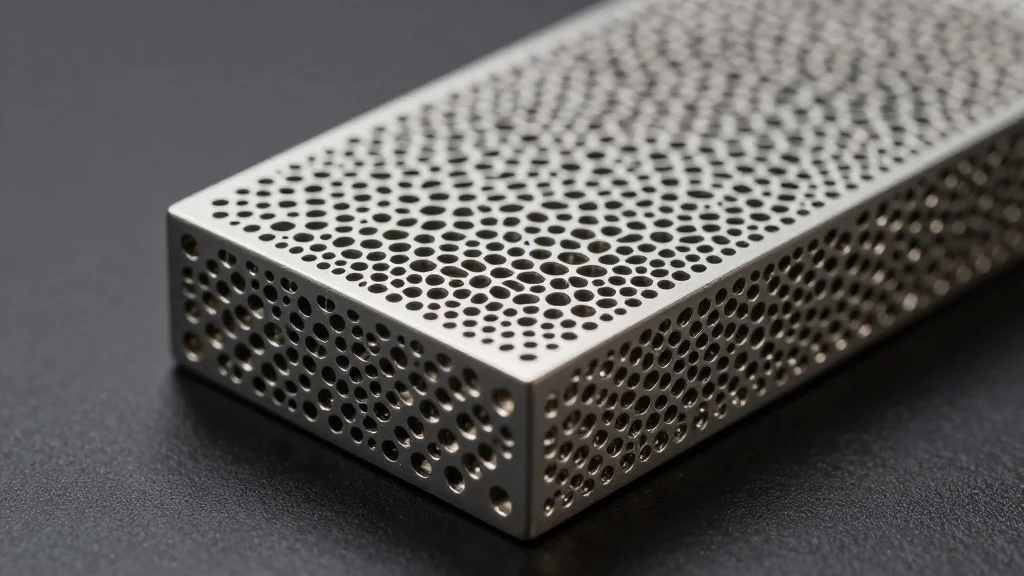
Macroscopic Porosity Optimization Using Thermodynamic Topology Optimization
Why It Matters
The technique widens the practical design space for 3‑D‑printed parts, delivering near‑optimal strength while respecting manufacturing limits, which could accelerate lightweight component adoption in aerospace, automotive and medical sectors.
Key Takeaways
- •Treats topology and porosity as separate design variables
- •Enables near‑optimal “gray” structures with current AM limits
- •Uses thermodynamic framework based on Hamilton’s principle
- •Handles multiple load cases in a single‑scale model
- •Improves stiffness‑to‑weight ratio over traditional designs
Pulse Analysis
Additive manufacturing has transformed the way engineers think about material distribution, but the gap between mathematically optimal graded microstructures and what can be printed remains a challenge. Traditional topology optimization yields binary, “black‑and‑white” layouts that ignore the continuum of stiffness achievable through controlled porosity. Recent advances in triply periodic minimal surface lattices and metallic foams have begun to close that gap, yet constraints on minimum density and feature size still limit the realization of fully "gray" designs.
The new methodology reframes the problem by decoupling macroscopic topology from local porosity, treating each as a distinct design variable within a thermodynamic optimization framework. By invoking Hamilton’s principle, the authors derive governing equations that naturally incorporate energy balance across multiple load cases, ensuring that the resulting structure meets diverse performance criteria. This single‑scale approach sidesteps the need for multi‑level homogenization, simplifying the computational pipeline while preserving the ability to fine‑tune stiffness gradients throughout the part.
For industry, the implications are immediate. Engineers can now generate lightweight components that approach the theoretical stiffness limits of graded materials without exceeding the resolution or density constraints of current 3‑D printers. Aerospace and automotive manufacturers stand to benefit from reduced mass and fuel consumption, while medical device designers can create implants with tailored compliance. As additive processes continue to improve, the presented framework offers a scalable path to integrate advanced porosity control into mainstream design workflows, potentially reshaping standards for high‑performance, manufacturable structures.
Macroscopic Porosity Optimization using Thermodynamic Topology Optimization
Comments
Want to join the conversation?
Loading comments...