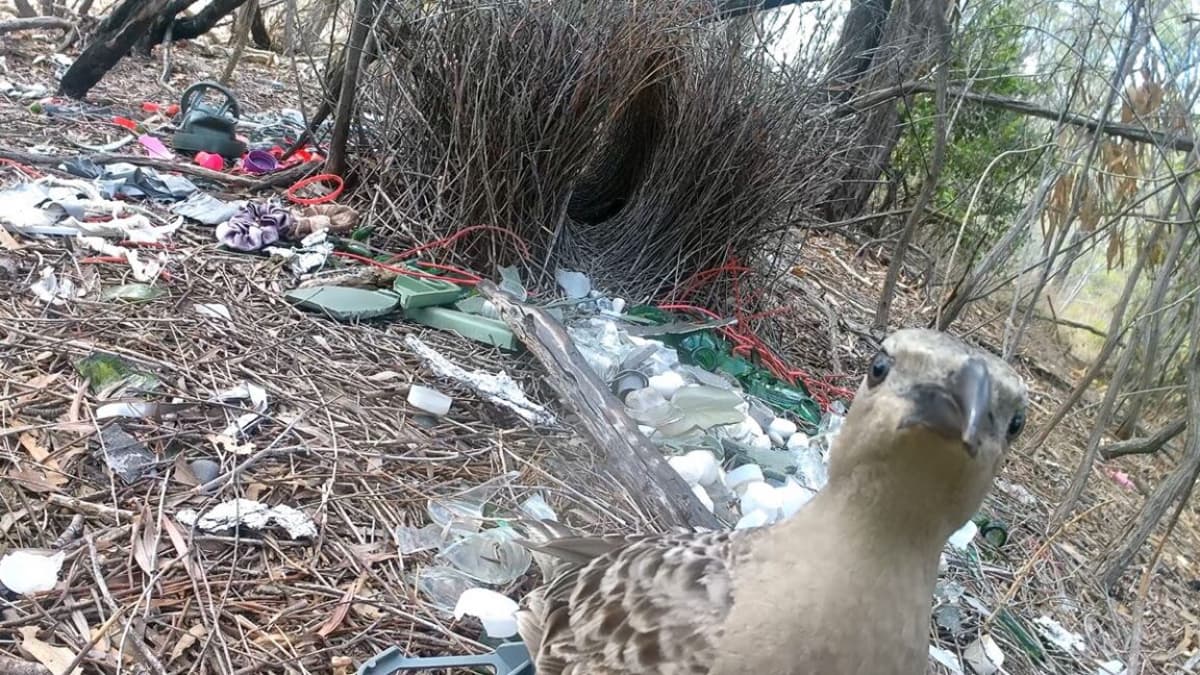
Male Bowerbirds Hope to Dazzle Females with Bright Human-Made Items
Why It Matters
The shift highlights how urbanization can reshape animal mating signals, potentially influencing reproductive success and biodiversity in rapidly expanding cities.
Key Takeaways
- •Urban bowerbirds use 10x more human-made items than rural birds
- •Urban bowers average 90 decorations; rural bowers average 20
- •Preferred urban items include green glass, red wire, and plastic
- •Study suggests urban displays may lower energetic costs for males
Pulse Analysis
Urban expansion is reshaping wildlife behavior in ways scientists are only beginning to quantify. The great bowerbird, famed for its elaborate, decorated courts, provides a vivid case study. By comparing 61 males across a rural cattle station and the city of Townsville, researchers documented a stark contrast: city dwellers amassed up to 300 shiny objects, while their country counterparts relied on leaves, seeds, and a handful of glass fragments. This pattern mirrors broader findings that animals in metropolitan habitats exploit novel resources, turning discarded plastics and colored glass into mating assets.
The implications for sexual selection are profound. Bowerbirds invest considerable energy gathering and arranging ornaments; the ready supply of bright, human-made items could lower those costs, allowing males to allocate more effort to display performance or territory defense. Moreover, the visual palette of urban bowers—vivid reds and glossy greens—differs from the muted natural hues of rural sites, potentially shifting female preference criteria. If females begin to favor artificial brilliance, male traits may evolve faster in cities, echoing similar trends observed in songbirds that adjust song frequency to overcome urban noise.
Beyond evolutionary intrigue, the study underscores a pressing conservation message: human waste is not inert. Every broken bottle or stray wire can become a catalyst for ecological change, influencing reproductive dynamics and, ultimately, population viability. Policymakers and urban planners should consider waste mitigation not only for aesthetic reasons but also for its indirect effects on native fauna. Continued monitoring of bowerbird populations will help determine whether these ornamental adaptations translate into higher mating success or unforeseen health costs, guiding future strategies to balance urban development with biodiversity preservation.
Male bowerbirds hope to dazzle females with bright human-made items
Comments
Want to join the conversation?
Loading comments...