Mars Life Search Gets Boost as Rover Test Distinguishes Mirrored Biosignature Molecules
Why It Matters
Chiral detection offers a reliable method to separate life‑derived organics from abiotic sources, strengthening the scientific case for past Martian life. Successful validation of MOMA boosts confidence in the Rosalind Franklin rover’s ability to deliver unambiguous biosignature data.
Key Takeaways
- •MOMA successfully separates chiral pristane and phytane for first time
- •Equal chiral ratios in Murchison suggest petroleum aerosol contamination
- •Chirality can distinguish biogenic from abiotic organics on Mars
- •Rosalind Franklin rover to launch 2030 with enhanced biosignature detection
- •Study prompts re‑evaluation of meteorite organic origins
Pulse Analysis
The search for ancient life on Mars has long been hampered by the difficulty of proving that detected organics are truly biological. While previous rovers identified a variety of carbon‑based molecules, none could unequivocally link them to living processes. Chirality— the handedness of molecules—provides a powerful discriminant because terrestrial biology produces almost exclusively one enantiomer, whereas abiotic synthesis yields a racemic mix. By focusing on pristane and phytane, two stable hydrocarbons that retain chiral signatures over billions of years, scientists have identified a class of molecules that could survive Mars’ harsh environment and still carry a biological fingerprint.
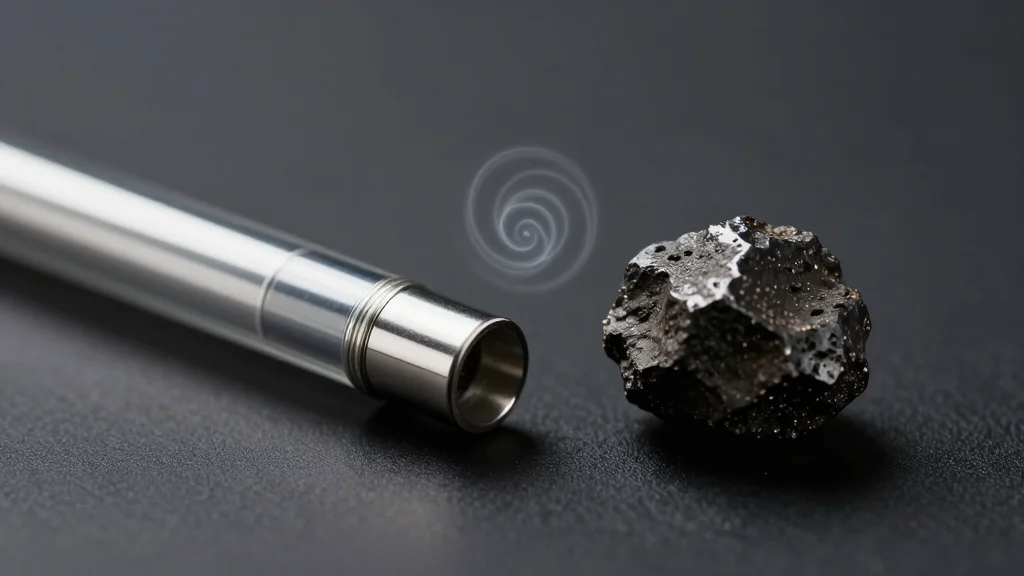
The European Space Agency’s Mars Organic Molecule Analyzer (MOMA) combines gas chromatography, mass spectrometry and chiral‑selective capillary coatings to separate enantiomers. In a recent laboratory trial, researchers replicated MOMA’s analytical tubes and applied them to powdered Murchison meteorite material. The instrument resolved the left‑ and right‑handed forms of pristane and phytane, demonstrating the high sensitivity and precision required for in‑situ Mars analysis. Unexpectedly, the meteorite sample displayed a perfectly racemic distribution, which the team traced to contamination from fossil‑fuel aerosols encountered during atmospheric entry. This result not only confirms MOMA’s capability but also underscores the need to account for terrestrial pollutants when interpreting extraterrestrial organic data.
Looking ahead, the successful chiral separation experiment strengthens the scientific payload of the Rosalind Franklin rover, scheduled for a 2030 launch. With MOMA’s validated performance, future missions can more confidently assess whether Martian organics exhibit the homochirality characteristic of life. Moreover, the study’s revelation of widespread petroleum‑derived contamination in meteorites prompts a broader review of how Earth’s industrial emissions may bias planetary science measurements, reinforcing the importance of rigorous contamination control in astrobiology research.
Mars life search gets boost as rover test distinguishes mirrored biosignature molecules
Comments
Want to join the conversation?
Loading comments...