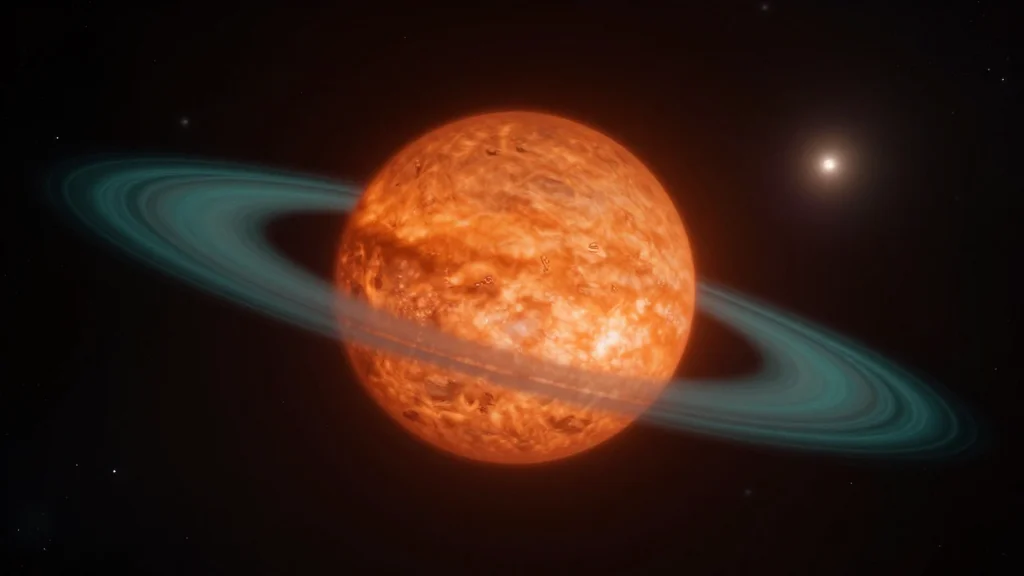
Mars-Like Worlds Near M-Dwarfs May Lose Air in Millions of Years
Why It Matters
Rapid atmospheric loss around common M‑dwarfs dramatically reduces the chances of stable, life‑supporting environments, reshaping target selection for exoplanet habitability studies.
Key Takeaways
- •Exo‑Mars loses Mars‑like atmosphere in 350,000 years.
- •Earth‑like atmosphere stripped in ~50 million years near Barnard.
- •M‑dwarf proximity accelerates atmospheric escape for rocky planets.
- •Primary hydrogen/helium atmospheres likely removed early by XUV flux.
- •Habitable‑zone planets around old M‑dwarfs face rapid air loss.
Pulse Analysis
Atmospheric escape is a decisive factor in a planet’s long‑term habitability. While Earth retains a thick nitrogen‑oxygen envelope thanks to its magnetic field and moderate solar output, Mars lost most of its carbon‑dioxide‑rich air within a few hundred million years, turning the planet into a barren desert. The new study extends this paradigm to exoplanets orbiting M‑type red dwarfs, the most abundant stars in the Milky Way. By quantifying how quickly a Mars‑analog can be stripped of its atmosphere, researchers provide a concrete metric for evaluating the survivability of thin‑atmosphere worlds in these systems.
The researchers modeled a Mars‑sized planet at 0.087 AU from Barnard’s star, an old, relatively quiet red dwarf located six light‑years away. Despite the star’s low current activity, the simulation shows a Mars‑like atmosphere would vanish in roughly 350,000 years, while an Earth‑scale atmosphere would endure only about 50 million years. These timescales are minuscule compared with the billions‑year lifespans of M‑dwarfs, implying that any planet residing within the traditional habitable zone would likely experience even faster loss. The findings also suggest that primary hydrogen‑helium envelopes, which are lighter than CO₂, would have been stripped early during the star’s more active youth.
For exoplanet hunters, the study underscores the need to factor stellar age and X‑ray/UV output into habitability assessments, not just orbital distance. Upcoming missions such as the James Webb Space Telescope and the European ARIEL observatory will be able to probe atmospheric composition of nearby rocky worlds, potentially confirming rapid escape signatures like extended exospheres or depleted CO₂. In the longer term, mission concepts targeting M‑dwarf systems must prioritize planets with strong magnetic fields or replenishing volcanic outgassing to sustain atmospheres. Ultimately, understanding atmospheric erosion will sharpen the search for truly Earth‑like environments beyond our solar system.
Mars-like worlds near M-dwarfs may lose air in millions of years
Comments
Want to join the conversation?
Loading comments...