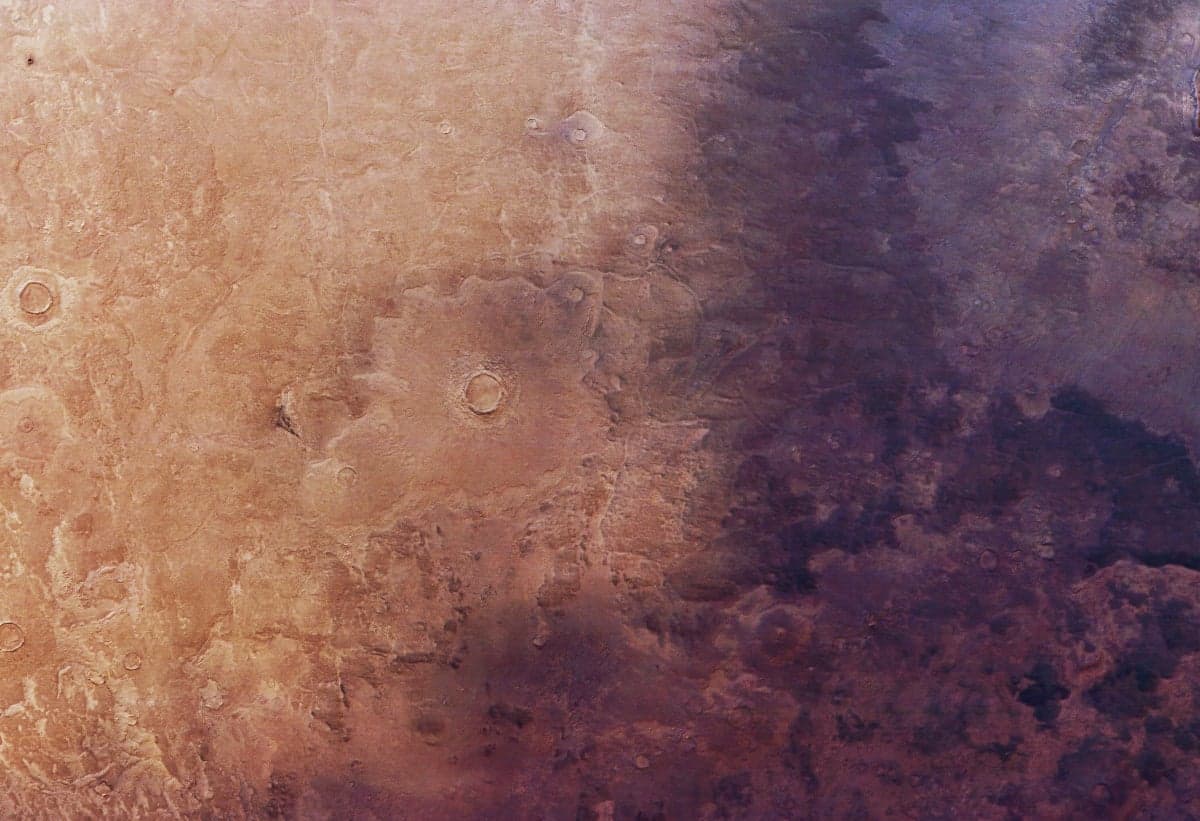
Mars Orbiter Watches Mysterious Wave of Darkness Spread Across Red Planet’s Surface
Why It Matters
The observation proves that Martian surface processes can operate on human timescales, reshaping our models of atmospheric dynamics and volatile cycles. It also highlights ESA’s enduring mission capability to deliver fresh data critical for future exploration planning.
Key Takeaways
- •Mars Express captured rapid ash spread across Utopia Planitia
- •Darkening likely caused by wind‑blown ancient volcanic ash
- •Image reveals hidden ice deposits and fresh impact craters
- •Surface changes observed in decades, not millennia
- •ESA’s 20‑year‑old orbiter continues delivering new planetary insights
Pulse Analysis
The latest Mars Express snapshot challenges the long‑standing view that Mars’ landscape evolves only over geological epochs. By juxtaposing the new high‑resolution view with Viking-era imagery, scientists have documented a darkening front moving across Utopia Planitia in just a few decades. This rapid alteration is attributed to the planet’s strong, seasonally driven winds mobilizing fine volcanic ash from ancient eruptions, effectively repainting the surface and exposing underlying basaltic rock. Such dynamics provide a rare window into present‑day aeolian activity on a world once thought to be largely inert.
Understanding the mechanisms behind the dark wave has broader implications for Mars’ climate and water inventory. The wind‑driven redistribution of ash can uncover ice‑rich layers, as hinted by shadowed fractures and pits in the new image. If buried ice is being exposed, it could affect local albedo, further influencing atmospheric temperature gradients and wind patterns. Moreover, the detection of fresh impact craters amid the ash‑laden terrain suggests that surface renewal processes are ongoing, potentially altering the preservation state of organic or mineralogical signatures that future missions aim to study.
The discovery also underscores the remarkable longevity and relevance of the Mars Express mission, now more than two decades after launch. Continued high‑resolution imaging supports not only scientific inquiry but also operational planning for upcoming missions like NASA’s Mars Sample Return and ESA’s ExoMars rover. By delivering timely, high‑quality data, ESA demonstrates how mature spacecraft can remain pivotal assets, informing both planetary science and the broader search for habitable environments beyond Earth.
Mars orbiter watches mysterious wave of darkness spread across red planet’s surface
Comments
Want to join the conversation?
Loading comments...