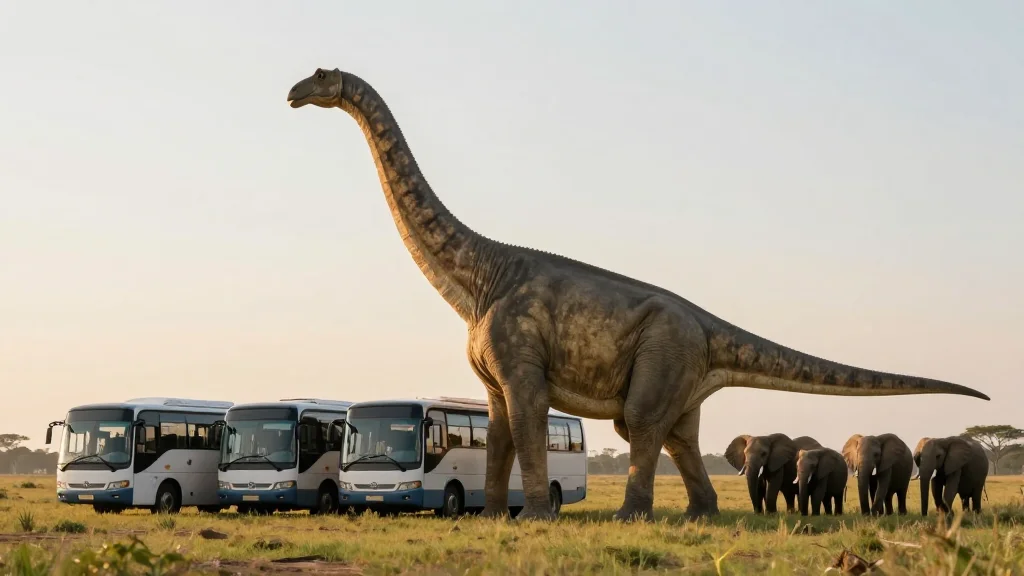
Massive Dinosaur Fossil Unearthed Beneath Pond in Thailand
Why It Matters
The discovery reshapes understanding of sauropod size and distribution in early Cretaceous Asia and highlights Thailand’s growing role in global paleontological research.
Key Takeaways
- •New sauropod named Nagatitan chaiyaphumensis discovered in Thailand
- •Estimated 27‑ton weight and 89‑ft length make it SE Asia’s largest
- •Belongs to Euhelopodidae, a uniquely Asian sauropod subgroup
- •Fossils found in youngest Thai dinosaur formation; may be last large sauropod
- •3D scanning enabled remote analysis, cutting project carbon footprint
Pulse Analysis
The unveiling of Nagatitan chaiyaphumensis marks a milestone for Southeast Asian paleontology. At an estimated 27 tons—about nine adult Asian elephants—and 89 feet long, the creature dwarfs previously known regional sauropods and rivals the size of classic Jurassic giants. Its age, placed in the Early Cretaceous, fills a critical gap in the fossil record, confirming that massive, long‑necked herbivores thrived in the dry, river‑lined landscapes that once covered what is now northeastern Thailand. By pinpointing unique spinal, pelvic and limb features, scientists have clarified the evolutionary path of Euhelopodidae, a lineage confined to Asia, and suggest this may be the final large sauropod to emerge from the region’s youngest dinosaur‑bearing strata.
Beyond sheer size, Nagatitan offers fresh insight into the ecological dynamics of Cretaceous Asia. The surrounding sediment indicates a mosaic of river channels, freshwater sharks, and crocodiles, implying a rich, semi‑aquatic ecosystem that supported diverse flora and fauna. The dinosaur’s massive neck and tail likely functioned as thermal radiators, a hypothesis that aligns with recent studies on sauropod thermoregulation. Its coexistence with smaller herbivores, apex predators, and pterosaurs paints a vivid picture of a bustling prehistoric community, underscoring the complexity of ancient food webs in a region previously thought to host only modest dinosaur assemblages.
The discovery also showcases the power of international collaboration and modern technology in advancing science. UCL’s partnership with Thai institutions leveraged 3‑dimensional scanning to analyze the fossils without the need for extensive travel, slashing the project’s carbon footprint while preserving delicate specimens. This approach accelerates data sharing, invites broader scholarly participation, and sets a new standard for sustainable fieldwork. Moreover, the life‑size reconstruction at Bangkok’s Thainosaur Museum turns academic findings into public engagement, boosting tourism and inspiring a new generation of Thai palaeontologists eager to explore their country’s rich, yet under‑documented, dinosaur heritage.
Massive dinosaur fossil unearthed beneath pond in Thailand
Comments
Want to join the conversation?
Loading comments...