Why It Matters
Nereid’s discovery highlighted the diversity of planetary satellite systems and informs models of moon capture and orbital evolution, a key puzzle for planetary science.
Key Takeaways
- •Gerard Kuiper discovered Nereid using 82‑inch telescope plates
- •Nereid orbits Neptune in 360 days, 850k–6 million mi range
- •Third‑largest Neptune moon, largest irregular satellite in solar system
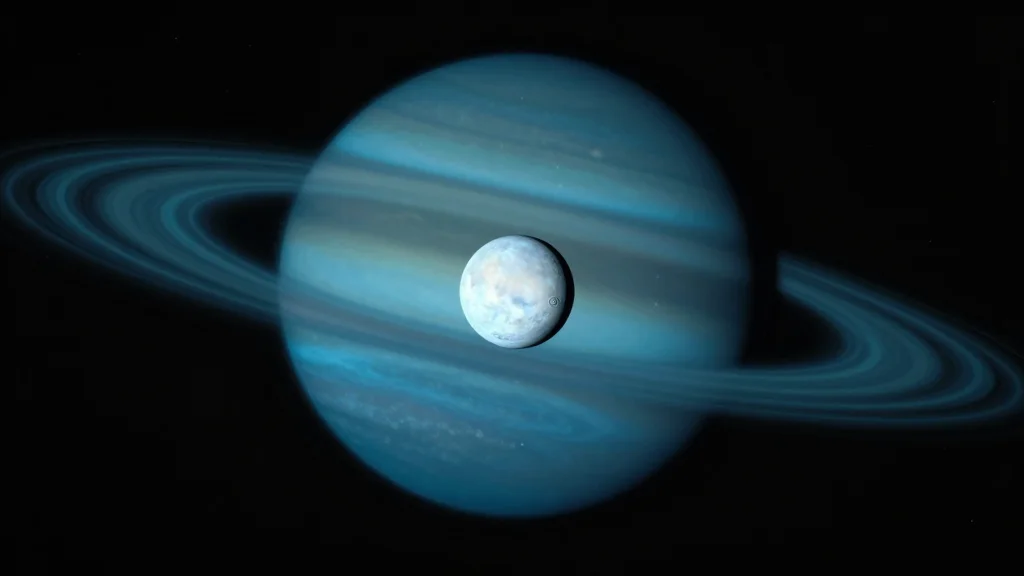
- •JWST found abundant water ice, high reflectivity, blue hue
- •Orbit likely altered when Neptune captured massive moon Triton
Pulse Analysis
The 1949 identification of Nereid marked a milestone in mid‑century astronomy, showcasing the power of ground‑based photographic surveys. Gerard Kuiper’s work at McDonald Observatory extended humanity’s inventory of planetary moons, a feat that would not be repeated for Neptune until the Voyager 2 encounter four decades later. By cataloguing Nereid’s extreme orbital parameters, early researchers laid the groundwork for modern studies of irregular satellites, which differ fundamentally from regular, tidally‑locked moons.
Nereid’s highly eccentric trajectory—spanning from 850,000 mi to 6 million mi—poses a classic dynamical puzzle. Its orbit suggests a violent past, likely reshaped when Neptune seized the massive moon Triton in the early solar system. The capture would have injected substantial energy into the surrounding satellite swarm, scattering objects onto elongated paths or ejecting them entirely. Understanding this process helps scientists refine models of planetary migration and satellite capture, shedding light on how giant planets acquire and retain their retinues of moons.
Recent observations with the James Webb Space Telescope have revived interest in Nereid, revealing a surface rich in water ice and an unusually high albedo that gives the moon a vivid blue tint. These characteristics contrast with other irregular moons, hinting at a distinct composition or resurfacing history. By probing Nereid’s geology and reflectance, researchers gain clues about the material exchange between Neptune’s moons and the outer solar system, informing broader theories of moon formation and evolution across planetary systems.
May 1, 1949: The discovery of Nereid
Comments
Want to join the conversation?
Loading comments...