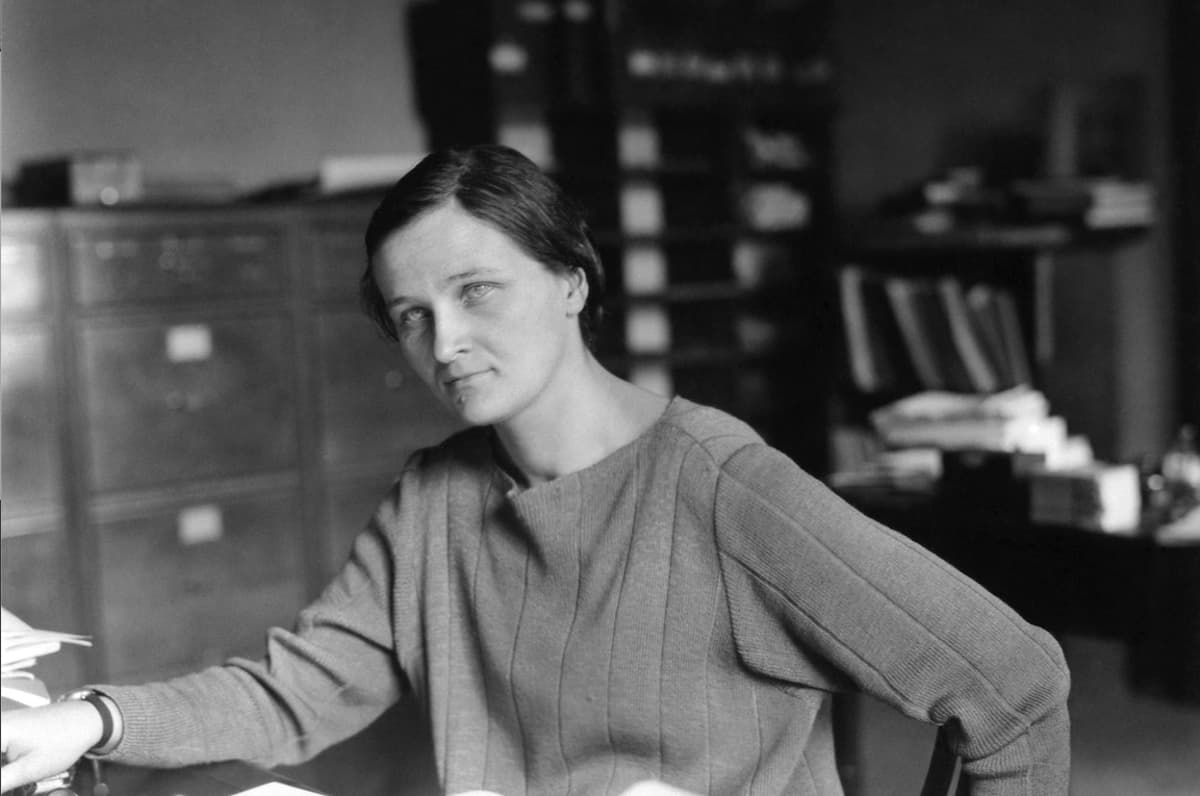
May 10, 1900: The Birth of Cecilia Payne-Gaposchkin
Why It Matters
Payne‑Gaposchkin’s discovery reshaped our understanding of stellar composition, enabling modern models of star formation and cosmic evolution, while her leadership opened doors for women in astronomy.
Key Takeaways
- •Born May 10, 1900, in Wendover, England.
- •1925 Ph.D. proved stars are mainly hydrogen and helium.
- •Initial rejection by Princeton; later hailed as brilliant thesis.
- •Became Harvard astronomy department chair in 1956.
- •Paved way for modern stellar composition models.
Pulse Analysis
Cecilia Payne‑Gaposchkin entered the world on May 10, 1900, in the English town of Wendover. After an inquisitive stint at Cambridge, where she caught the attention of astronomer Arthur Eddington, she crossed the Atlantic to Harvard. Under the mentorship of Harlow Shapley, she combined spectroscopy with emerging quantum theory, laying the groundwork for her 1925 doctoral dissertation. The thesis argued that the varying colors of stars stem from temperature differences, not from distinct chemical make‑ups—a radical departure from the prevailing view that each star possessed a unique elemental composition.
The dissertation’s core claim—that hydrogen and helium dominate stellar interiors—was initially dismissed as “clearly impossible” by Princeton’s Henry Norris Russell. Payne‑Gaposchkin was forced to temper her conclusions, yet the data she presented could not be ignored. Within a decade, leading astronomers Otto Struve and Velta Zebergs lauded the work as the most brilliant Ph.D. thesis in astronomy, and the hydrogen‑helium model became the foundation of stellar evolution theory. This paradigm shift enabled precise calculations of stellar lifecycles, nucleosynthesis, and the broader chemical evolution of the universe.
Beyond her scientific contributions, Payne‑Gaposchkin broke gender barriers, becoming Harvard’s first female astronomy department chair in 1956. Her tenure inspired a generation of women to pursue astrophysics and reinforced the importance of rigorous data analysis over entrenched dogma. Today, space missions and large‑scale surveys still rely on the hydrogen‑helium baseline she established, from the James Webb Space Telescope’s study of early galaxies to spectroscopic surveys mapping the Milky Way. Her legacy endures as a testament to perseverance and the transformative power of evidence‑driven discovery.
May 10, 1900: The birth of Cecilia Payne-Gaposchkin
Comments
Want to join the conversation?
Loading comments...