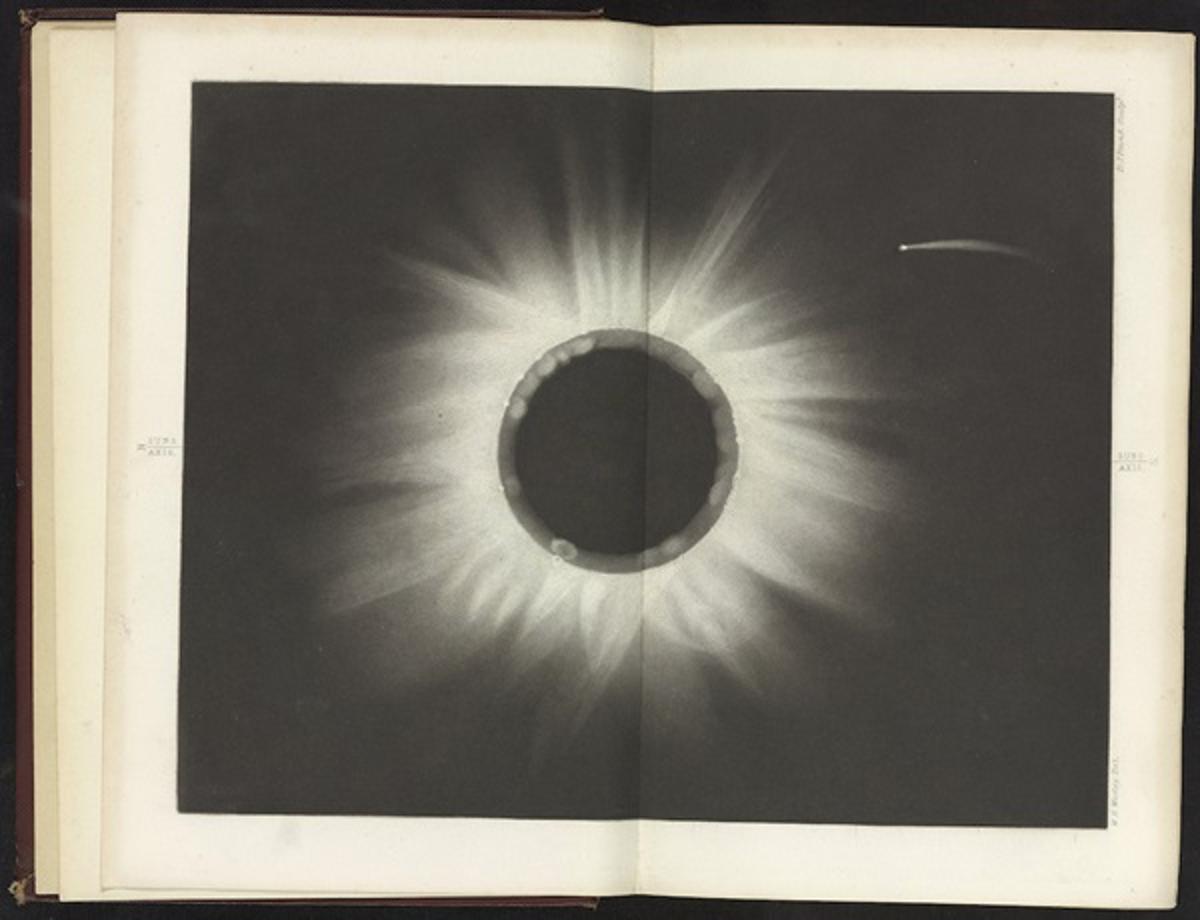
May 17, 1882: Comet Tewfik Is Spotted During an Eclipse
Why It Matters
The achievement demonstrated the power of eclipse observations for solar physics and opened a new method to detect sungrazing comets, influencing both astronomy and photographic techniques.
Key Takeaways
- •Schuster captured first comet image during a solar eclipse
- •Comet Tewfik classified as a sungrazing comet
- •Lockyer's expedition studied corona and sun‑spot activity
- •Eclipse totality lasted under two minutes across Egypt
Pulse Analysis
The May 17, 1882 eclipse was a pivotal moment for 19th‑century astronomy, offering a rare alignment that let scientists peer directly at the Sun’s hidden corona. While totality lasted only 70 seconds in Egypt, the brief darkness was enough for J. Norman Lockyer’s team to deploy spectroscopes and early photographic plates, laying groundwork for modern solar research. The expedition’s findings on coronal emission lines helped confirm the Sun’s complex chemical makeup, a topic that still fuels solar‑physics debates today.
Arthur Schuster’s photographic breakthrough added another layer of significance. By capturing the comet later dubbed Tewfik within the eclipse’s glare, he proved that sungrazing comets could be observed against the Sun’s bright backdrop—a technique later refined with space‑based coronagraphs. The image, reproduced in Mabel Loomis Todd’s "Total Eclipses of the Sun," illustrated how eclipse photography could reveal transient celestial events otherwise lost in daylight, inspiring a generation of astronomers to chase similar opportunities.
Beyond its historical charm, the 1882 eclipse underscores enduring lessons for contemporary science. Modern solar observatories still rely on eclipse windows to validate instruments and calibrate models of the solar atmosphere. Moreover, the comet‑during‑eclipse concept foreshadowed today’s use of solar occultations to study planetary atmospheres and exoplanetary transits. By linking a fleeting natural phenomenon with cutting‑edge technology, the event exemplifies how opportunistic observation can accelerate discovery, a principle that remains central to today’s space‑based missions.
May 17, 1882: Comet Tewfik is spotted during an eclipse
Comments
Want to join the conversation?
Loading comments...