Why It Matters
Accurate dating of the Ugarit eclipse refines the chronology of the Late Bronze Age Near East, affecting archaeological and historical interpretations. It also demonstrates the power of interdisciplinary analysis combining philology and modern astronomy.
Key Takeaways
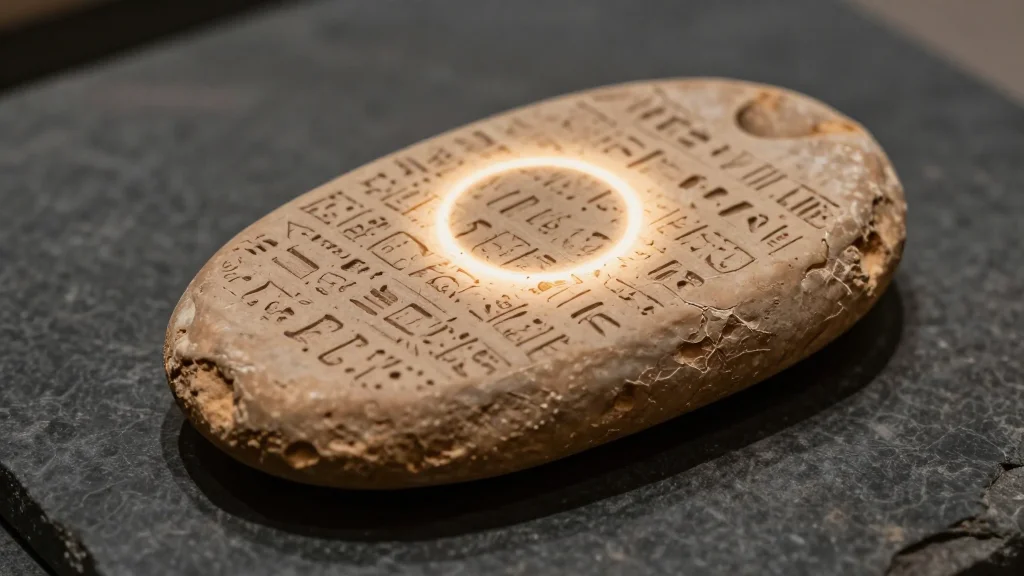
- •Ugarit tablet discovered 1948 records earliest known solar eclipse
- •Original date set to May 3, 1375 B.C.E. by early scholars
- •1989 study shifted eclipse to March 5, 1223 B.C.E.
- •Clues include seasonal timing and Mars visibility near eclipse
- •Re‑dated eclipse refines Near Eastern chronology and astronomical models
Pulse Analysis
The Ugarit tablet’s eclipse account is more than a curiosity; it provides a rare anchor point for dating events in the Late Bronze Age. Ancient societies rarely left precise astronomical records, so when a cuneiform text describes the Sun’s disappearance at a specific hour, scholars can cross‑reference that with modern eclipse calculations. This linkage offers a fixed chronological marker that can validate or challenge relative dating methods used in archaeology, such as pottery typology or stratigraphic sequencing.
The 1989 reassessment illustrates how interdisciplinary tools sharpen historical timelines. Researchers examined the tablet’s language for seasonal hints, concluding the eclipse likely occurred in late winter rather than early spring. They also noted a mention of the planet Mars, whose position can be precisely back‑calculated. By aligning these textual clues with astronomical software, the team identified March 5, 1223 B.C.E. as a viable date, a shift of over 150 years from the original estimate. This methodological blend of philology, astronomy, and computational modeling sets a precedent for re‑evaluating other ancient observations.
Re‑dating the eclipse carries ripple effects across Near Eastern studies. A later eclipse date compresses the timeline of Ugarit’s political and cultural developments, influencing how scholars synchronize events in neighboring kingdoms like Egypt and Hatti. It also refines models of solar activity and planetary visibility for that era, feeding into broader climatological and astronomical research. As more ancient texts are digitized and analytical techniques improve, similar revisions may emerge, continually sharpening our understanding of ancient history.
May 3, 1375 B.C.E.: The Ugarit eclipse
Comments
Want to join the conversation?
Loading comments...