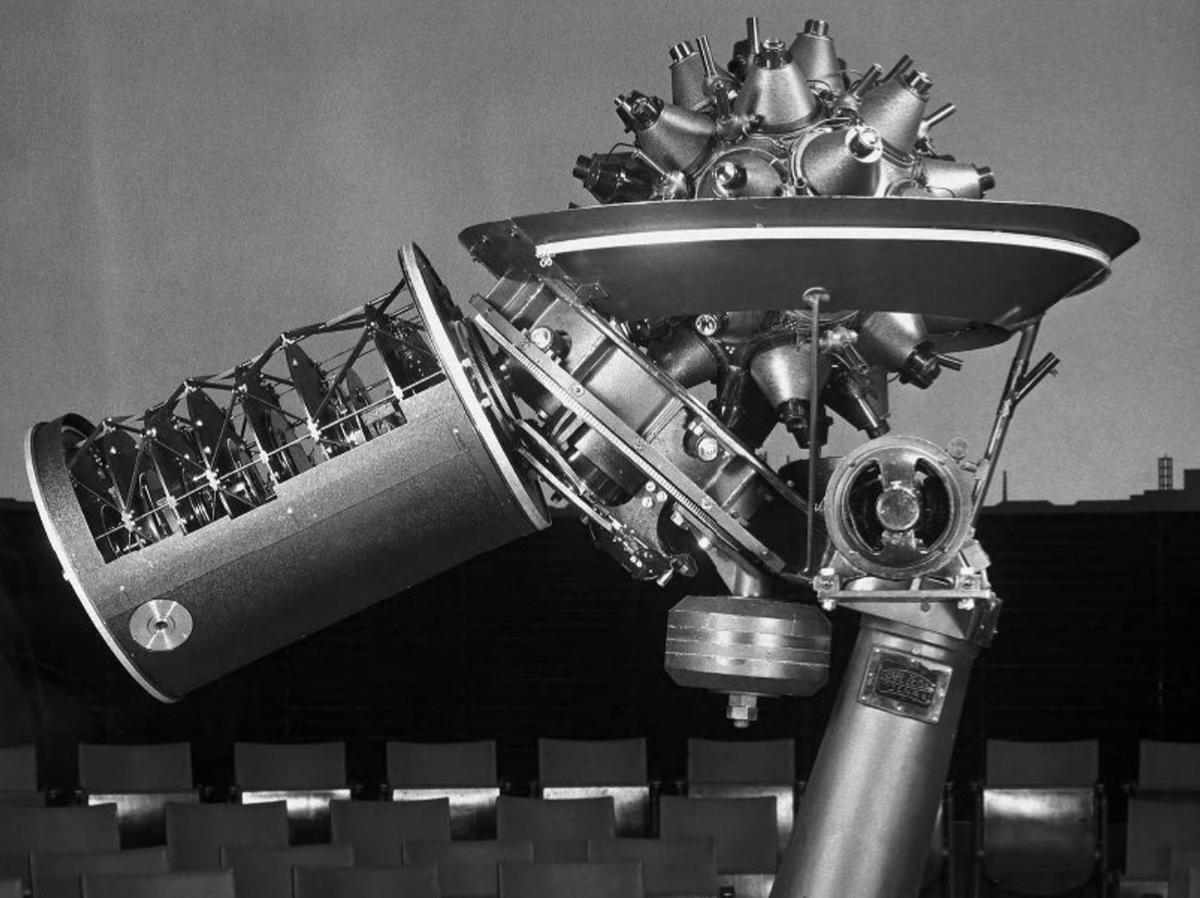
Why It Matters
The debut demonstrated how immersive visual technology can democratize complex science, creating a new market for educational entertainment and driving demand for precision optics worldwide.
Key Takeaways
- •Zeiss Model I projected 4,500 stars plus Milky Way and planets
- •Debut occurred at Deutsches Museum, Munich, on May 7, 1925
- •Gear‑driven motors let presenter control seasonal sky motions
- •Over 4,000 planetariums operate globally today
- •May 7 now celebrated as International Day of Planetariums
Pulse Analysis
The 1925 launch of the Zeiss Model I projector marked a watershed moment for scientific visualization. Built by the Carl Zeiss Company, the device combined precision optics with mechanical engineering to render a realistic night sky on a dome. By reproducing 4,500 stars, the Milky Way, and key celestial bodies, it offered audiences an unprecedented, immersive view of the heavens, turning abstract astronomy lessons into tangible experiences. This breakthrough set the template for modern planetarium technology, where digital projection now builds on the same educational philosophy.
The planetarium’s immediate impact was felt in museums and schools, where educators could synchronize narrative with moving star fields, reinforcing concepts of Earth’s rotation, seasonal change, and planetary motion. Word of the Munich exhibit spread through postcards and press, prompting institutions worldwide to invest in similar installations. This early adoption spurred a niche industry for high‑precision projectors, fostering collaborations between optics manufacturers, architects, and content creators. The resulting network of over 4,000 venues today serves both public outreach and commercial entertainment, illustrating the long‑term commercial viability of immersive science venues.
In the 21st century, digital planetariums incorporate 4K projection, real‑time data feeds, and interactive controls, yet they trace their lineage to the 1925 Zeiss Model I. The continued celebration of May 7 as International Day of Planetariums underscores the cultural and economic significance of this technology. For businesses, the sector offers growth opportunities in hardware upgrades, software development, and immersive content production, while educators benefit from ever‑more realistic tools to inspire the next generation of astronomers.
May 7, 1925: The first projection planetarium
Comments
Want to join the conversation?
Loading comments...