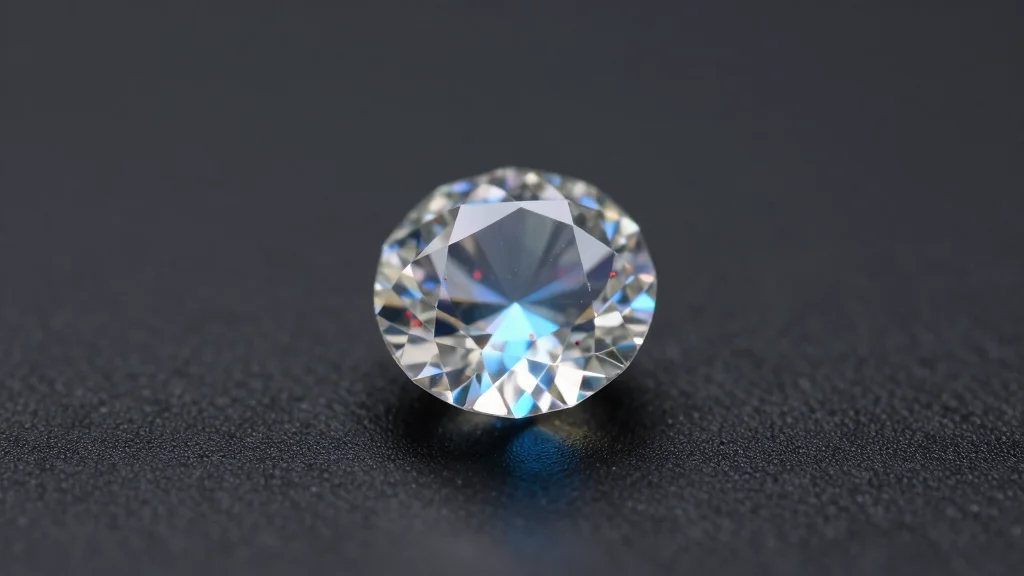
Mechanical Inputs Boost Diamond Quantum Sensor States as Q Factor Tops One Million
Why It Matters
A Q factor above one million dramatically extends the coherence time of mechanical quantum states, unlocking higher‑precision diamond sensors and paving the way for scalable quantum networks. This breakthrough positions diamond as a competitive substrate against silicon for next‑generation quantum technologies.
Key Takeaways
- •Diamond resonator achieved Q factor >1,000,000 at 10 GHz
- •High Q enables longer quantum information storage
- •NV centers in diamond act as sensitive qubit sensors
- •Pulsed optical probing expected to raise Q beyond silicon
- •Mechanical mediation may allow entangled sensor networks
Pulse Analysis
The recent demonstration of a diamond optomechanical crystal with a Q factor surpassing one million marks a pivotal step for quantum sensing. Mechanical resonators store energy as phonons, and a higher Q means the oscillations decay more slowly, preserving quantum information longer. At a 10‑gigahertz operating frequency, the device cycles ten billion times per second, offering a platform where mechanical motion can reliably interface with quantum bits. This performance rivals, and potentially exceeds, silicon‑based resonators, which have traditionally dominated the field due to mature fabrication processes.
Diamond’s intrinsic properties—exceptional thermal conductivity, a wide band gap, and low optical absorption—make it an ideal host for nitrogen‑vacancy (NV) centers, the workhorse qubits for magnetic, electric, and temperature sensing. By embedding hundreds of NV centers within a thin, micrometer‑scale beam, the researchers create a dense array of quantum sensors that can be collectively driven and read out via the co‑located optical cavity. The challenge has been diamond’s fabrication difficulty, but the UC Quantum Foundry’s fifteen‑year effort has yielded reliable nanofabrication techniques, allowing precise control over both mechanical and optical modes.
Looking ahead, the team plans to transition from continuous to pulsed optical probing, a method that minimizes heating and could reveal Q factors surpassing silicon’s best results. Higher Q values will strengthen mechanically mediated NV‑NV interactions, enabling entangled states useful for metrology beyond classical limits. If successful, such mechanically linked sensor networks could transform fields ranging from biomedical imaging to navigation, positioning diamond‑based quantum devices as a cornerstone of the emerging quantum technology market.
Mechanical inputs boost diamond quantum sensor states as Q factor tops one million
Comments
Want to join the conversation?
Loading comments...