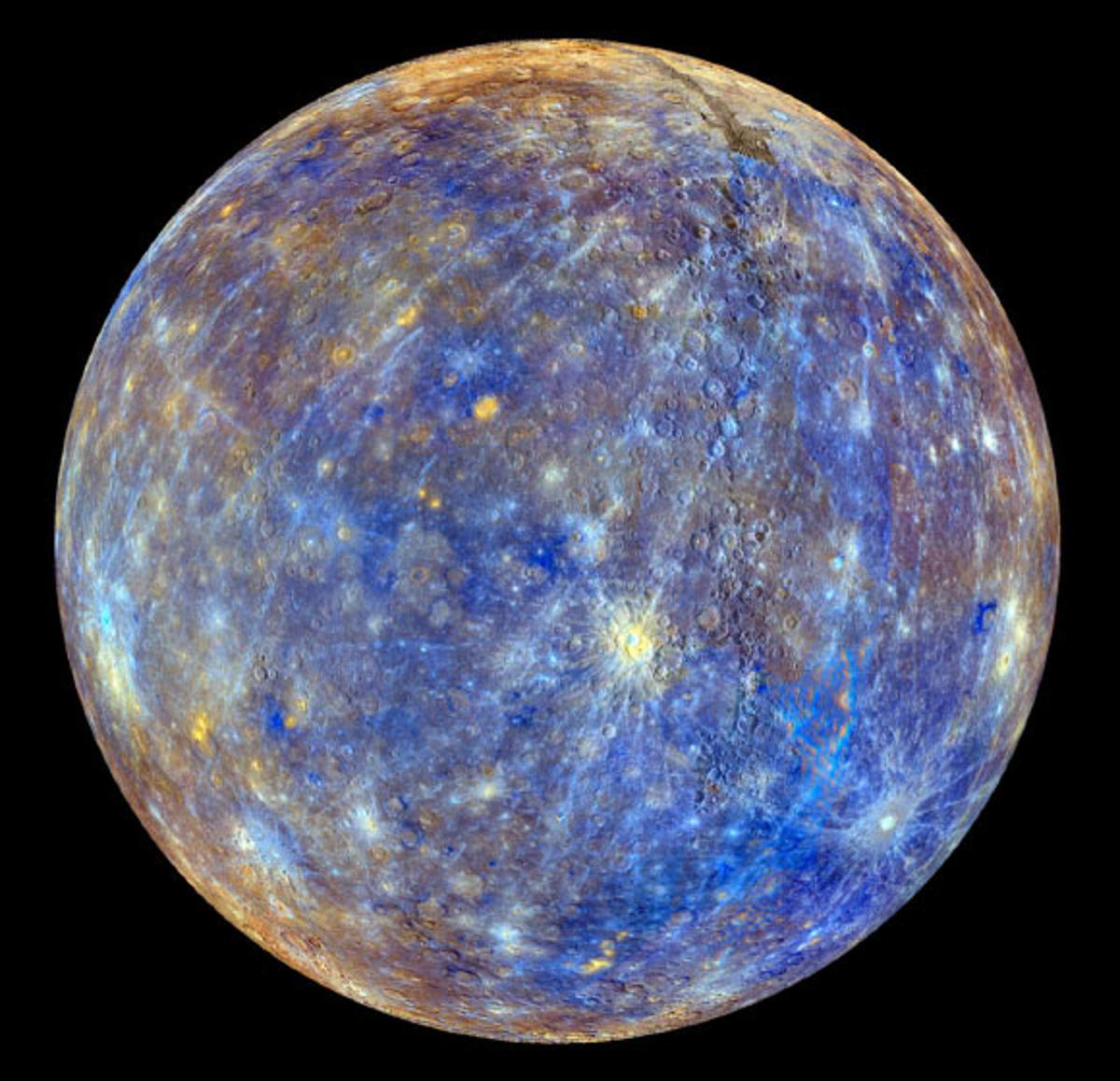
Mercury’s Sulfur-Rich Magma May Rewrite How Solar System’s Innermost Planet Formed
Companies Mentioned

NASA
Why It Matters
Understanding Mercury’s unique magmatic behavior reshapes models of inner‑planet formation and informs how reduced, sulfur‑rich worlds may evolve, impacting both solar‑system science and exoplanet characterization.
Key Takeaways
- •Sulfur lowers crystallization temperature of Mercury’s magmas.
- •Indarch meteorite used to simulate Mercury’s reduced composition.
- •Low iron lets sulfur bind magnesium and calcium in rocks.
- •Mercury’s mantle likely solidified at lower temperatures than Earth’s.
- •Study urges planet‑specific magmatic models beyond Earth analogs.
Pulse Analysis
Mercury’s anomalous density and surface composition have long puzzled planetary scientists, prompting a range of hypotheses from giant impacts to volatile loss. Traditional models, however, have leaned heavily on Earth‑centric assumptions about magmatic processes. The Rice team’s approach sidesteps this bias by leveraging the Indarch meteorite—a 19th‑century fall whose chemistry mirrors Mercury’s highly reduced state. By subjecting a synthetic melt of Indarch material to Mercury‑like pressure and temperature, the researchers recreated the planet’s interior conditions without needing direct samples, offering a rare laboratory window into early solar‑system chemistry.
The experiments revealed that sulfur, abundant in Mercury’s mantle but scarce in Earth’s, substitutes for oxygen in the silicate lattice, forming weaker bonds with magnesium and calcium. This substitution depresses the liquidus temperature, meaning Mercury’s magmas remain fluid at lower heat levels than comparable Earth basalts. Consequently, the planet’s mantle could have remained partially molten longer, influencing crust formation, volcanic resurfacing, and the retention of volatile elements. The findings challenge the prevailing view that Mercury’s mantle solidified rapidly after core formation, instead suggesting a protracted, sulfur‑driven cooling history.
Beyond Mercury, the study underscores the need for planet‑specific magmatic frameworks when interpreting exoplanet data. Many rocky exoplanets orbit close to their stars and may share Mercury’s reduced, sulfur‑rich chemistry, affecting their interior dynamics and surface expressions. Future missions such as BepiColombo and advanced spectroscopic surveys will benefit from incorporating these laboratory insights, improving predictions of planetary habitability and evolution across diverse stellar environments.
Mercury’s Sulfur-Rich Magma May Rewrite How Solar System’s Innermost Planet Formed
Comments
Want to join the conversation?
Loading comments...