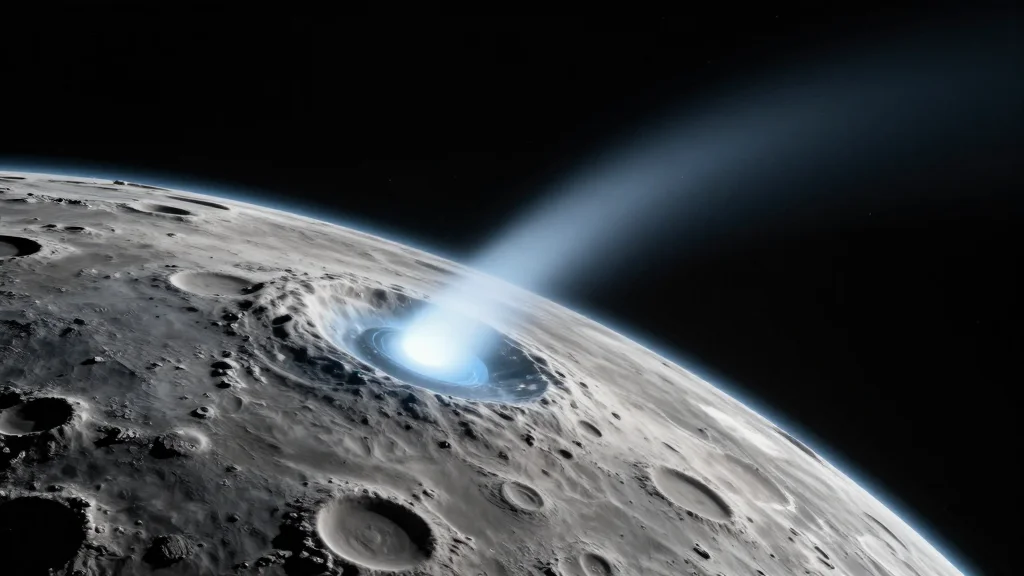
Mercury's Water Ice May Have Been Deposited by a Larger, Slower Impactor than Previously Thought—In only One Day
Why It Matters
If a single, slower impact can account for Mercury’s polar ice, it reshapes theories of volatile acquisition on airless planets and informs the design of future missions targeting surface composition. The study also highlights atmospheric self‑shielding as a key process in preserving water on bodies with negligible atmospheres.
Key Takeaways
- •Hokusai‑scale impact could deliver ~2.3×10¹³ kg water to Mercury’s poles
- •Impact‑generated atmosphere reduces photolysis loss from 96% to 46%
- •Self‑shielding traps ~22% of water vapor, far more than baseline
- •Simulated ice thickness (≤37 cm) is thinner than radar‑observed meters
- •Slower, larger impactor may be needed to match observed deposits
Pulse Analysis
Mercury’s permanently shadowed craters have long puzzled scientists because they host water ice despite the planet’s scorching daytime temperatures and near‑vacuum exosphere. Early explanations ranged from a slow drizzle of micrometeoroids to continuous solar‑wind implantation, but the relatively pure and youthful nature of the ice hinted at a rapid, episodic delivery. Understanding how volatiles can survive on an airless world informs broader questions about the early Solar System, including the fate of water on the Moon and asteroids.
The recent Geophysical Research paper advances this debate by fully simulating a Hokusai‑scale impact—a 17 km comet or asteroid striking at roughly 30 km s⁻¹. The model tracks water vapor as it expands into a transient, impact‑generated atmosphere, where dense gas layers dramatically curb photolysis, allowing roughly 22 % of the vapor to be cold‑trapped in the polar pits. By contrast, a thin‑exosphere scenario loses nearly all water to solar photons. The result is a rapid, one‑day deposition of up to 2.3×10¹³ kg of ice, aligning with the lower bound of observational estimates.
However, the simulated deposits reach only about 37 cm, far short of the several‑meter thickness inferred from radar reflections. This discrepancy suggests the impactor may have been larger and slower than the baseline case, enhancing both the water payload and the self‑shielding effect. Upcoming data from ESA’s BepiColombo mission, which will map ice distribution with unprecedented precision, could validate these models. Moreover, the study underscores the importance of transient atmospheres in volatile retention, a concept that may apply to other airless bodies and guide future exploration strategies.
Mercury's water ice may have been deposited by a larger, slower impactor than previously thought—in only one day
Comments
Want to join the conversation?
Loading comments...