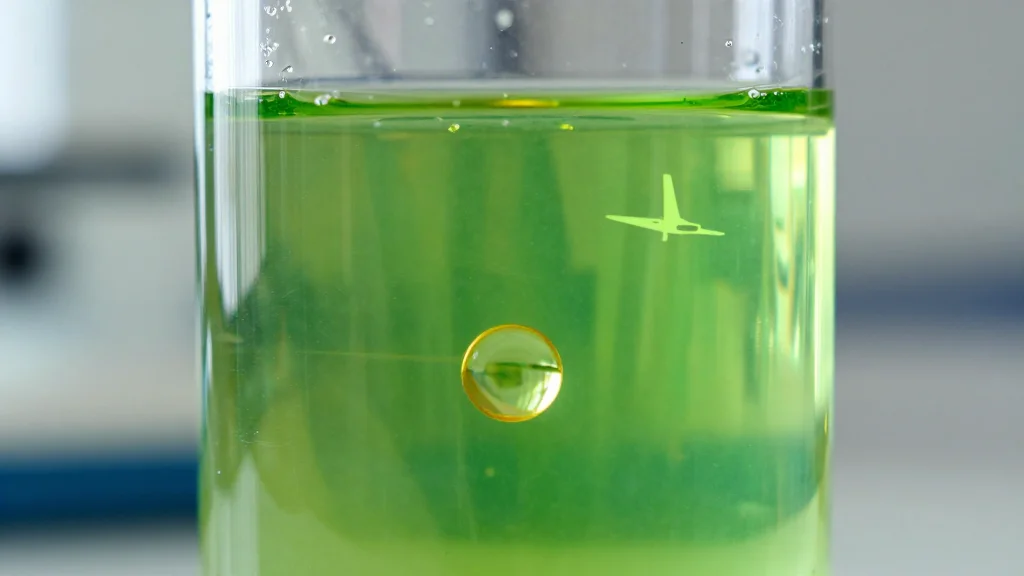
Microalgae Can Photosynthetically Produce and Secrete Biofuel Precursors
Why It Matters
External secretion eliminates costly biomass harvesting and extraction, while the non‑GMO status could accelerate commercial scale‑up of algal biofuels.
Key Takeaways
- •Engineered cyanobacteria secrete free fatty acids directly into culture medium.
- •Strain reaches 389 mg L⁻¹ FFA titer and 0.81 mg L⁻¹ h⁻¹ rate.
- •Self‑cloning method eliminates foreign DNA, reducing regulatory barriers.
- •Two‑phase solvent overlay enables continuous FFA collection without cell destruction.
- •Strong light stress at 25 °C boosts per‑cell FFA productivity.
Pulse Analysis
Algal biofuels have long promised a carbon‑neutral alternative to petroleum, yet the economics have been hampered by energy‑intensive downstream steps. Traditional systems trap lipids inside cells, forcing large‑scale harvesting, drying, and solvent extraction—processes that erode the sustainability advantage. The new Saitama University work flips this model by engineering cyanobacteria to excrete free fatty acids (FFAs) directly into the surrounding medium, turning the culture itself into a continuous “living fuel factory.” This shift reduces capital and operating expenses and opens the door to simpler, scalable recovery methods.
The breakthrough hinges on a self‑cloning strategy that leverages only native genes. Researchers knocked out the acyl‑ACP synthetase (Aas) gene, preventing FFA re‑uptake, and simultaneously overexpressed an endogenous RND‑type efflux pump and two galactolipases (LipB, LipC) to liberate and export FFAs. Because no foreign DNA is introduced, the strain sidesteps many of the regulatory hurdles that have stalled genetically modified algae in outdoor ponds. The engineered strain delivers an FFA titer of roughly 389 mg L⁻¹ and a dry‑weight productivity of 24.7 mg g⁻¹ day⁻¹, metrics that compare favorably with leading lipid‑accumulating algae while offering the added benefit of secretion.
From a market perspective, the ability to harvest bio‑fuel precursors without cell disruption could dramatically lower the cost curve for renewable jet and diesel fuels, sectors where price parity with fossil fuels remains a critical barrier. Continuous solvent‑overlay recovery further streamlines operations, enabling real‑time product capture and reducing waste. As the industry seeks scalable, low‑carbon feedstocks, this self‑cloning, secretion‑based platform positions microalgae as a viable contender alongside cell‑free synthetic biology and advanced fermentation routes. Ongoing work to adapt the strain to fluctuating outdoor conditions and to develop inexpensive solvent systems will determine how quickly the technology moves from lab‑scale proof‑of‑concept to commercial deployment.
Microalgae can photosynthetically produce and secrete biofuel precursors
Comments
Want to join the conversation?
Loading comments...