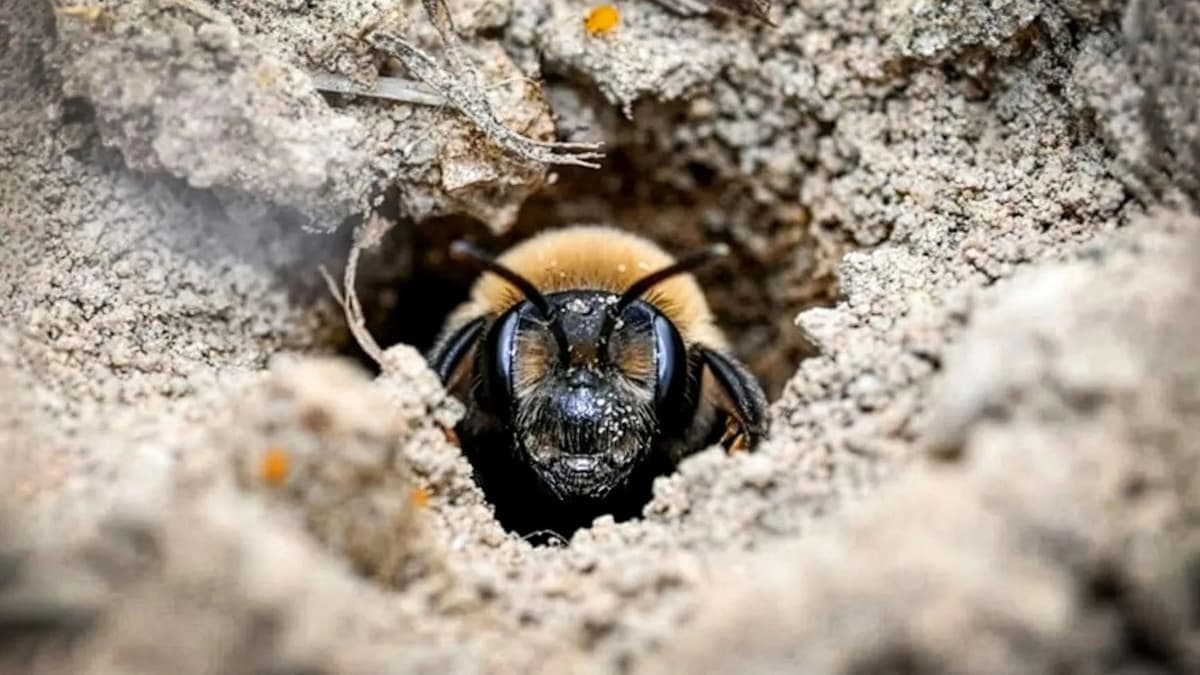
Millions of Bees Have Thrived Under a New York Cemetery for More Than a Century
Why It Matters
The finding proves that modest, pesticide‑free green spaces can sustain massive pollinator populations, directly supporting regional agriculture and informing urban conservation strategies.
Key Takeaways
- •5.5 million Andrena regularis bees occupy 1.25 acres
- •Colony equals over 200 typical honey‑bee hives
- •Bees emerge early, syncing with apple orchard bloom
- •Cemetery soil offers pesticide‑free, diggable habitat
- •Citizen‑science initiative seeks worldwide underground bee reports
Pulse Analysis
The discovery at East Lawn Cemetery illustrates how overlooked urban parcels can become thriving pollinator sanctuaries. Researchers placed ten tiny net traps across a 1.25‑acre plot and extrapolated a staggering 5.5 million bees, a density comparable to more than two hundred commercial honey‑bee hives. Such numbers are rare for solitary, ground‑nesting species, positioning the cemetery as a benchmark for urban biodiversity studies and prompting city planners to reconsider the ecological value of historic green spaces.
Andrena regularis, often called the miner bee, follows a life cycle finely tuned to the regional climate. Males surface a few days before females in early April, maximizing mating chances, while females immediately begin excavating tunnels and provisioning cells with pollen and nectar. This early activity aligns precisely with the flowering of apple trees in Cornell’s orchards, delivering essential pollination services that boost fruit yields. The study also recorded parasitic interactions with Nomada imbricata, revealing a complex underground ecosystem that mirrors natural meadow dynamics.
Beyond academic interest, the findings have concrete conservation implications. With 75 percent of wild bees being solitary ground‑nesters, preserving sandy, pesticide‑free soils becomes a priority. The authors have launched a global citizen‑science platform encouraging the public to report similar underground colonies, aiming to map and protect these hidden hotspots before development projects disturb them. By integrating such data into urban planning, municipalities can safeguard pollinator corridors, enhance food security, and reinforce the ecological resilience of cities worldwide.
Millions of Bees Have Thrived Under a New York Cemetery for More Than a Century
Comments
Want to join the conversation?
Loading comments...