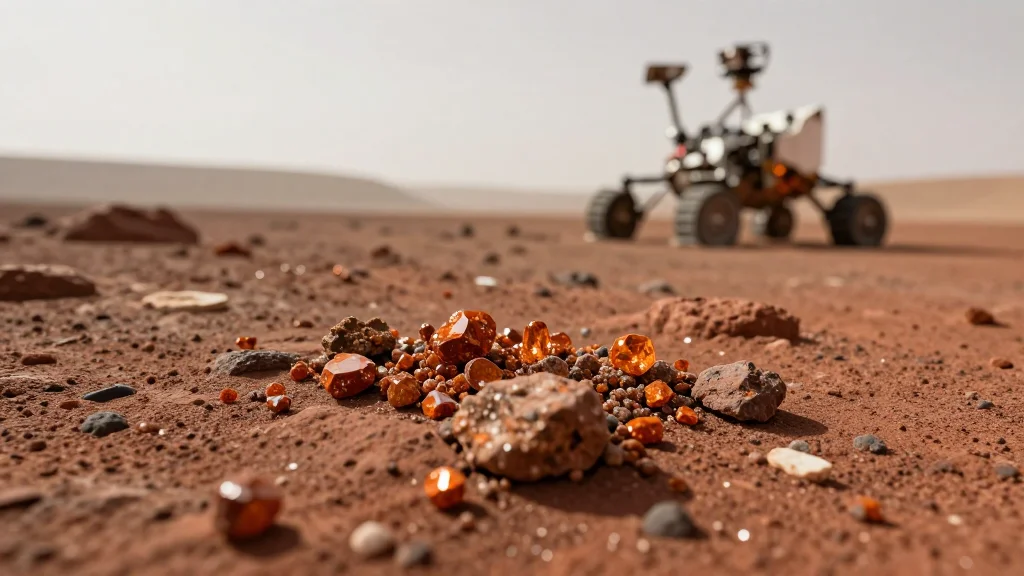
Mineral Clues in Gale Crater Track Ancient Mars Climate Change
Why It Matters
The study offers concrete, sample‑based proof that Mars hosted extended periods of warm, wet environments, reshaping timelines for habitability and guiding future exploration strategies.
Key Takeaways
- •Hematite crystallite size varies with elevation in Gale Crater.
- •Larger crystals up to 65 nm indicate warm, wet conditions for ~4.7 Myr.
- •Goethite appears only in higher layers, absent in deeper samples.
- •CheMin X‑ray diffraction reveals crystal size, a new Mars climate marker.
- •Study suggests subsurface aquifers persisted for millions of years, potentially habitable.
Pulse Analysis
Understanding Mars' ancient climate has long depended on orbital imagery and sedimentary structures that hint at past rivers and lakes. While those clues outline a broad narrative, they lack the temporal precision needed to pinpoint when water was abundant. Mineralogical markers—specifically iron oxides like hematite—offer a finer lens because their crystal growth responds directly to temperature, pH, and water availability. By focusing on the microscopic properties of these minerals, scientists can translate rock chemistry into a climate timeline, adding depth to the planet’s environmental story.
Curiosity’s Chemistry and Mineralogy (CheMin) instrument performed X‑ray diffraction on powdered rock from 20 drill sites spanning Gale Crater’s vertical profile. The analysis showed hematite crystals less than 10 nanometers high in upper layers, while deeper samples hosted crystals up to 65 nanometers. Concurrently, goethite—a mineral that forms under neutral‑to‑alkaline, warm water—was detected only at higher elevations. This dual pattern signals that the lower strata experienced sustained, warmer groundwater, likely persisting for up to 4.7 million years, whereas the upper layers endured colder, transient wet periods. The process of Ostwald ripening explains the growth of larger crystals in the long‑lasting aquifers.
These insights have immediate implications for astrobiology and mission planning. Demonstrating that habitable conditions could endure for millions of years beneath the surface expands the window for potential microbial life, guiding where future rovers or sample‑return missions should dig. Moreover, the methodology—using mineral crystallite size as a climate proxy—can be applied to other Martian locales and even to extraterrestrial bodies where in‑situ analysis is possible. As NASA and international partners chart the next steps toward human exploration, such granular climate reconstructions will be essential for assessing resource availability and environmental risks.
Mineral clues in Gale Crater track ancient Mars climate change
Comments
Want to join the conversation?
Loading comments...