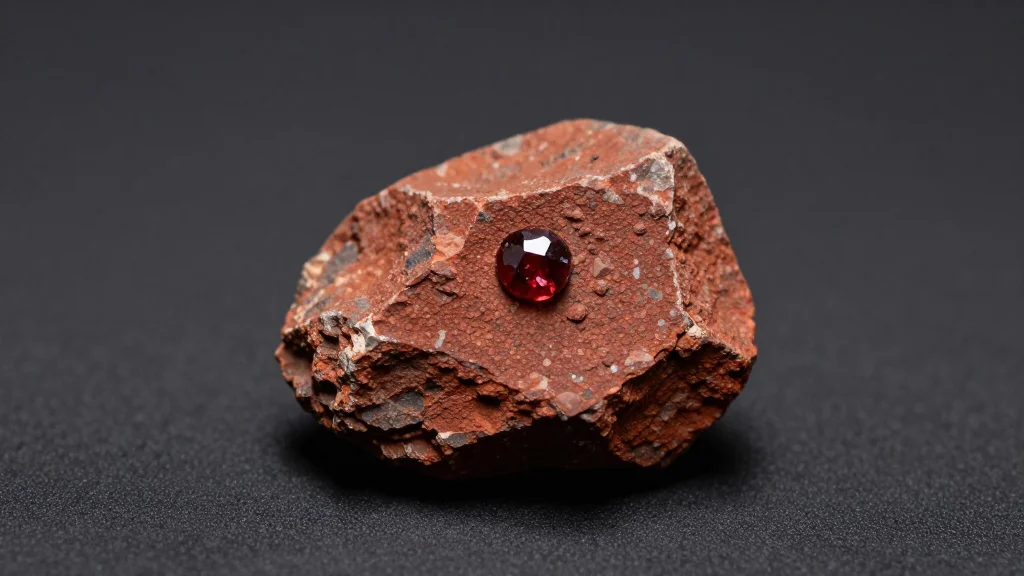
Mineral Garnet Discovered in Mars Meteorite May Reveal How the Red Planet Evolved Billions of Years Ago
Why It Matters
Garnet’s presence could rewrite models of Mars’ thermal and tectonic history, influencing future exploration strategies and our understanding of planetary metamorphism.
Key Takeaways
- •First garnet identified in a Martian meteorite fragment
- •Garnet suggests past high‑pressure, high‑temperature events on Mars
- •Origin remains ambiguous: in‑situ formation or delivered by impact
- •Isotopic analysis needed to confirm Martian versus extraterrestrial source
- •Study may expand known Martian lithologic diversity and guide rover missions
Pulse Analysis
The detection of garnet inside the NWA 8171 Martian meteorite marks the first confirmed occurrence of this metamorphic mineral on the Red Planet. Garnet’s crystal chemistry records the pressure‑temperature conditions under which it formed, offering a rare window into processes that have long been invisible in Martian basalts and volcanic rocks. The find emerged from a collaborative analysis that combined high‑resolution electron microscopy at the University of Portsmouth with laser‑based mineralogy at the Royal Ontario Museum, underscoring the value of cross‑institutional expertise in planetary science.
On Earth, garnet typically forms during metamorphism when rocks experience intense heat, pressure, or fluid infiltration. Translating that framework to Mars raises two plausible scenarios: the mineral could have crystallized in situ during a localized impact‑driven metamorphic event, or it may have been introduced by an extraterrestrial projectile that itself contained garnet‑bearing material. Distinguishing between these origins hinges on oxygen‑isotope ratios, which differ systematically between Martian and non‑Martian reservoirs. However, the sample’s rarity limits destructive testing, prompting researchers to explore non‑invasive spectroscopic techniques as a compromise.
The garnet discovery expands Mars’ known lithologic palette beyond the basaltic and sedimentary units sampled by rovers, hinting at a more complex thermal history. If confirmed as native to Mars, it would imply that the planet experienced episodic high‑pressure events capable of driving metamorphism, reshaping models of crustal evolution and volatile cycling. Conversely, an exogenic origin would provide direct evidence of material exchange between planetary bodies in the early Solar System. Either outcome will inform the selection of future landing sites and the design of instruments aimed at probing mineralogical signatures on the Martian surface.
Mineral garnet discovered in Mars meteorite may reveal how the red planet evolved billions of years ago
Comments
Want to join the conversation?
Loading comments...