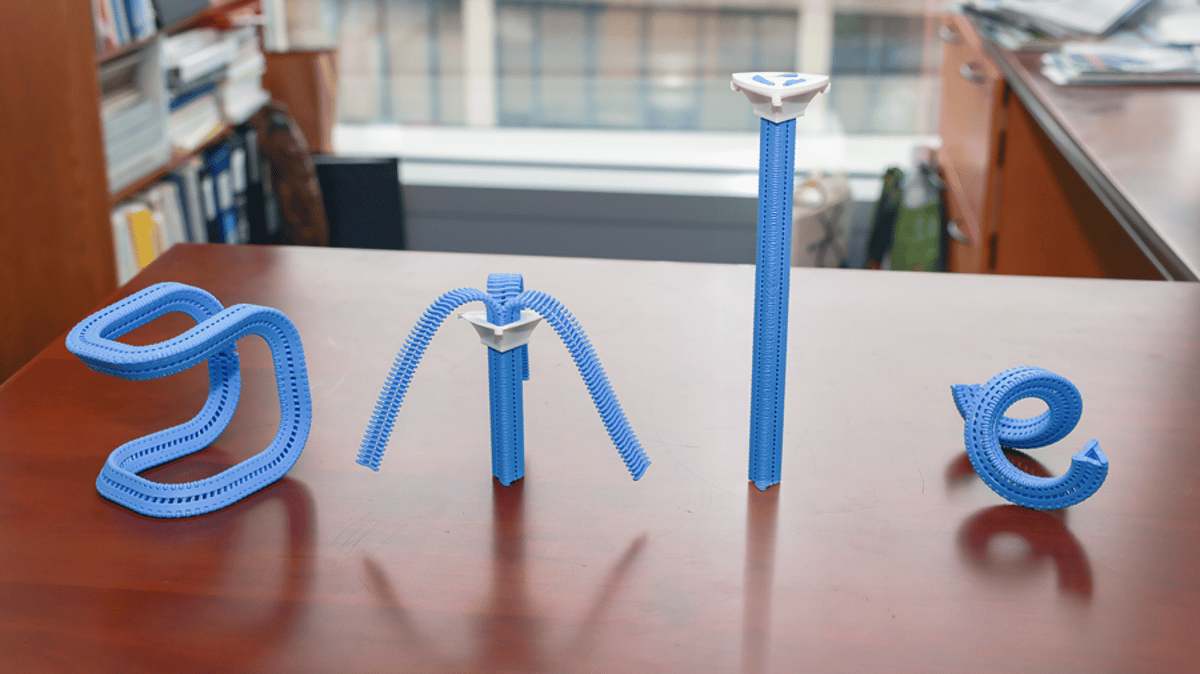
MIT Researchers Revive 40-Year-Old Triangular Zipper Concept Now Made Possible by 3D Printing, Creates Shape-Shifting Robots and Deployable Structures — 3D-Printed 'Y-Zipper' Turns Floppy Tentacles Into Rigid Beams in Seconds
Why It Matters
The Y‑Zipper provides a fast, reversible transition between soft and stiff states, addressing a core limitation in soft robotics and deployable architecture and enabling quicker, adaptable field solutions.
Key Takeaways
- •3‑arm triangular zipper creates rigid beams from flexible polymers instantly
- •Setup time for a tent dropped from six minutes to 1 min 20 sec
- •Demonstrated 18,000 zip‑unzip cycles without failure
- •Enables adjustable robot limbs and re‑tightening wrist casts
- •Future versions could use metal for aerospace deployable structures
Pulse Analysis
The Y‑Zipper illustrates how modern additive manufacturing can resurrect dormant engineering concepts. By exploiting the inherent rigidity of triangles, the 3‑D‑printed arms lock into a load‑bearing tube the moment a custom slider closes. This simple geometric principle, paired with computational design tools, overcomes the material and fabrication constraints that stalled the original 1985 patent, turning a theoretical fast‑assembly device into a practical, repeatable mechanism.
Beyond the novelty of instant stiffening, the Y‑Zipper opens new pathways for soft‑robotics, emergency shelters, and medical supports. A quadruped robot can adjust limb length and stiffness on the fly, improving terrain adaptability, while a tent frame snaps into place in under two minutes, dramatically cutting deployment time for disaster relief. The adjustable wrist‑cast prototype shows how patient comfort and support can be balanced without separate devices, hinting at broader healthcare applications.
Looking ahead, scaling the design with higher‑strength polymers or metal alloys could enable deployable aerospace structures, such as satellite antennas that unfold in orbit, or robotic grippers that transition from compliant to rigid for sample collection on other planets. The durability demonstrated—roughly 18,000 cycles—suggests a long service life, making the technology attractive to manufacturers seeking modular, reconfigurable components. As 3‑D‑printing costs decline and material libraries expand, the Y‑Zipper may become a staple in industries where rapid, reversible assembly is a competitive advantage.
MIT researchers revive 40-year-old triangular zipper concept now made possible by 3D printing, creates shape-shifting robots and deployable structures — 3D-printed 'Y-Zipper' turns floppy tentacles into rigid beams in seconds
Comments
Want to join the conversation?
Loading comments...