MIT Study Reveals How CO2 Injection Strengthens Cement
Why It Matters
The discovery provides a clear chemical pathway to enhance cement performance while sequestering CO₂, offering the construction sector a viable route to reduce emissions without sacrificing strength.
Key Takeaways
- •CO₂ injection adds 13% compressive strength in 24 hours
- •Raman spectroscopy revealed transient silica gel drives C‑S‑H uniformity
- •Calcium carbonate particles are not primary strength contributors
- •Findings could accelerate low‑carbon cement commercialization
Pulse Analysis
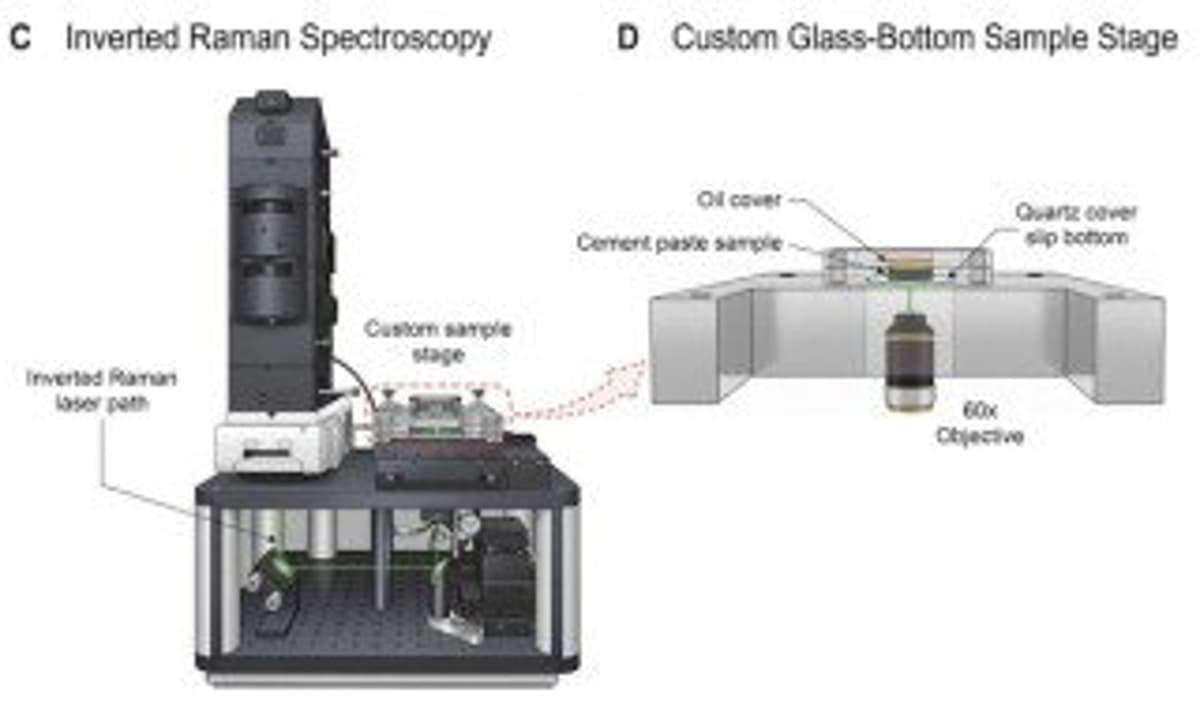
Carbon‑intensive cement production accounts for roughly 8% of global CO₂ emissions, prompting researchers to explore ways to embed carbon directly into concrete. MIT’s latest study, conducted with CarbonCure Technologies, confirms that a modest CO₂ dosage—just one percent of the cement’s weight—can deliver a measurable 13% strength increase within a day. By leveraging Raman spectroscopy, the team captured the rapid chemical shifts that occur when CO₂ meets fresh cement, offering a rare glimpse into the early hydration phase that traditional testing often overlooks.
The crux of the breakthrough lies in the formation of a fleeting silica gel network. After CO₂ reacts with liberated calcium to produce calcium carbonate, the mixture temporarily reorganizes, generating silica gel that guides the subsequent growth of calcium‑silicate‑hydrate (C‑S‑H), the primary binding phase in concrete. This more uniform C‑S‑H distribution, rather than the presence of calcium carbonate particles, is responsible for the observed strength gains. The nuanced understanding challenges earlier assumptions and opens the door to engineering cement mixes that deliberately harness this transient phase for performance benefits.
For the construction industry, the implications are twofold. First, integrating CO₂ curing can simultaneously cut the carbon footprint of concrete and enhance its mechanical properties, aligning with sustainability targets and regulatory pressures. Second, the mechanistic insight equips manufacturers with a scientific basis to optimize dosing, timing, and curing conditions, potentially accelerating the rollout of low‑carbon concrete products. As carbon‑mineralisation technologies move from pilot projects to mainstream adoption, studies like MIT’s provide the empirical foundation needed to standardize practices, improve durability, and ultimately reshape the economics of greener building materials.
MIT study reveals how CO2 injection strengthens cement
Comments
Want to join the conversation?
Loading comments...