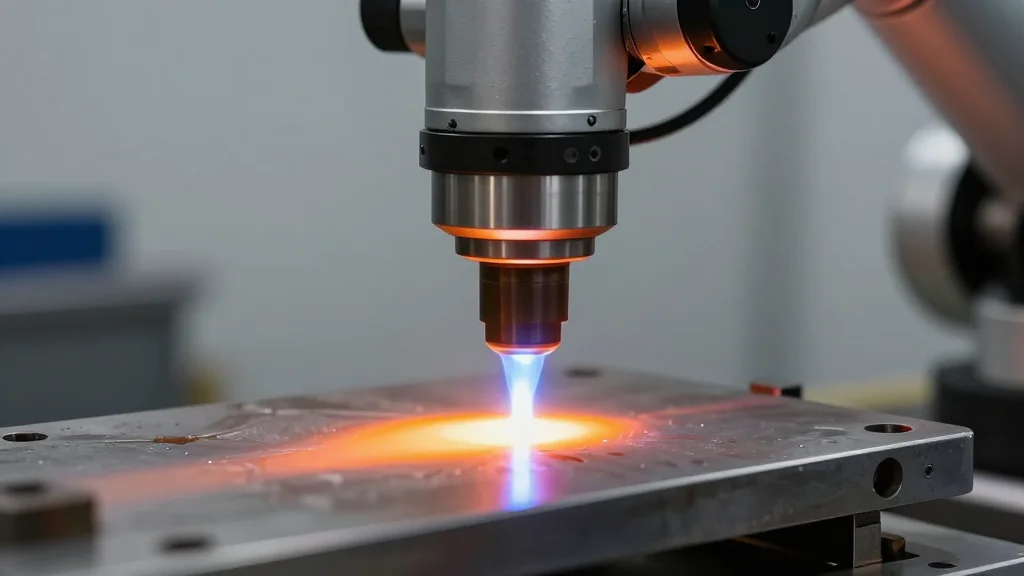
Modeling and Prediction of Laser Cladding Layer Morphology with Deep Learning
Why It Matters
Accurate, rapid prediction of cladding defects enables manufacturers to cut scrap, reduce downtime, and optimize laser parameters, accelerating adoption of laser cladding across high‑value industries.
Key Takeaways
- •ESFM model uses EfficientNetV2 with ShuffleNetV2 channel shuffle
- •Trained on augmented molten‑pool image dataset for cladding quality
- •Achieves 96% classification accuracy with rapid convergence
- •Provides real‑time prediction to reduce defective laser‑clad parts
- •Enables data‑driven process optimization for additive manufacturing
Pulse Analysis
Laser cladding is a key additive‑manufacturing technique for repairing or building metal components, yet the process is highly sensitive to parameters such as laser power, scan speed, and powder feed rate. Small deviations can produce porosity, cracks, or uneven geometry, leading to costly rework. Traditionally, quality assessment relies on post‑process inspection, which delays feedback and limits throughput. Integrating artificial intelligence into the production line promises real‑time insight, allowing operators to adjust settings on the fly and maintain consistent layer morphology.
The research team introduced an Efficient‑Scale Fusion‑Module (ESFM) network that builds on EfficientNetV2, a state‑of‑the‑art convolutional architecture. By embedding ShuffleNetV2’s channel‑shuffle operation into the MBConv and Fused‑MBConv blocks, the model reduces computational overhead while preserving feature diversity. A curated dataset of over 10,000 molten‑pool images was augmented through rotation, scaling, and contrast adjustments to improve robustness. Training on this dataset yielded a 96 % classification accuracy for distinguishing high‑quality versus defective cladding layers, with convergence achieved in fewer epochs than baseline models.
Such predictive capability can transform laser‑cladding workflows by delivering near‑instant quality flags, cutting scrap rates and shortening cycle times. Manufacturers can embed the ESFM model into edge devices or cloud‑based monitoring systems, enabling closed‑loop control that automatically tunes laser parameters. Beyond immediate cost savings, the approach accelerates research into new alloy compositions and complex geometries, fostering broader adoption of additive manufacturing in aerospace, automotive, and energy sectors. Continued refinement of data pipelines and model interpretability will further solidify AI’s role in metal‑based additive processes.
Modeling and Prediction of Laser Cladding Layer Morphology with Deep Learning
Comments
Want to join the conversation?
Loading comments...