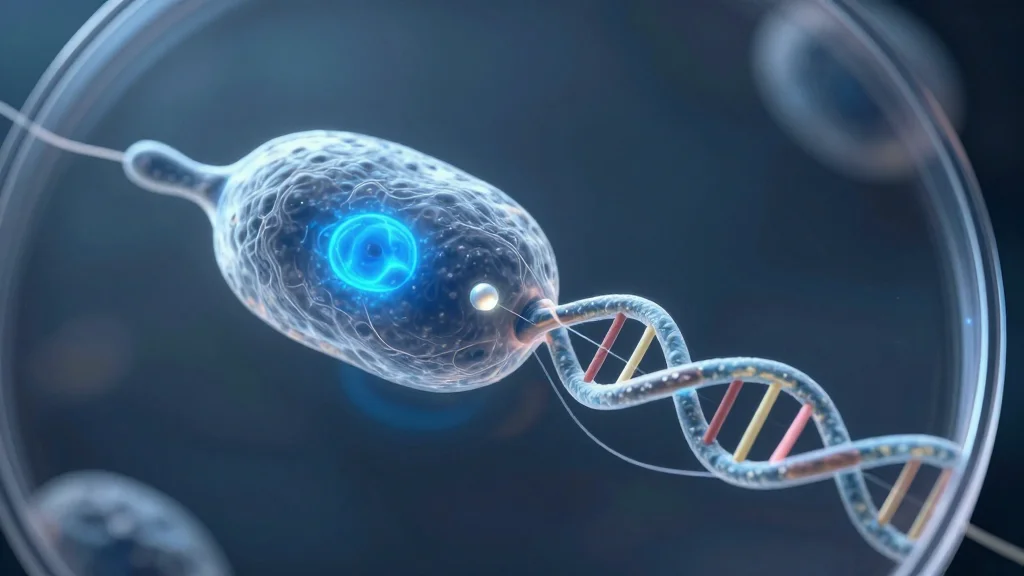
Molecular 'Leash' Measures Force-Sensing Protein Activation at About 15 Piconewtons
Why It Matters
Quantifying Piezo1’s activation force clarifies cellular mechanotransduction and opens pathways for targeted mechanotherapy and smart biomaterials.
Key Takeaways
- •DNA tether applies calibrated piconewton forces to Piezo1
- •Activation threshold measured at ~15 piconewtons
- •Demonstrates force‑from‑filament activation, independent of membrane stretch
- •Platform adaptable to other mechanosensitive proteins
- •Enables precise study of cellular mechanosensing for therapies
Pulse Analysis
Mechanosensitive ion channels like Piezo1 are central to how cells interpret physical cues, influencing processes from vascular tone to stem‑cell differentiation. Historically, researchers inferred activation thresholds indirectly, often confounding membrane tension with protein‑specific forces. This ambiguity limited the design of drugs that modulate mechanosensing pathways and hampered the engineering of responsive biomaterials.
The NUS team’s DNA‑tethered “leash” resolves these challenges by anchoring a bead to a genetically engineered Piezo1 via a short DNA strand. By varying suction pressure, the system delivers forces in the 1‑20 pN range with nanometer‑scale accuracy while a fused GCaMP reporter records calcium influx instantly. The approach isolates the protein from membrane curvature effects, delivering the first direct measurement that Piezo1 opens at roughly 15 pN. Such precision surpasses traditional patch‑clamp or substrate‑stretch techniques, offering reproducible, reversible activation at the single‑molecule level.
Beyond Piezo1, this methodology establishes a versatile platform for probing any force‑sensitive protein, from integrins to bacterial mechanosensors. Researchers can now map force‑response curves, identify therapeutic windows, and design synthetic matrices that deliver calibrated mechanical cues to cells. In the long term, the ability to quantify and manipulate mechanotransduction at piconewton resolution could accelerate the development of mechanopharmacology, improve tissue‑engineered constructs, and deepen our understanding of disease states where mechanical signaling goes awry.
Molecular 'leash' measures force-sensing protein activation at about 15 piconewtons
Comments
Want to join the conversation?
Loading comments...