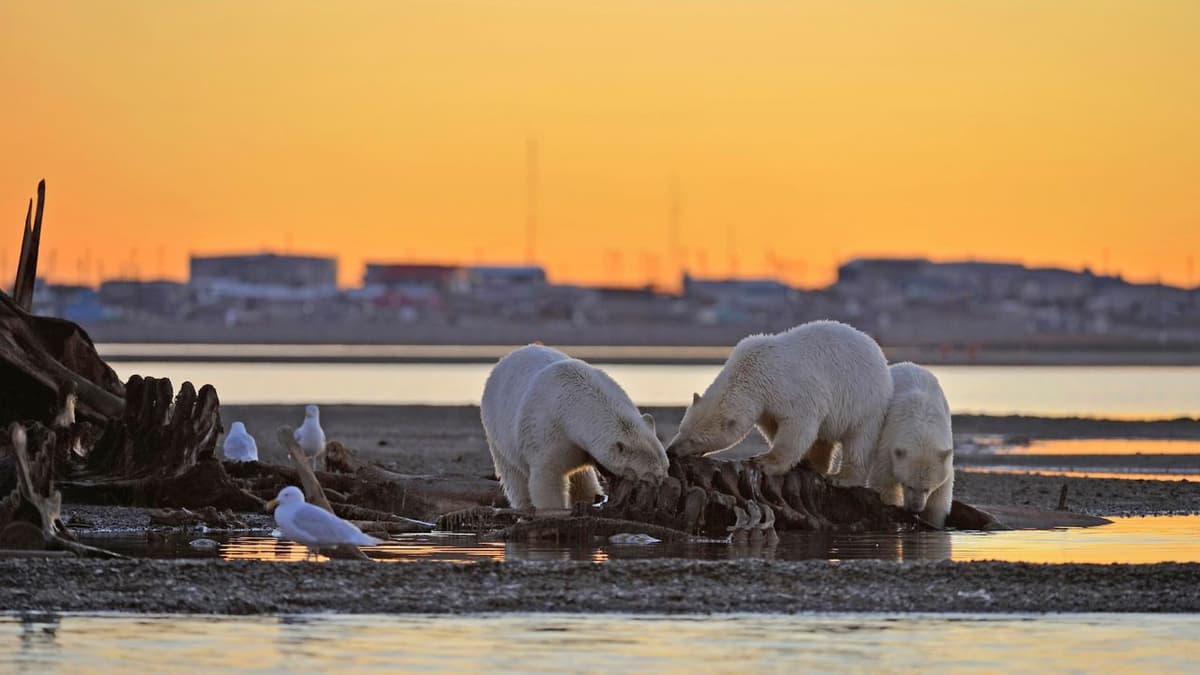
More Polar Bears Are Approaching Human Sites as the Climate Warms, and It's Not Just the Skinny Ones
Why It Matters
As Arctic sea ice continues to recede, more polar bears are venturing onto shore, raising the probability of dangerous encounters with people. Understanding that climate‑driven habitat loss—not hunger—spurs these visits reshapes mitigation strategies for communities and park managers.
Key Takeaways
- •580 bear visits recorded between 2011‑2021 via trail cameras.
- •Longer ice‑free season linked to more frequent camp visits.
- •Human presence at camps did not affect bear visitation rates.
- •Both healthy and underweight bears approached sites at similar rates.
- •Body condition may influence aggression, not encounter likelihood.
Pulse Analysis
Arctic warming is eroding the sea‑ice platform that polar bears depend on for hunting seals, forcing an increasing number of individuals onto the tundra shoreline. The study conducted by researchers in Manitoba’s Wapusk National Park deployed trail cameras at three remote field camps and the Churchill Northern Studies Centre, capturing 580 bear appearances over a ten‑year span. Seasonal analysis revealed that years with extended ice‑free periods saw a proportional rise in bear visits, underscoring a direct link between habitat loss and human‑bear overlap.
Prevailing narratives have long tied polar‑bear aggression to nutritional stress, suggesting that thinner bears are more likely to attack humans in search of food. However, the camera data contradict this view: bears of all body conditions approached the camps at comparable frequencies. What the research does highlight is a nuanced risk profile—while body condition does not dictate encounter likelihood, it may affect the severity of an interaction, with underweight bears potentially more prone to aggressive behavior once contact occurs. This distinction is critical for wildlife managers who must differentiate between preventing visits and de‑escalating encounters.
For policymakers and Indigenous communities alike, the implications are clear: mitigation efforts should prioritize adapting to longer ice‑free seasons rather than solely focusing on bear hunger. Strategies may include reinforcing camp perimeters, improving waste management, and integrating traditional ecological knowledge that has long warned of shifting bear behavior. Continued monitoring and collaborative research will be essential to develop flexible, climate‑responsive policies that protect both human safety and polar‑bear conservation as the Arctic environment transforms.
More polar bears are approaching human sites as the climate warms, and it's not just the skinny ones
Comments
Want to join the conversation?
Loading comments...