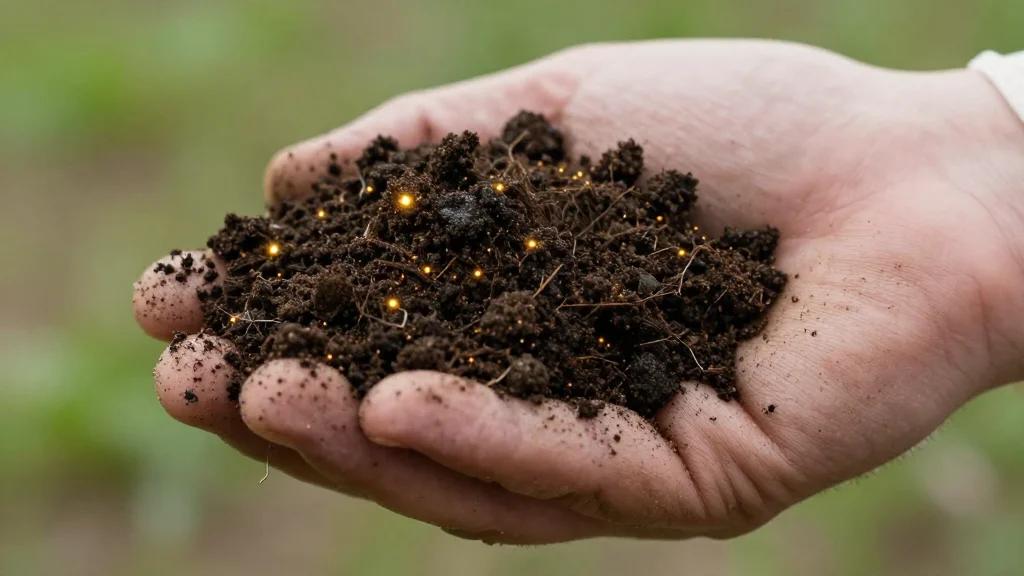
More Sustainable Agriculture: Recycled Fertilizers Could Be Part of the Solution
Why It Matters
The research offers a pathway to reduce dependence on finite mined phosphorus, lowering fertilizer costs and environmental impact while supporting circular agriculture. Tailored use of recycled fertilizers can boost crop yields on diverse soils, accelerating the transition to greener food production.
Key Takeaways
- •Sewage sludge fertilizers increase phosphorus availability over time
- •Phosphorus mobility varies with soil type and recycled source
- •Synchrotron analysis reveals precise phosphorus forms in soils
- •One-size-fits-all fertilizer strategies are ineffective for recycled inputs
- •Findings guide tailored application timing for sustainable agriculture
Pulse Analysis
Phosphorus scarcity is a looming challenge for global food security, as the mineral that fuels plant growth is sourced from non‑renewable rock deposits. Traditional fertilizers rely on mining phosphate rock, a process linked to geopolitical risk and ecological degradation. By turning waste streams—sewage sludge, ash, and animal by‑products—into nutrient‑rich amendments, the agricultural sector can close the loop, conserve natural resources, and cut greenhouse‑gas emissions associated with mining and transport.
The recent study leveraged the high‑resolution capabilities of the Canadian Light Source synchrotron to dissect the chemical speciation of phosphorus in recycled fertilizers and track its movement through varied soil matrices. Unlike conventional mineral phosphorus, which tends to immobilize over time, certain recycled forms, especially those derived from sewage sludge, demonstrated increasing solubility and deeper soil penetration. This enhanced mobility can improve root uptake, but the effect is highly contingent on soil texture, pH, and organic matter content, underscoring the need for site‑specific management.
For agribusinesses and policymakers, these insights signal a shift toward precision fertilization strategies that match recycled nutrient sources with compatible soils and optimal timing. Adoption could lower input costs, reduce reliance on imported phosphate rock, and meet sustainability targets demanded by consumers and regulators. Future field trials will be crucial to translate laboratory findings into practical guidelines, paving the way for a more resilient, circular agricultural economy.
More sustainable agriculture: Recycled fertilizers could be part of the solution
Comments
Want to join the conversation?
Loading comments...