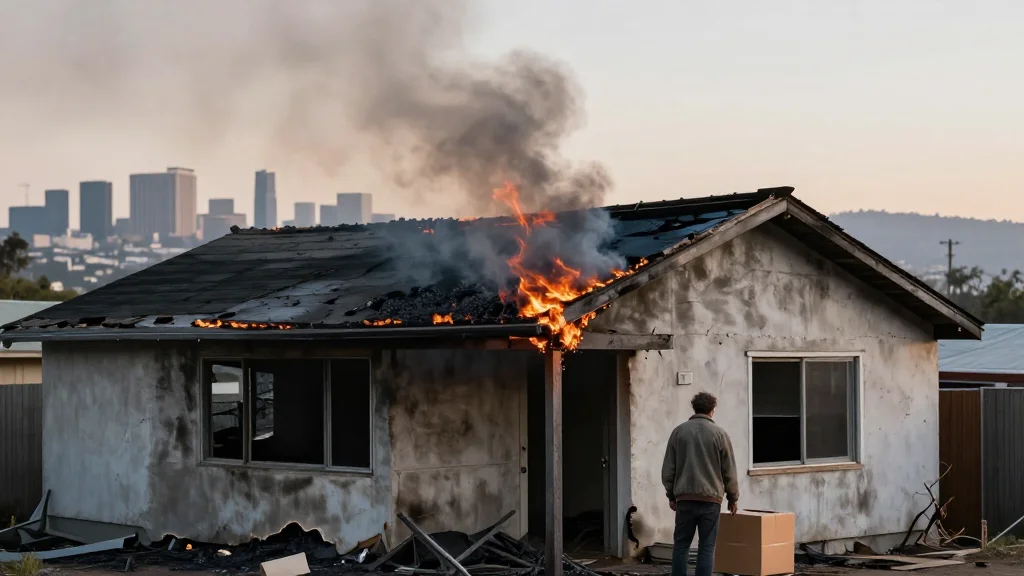
More than 200,000 Lost Their Homes in the L.A. County Fires. For People Already on the Streets, the Damage Ran Deeper
Why It Matters
The findings reveal homelessness as a predictable fallout of climate events, urging policymakers to integrate disaster planning with housing assistance to curb a growing public‑health crisis.
Key Takeaways
- •200,000 LA homes lost in Jan 2025 wildfires.
- •75% of unhoused surveyed reported injuries or major disruptions.
- •Each climate‑related home loss adds 1% homelessness per 10k people.
- •Eviction protections during COVID‑19 limited homelessness rise to 11% instead of 20%.
- •Disaster response gaps left unsheltered people without shelter, medical aid.
Pulse Analysis
The UCLA research series underscores a shifting paradigm: homelessness is no longer solely a chronic affordability issue but a climate‑sensitive risk. By quantifying the link between wildfire‑driven home loss and a measurable uptick in unhoused populations, the studies give policymakers a data‑driven rationale to embed housing resilience into disaster preparedness plans. This approach mirrors emerging trends in climate‑adaptation policy, where cities are urged to protect vulnerable residents before, during, and after extreme events.
Beyond the raw numbers, the research highlights systemic failures in emergency response. Outreach teams, libraries, and soup kitchens—critical lifelines for unsheltered individuals—often shut down or redirect resources during crises, leaving people exposed to injury, smoke inhalation, and loss of essential belongings. Mobile clinics and mutual‑aid networks proved vital in bridging these gaps, suggesting that scalable, community‑based health interventions could become a cornerstone of future disaster strategies. Integrating these services with official alert systems would improve information flow to those lacking conventional communication channels.
Policy implications extend to housing law and public health funding. The national study’s counterfactual shows that eviction moratoriums during the COVID‑19 pandemic mitigated what could have been a near‑20% surge in homelessness, illustrating the protective power of temporary rent relief. As climate events intensify, legislators may need to consider permanent, disaster‑triggered eviction safeguards, alongside targeted funding for rapid‑deployment shelters and portable housing units. Aligning climate mitigation with housing security could therefore reduce both immediate suffering and long‑term socioeconomic costs.
More than 200,000 lost their homes in the L.A. County fires. For people already on the streets, the damage ran deeper
Comments
Want to join the conversation?
Loading comments...