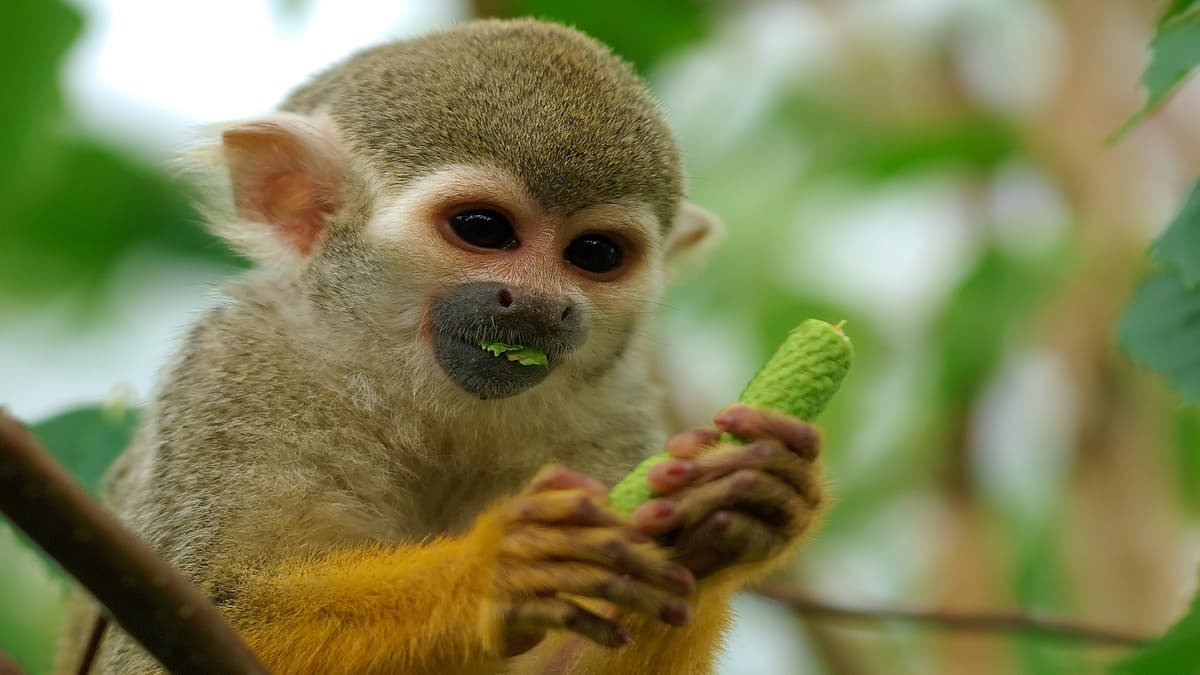
Most Wildlife AI Focuses on the Ground. This Model Looks up in the Trees
Why It Matters
By automating identification of arboreal species, TropiCam‑AI expands ecological data pipelines, enabling faster conservation decisions for canopy‑dependent fauna threatened by deforestation. The tool also reduces manual annotation costs for researchers handling millions of camera‑trap images.
Key Takeaways
- •TropiCam‑AI identifies 84 taxa, 63 species, with 95% overall accuracy.
- •Model fills gap for arboreal species in neotropical camera‑trap surveys.
- •Training data sourced from Brazil, Peru, Costa Rica, French Guiana, iNaturalist.
- •Researchers can receive genus‑level IDs when species certainty is low.
Pulse Analysis
The launch of TropiCam‑AI marks a pivotal shift in wildlife monitoring, addressing a blind spot that has long hampered canopy research. While AI‑driven camera‑trap analysis has streamlined ground‑based surveys, arboreal mammals and birds—key seed dispersers and ecosystem engineers—have remained under‑detected. By training on a diverse set of images from Brazil, Peru, Costa Rica, French Guiana and the expansive iNaturalist database, the model achieves 95% accuracy across 84 taxa, demonstrating that high‑resolution canopy data can be processed at scale.
Beyond raw performance, TropiCam‑AI introduces a nuanced confidence system that escalates to genus‑level predictions when species‑level certainty falls short. This approach mirrors best practices in medical imaging AI, where uncertainty is explicitly communicated to avoid false confidence. For conservation practitioners, the ability to rapidly sort millions of images into meaningful taxonomic groups accelerates habitat assessments, informs anti‑deforestation strategies, and supports funding proposals that require robust biodiversity metrics.
Looking ahead, the model’s open‑ended architecture invites continuous improvement through community‑sourced data. As more researchers contribute camera‑trap footage, especially from under‑represented regions, TropiCam‑AI can refine its classifiers and expand to additional arboreal taxa. The collaboration between academic institutions, NGOs, and citizen‑science platforms exemplifies a scalable pathway for AI‑enhanced ecology, positioning the tool as a cornerstone for next‑generation forest conservation initiatives.
Most wildlife AI focuses on the ground. This model looks up in the trees
Comments
Want to join the conversation?
Loading comments...