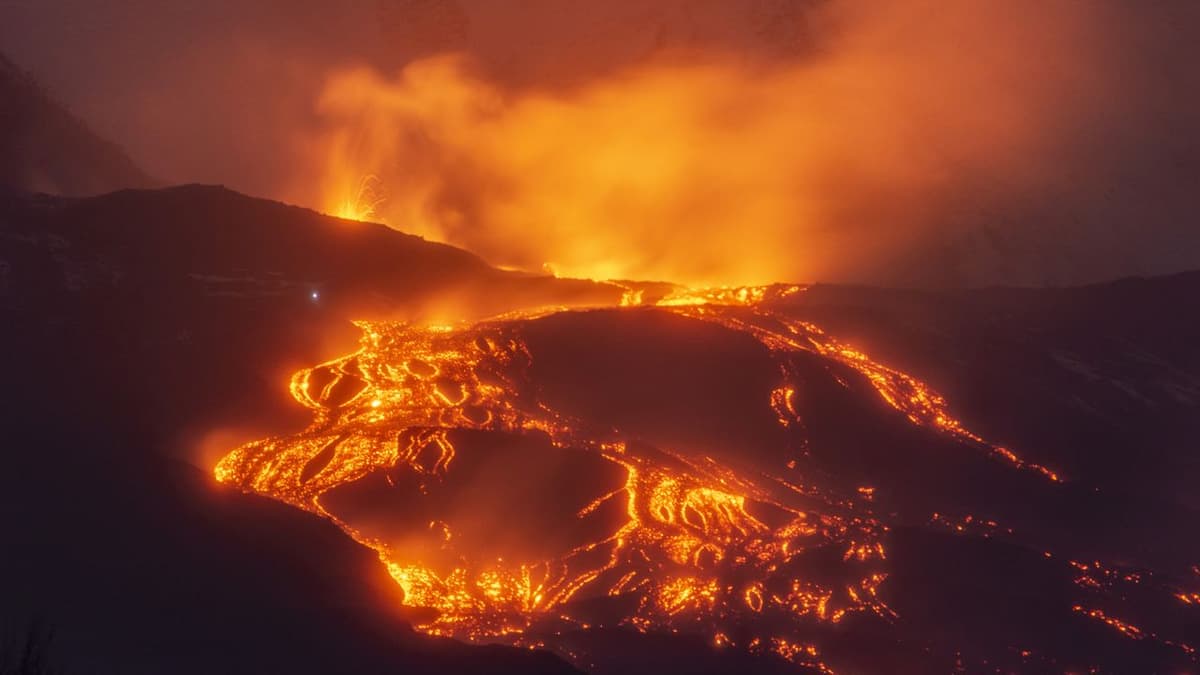
Mount Etna Is Like No Other Volcano on Earth, Representing 'a New Type of Volcanism,' New Research Reveals
Why It Matters
Etna’s atypical magma source challenges existing volcanic classification and suggests that similar hidden pathways may affect eruption forecasts worldwide, impacting hazard planning and resource allocation.
Key Takeaways
- •Etna doesn't fit traditional volcano classifications
- •Lava originates from low‑velocity mantle zone
- •Tectonic folding creates conduit for magma ascent
- •Shift from silica‑rich to alkali‑rich eruptions recorded
- •Findings imply similar volcanism may exist globally
Pulse Analysis
Mount Etna’s recent re‑classification underscores a gap in the way geoscientists categorize volcanic systems. The long‑standing framework—mid‑ocean‑ridge, intraplate hotspot, and subduction‑zone—has guided everything from hazard modeling to resource exploration. Etna, perched on the complex boundary where the African plate slides beneath Eurasia, defies these categories, prompting researchers to propose a fourth, “leaking pipe” model. This fresh perspective forces a reassessment of how tectonic nuances can generate volcanic behavior that doesn’t conform to textbook examples, a shift that could ripple through academic curricula and industry risk assessments.
The study’s core finding is that Etna’s magma taps a low‑velocity zone—a shallow mantle layer rich in melt that normally remains trapped. Seismic data reveal slower wave speeds in this zone, indicating partial melting. Unique folding of the subducting slab creates fractures that act as conduits, allowing melt to breach the lithosphere. Early eruptions were silica‑rich, reflecting extensive interaction with continental crust, while later flows became alkali‑rich as the pathway shortened, delivering less‑modified mantle melt. This geochemical evolution provides a rare, continuous record of mantle‑crust dynamics.
If Etna exemplifies a broader, under‑recognized volcanic style, the implications are profound. Regions with similar tectonic complexities may host hidden low‑velocity zones capable of sporadic surface eruptions, complicating volcanic hazard maps that rely on traditional classifications. Moreover, understanding lithospheric control over magma ascent could improve eruption forecasting models, benefiting civil protection agencies and insurers. Future research will likely focus on identifying comparable low‑velocity zones worldwide, integrating high‑resolution seismic imaging with geochemical surveys to refine the emerging paradigm of “leaking‑pipe” volcanism.
Mount Etna is like no other volcano on Earth, representing 'a new type of volcanism,' new research reveals
Comments
Want to join the conversation?
Loading comments...