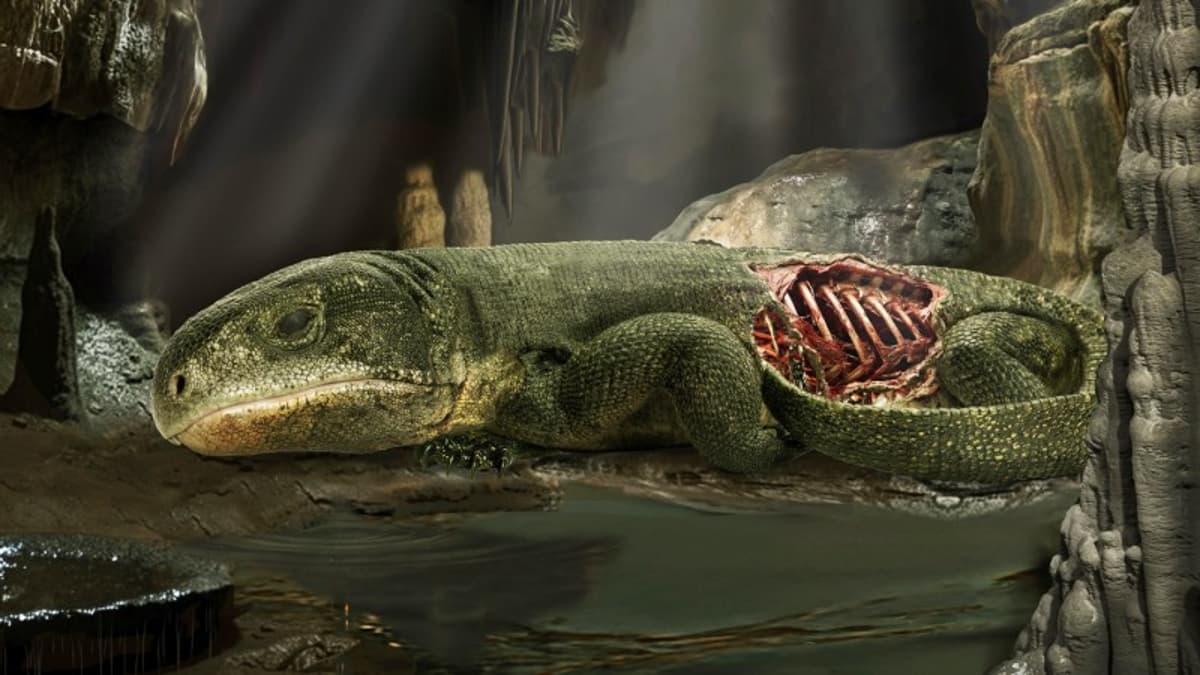
Mummified Reptile Hints at the Origins of How We Breathe
Why It Matters
The find pinpoints when chest‑driven breathing emerged in amniotes, reshaping our timeline of vertebrate physiological evolution and informing how modern respiratory systems originated.
Key Takeaways
- •Captorhinus fossils date to ~288 million years ago
- •Specimens preserve rib cage, cartilage, and protein remnants
- •Evidence shows early reptiles used chest‑muscle breathing
- •First fossil record of a flexible cartilaginous sternum
- •Findings narrow timing of amniote respiratory evolution
Pulse Analysis
The discovery of two exceptionally preserved Captorhinus specimens in an Oklahoma cave offers a rare glimpse into soft‑tissue anatomy from the early Permian. Unlike typical bone‑only fossils, these mummies retained cartilage, rib structures, and trace proteins, thanks to rapid mineral‑rich groundwater and crude oil infiltration. Researchers employed neutron computed tomography—a non‑destructive imaging technique—to map the three‑dimensional arrangement of the rib cage, sternum, and surrounding cartilage without disturbing the delicate matrix. This methodological breakthrough underscores how advanced imaging can unlock biological details previously thought lost to deep time.
Understanding how vertebrates transitioned from amphibian skin‑based respiration to a thoracic breathing apparatus has long been a puzzle. Early amphibians relied on jaw movements or skin diffusion, while modern reptiles, birds, and mammals pump air using coordinated chest muscles. The Captorhinus fossils reveal a fully formed, flexible cartilaginous sternum and rib articulation, confirming that chest‑muscle ventilation was already in place by roughly 288 million years ago—well before the rise of true dinosaurs. This pushes back the origin of the amniote respiratory system by tens of millions of years, filling a critical gap between primitive amphibian‑like breathing and the sophisticated diaphragmatic mechanics seen in mammals.
Beyond evolutionary intrigue, the findings have practical relevance for comparative physiology and biomedical research. By tracing the structural roots of thoracic breathing, scientists can better model the genetic and developmental pathways that produced the diaphragm and intercostal musculature in humans. The study also highlights the potential of fossilized soft tissues to inform modern medicine, such as understanding congenital rib or cartilage disorders. Future work will likely target additional Permian specimens and apply similar imaging techniques, promising further insights into the deep origins of the respiratory systems that sustain life today.
Mummified reptile hints at the origins of how we breathe
Comments
Want to join the conversation?
Loading comments...