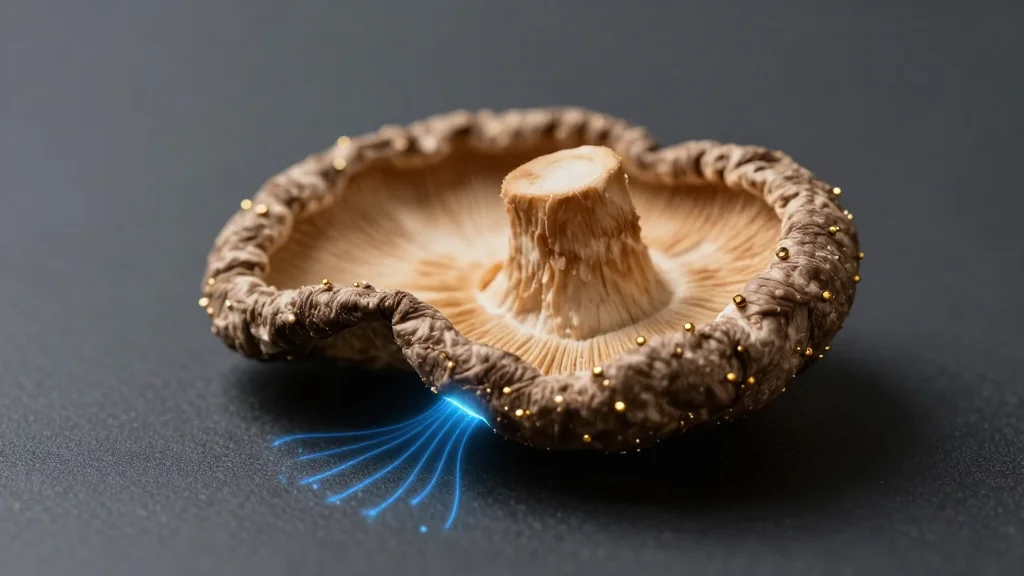
Mushroom Computer Chips Act as Fungal Memristors for Brain-Like Computing?
Key Takeaways
- •Mushroom memristors switch at 5,850 signals/sec with 90% accuracy
- •Dehydrated shiitake chips remain viable for months without power
- •Bio‑memristors cut rare‑earth use, lowering data‑center energy waste
- •Scaling fungal RAM could power edge devices and aerospace systems
- •Production can start from simple compost setups to industrial farms
Pulse Analysis
The emergence of fungal memristors marks a convergence of biology and electronics, offering a novel substrate for data storage that sidesteps the scarcity and toxicity of conventional semiconductor materials. By leveraging the natural conductivity of mycelium, researchers have created biodegradable memory elements that can be cultivated on a farm‑scale basis, dramatically shrinking the carbon footprint associated with chip fabrication. This bio‑first approach aligns with broader industry moves toward circular design and could accelerate the adoption of green computing standards across data‑center operations.
Performance metrics from the Ohio State study reveal that dehydrated mushroom chips can toggle between resistance states at nearly 6 kHz with 90% fidelity—rates comparable to early‑generation volatile RAM. While speed declines at higher frequencies, the modular nature of mycelial networks allows engineers to parallelize devices, mimicking the brain’s redundancy to maintain accuracy. Such characteristics make fungal memristors attractive for edge computing, where low‑power, high‑density memory is critical, as well as for aerospace applications that demand lightweight, radiation‑tolerant components.
Despite promising lab results, scaling fungal memristors to commercial volumes faces hurdles, including uniform cultivation, miniaturization of the biological substrate, and integration with existing silicon‑based architectures. Ongoing research aims to refine growth protocols, embed nanostructured electrodes, and develop hybrid bio‑silicon interfaces. If these challenges are overcome, the technology could unlock new markets for sustainable hardware, attract venture capital focused on eco‑tech, and prompt regulatory bodies to reconsider e‑waste standards. The involvement of the Honda Research Institute signals early industry validation, suggesting that bio‑electronics may soon transition from novelty to viable supply‑chain alternative.
Mushroom computer chips act as fungal memristors for brain-like computing?
Comments
Want to join the conversation?