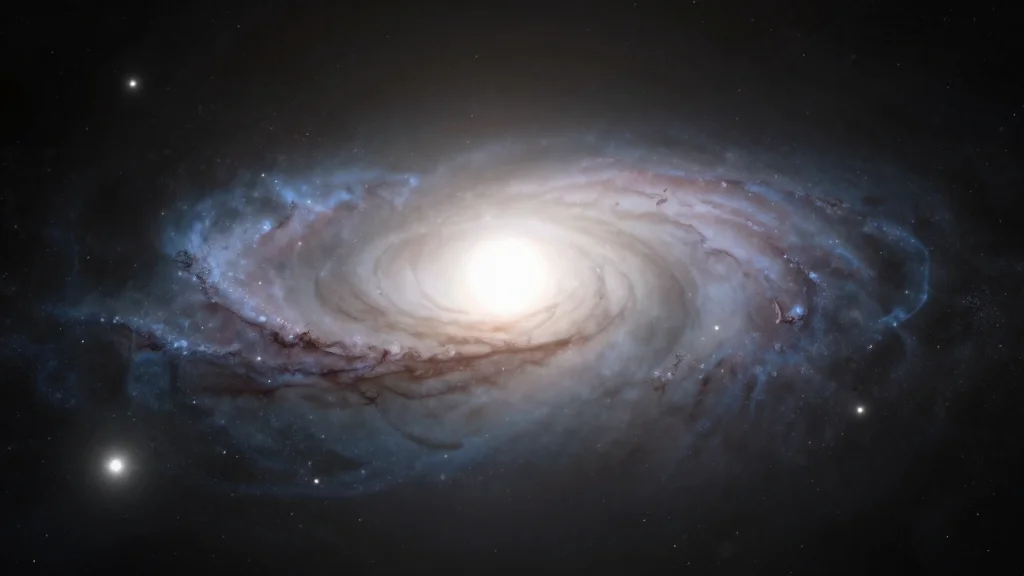
My, What Big Black Holes You Have: Tales From the Virgo Cluster
Why It Matters
These oversized black holes reshape our understanding of how environment influences black‑hole mass assembly, prompting revisions to galaxy‑formation models. The results offer a rare empirical test for theories linking dark‑matter halos, stellar bulges, and central black holes.
Key Takeaways
- •Virgo Cluster hosts black holes up to three times expected mass
- •Hubble and Chandra data confirmed unusually high X‑ray luminosities
- •Cluster density appears to boost black‑hole growth rates
- •Findings challenge existing black‑hole‑galaxy scaling laws
- •Provides calibration points for cosmological simulations
Pulse Analysis
The Virgo Cluster, the nearest massive galaxy cluster to the Milky Way, has long served as a natural laboratory for studying galaxy interactions and evolution. Recent observations by University of Michigan researchers have uncovered a surprising population of supermassive black holes that dwarf those predicted by conventional mass‑bulge relationships. By leveraging high‑resolution imaging from the Hubble Space Telescope and deep X‑ray surveys from Chandra, the team quantified black‑hole masses in several early‑type galaxies, revealing values that exceed the standard M‑sigma relation by up to threefold. This discovery underscores the unique role that dense, gravitationally bound environments play in funneling gas and stars toward galactic centers, accelerating black‑hole accretion.
Beyond the immediate astrophysical intrigue, these findings carry weight for broader cosmological models. Current simulations of galaxy formation often assume a relatively uniform black‑hole growth pathway, calibrated on field galaxies. The Virgo results compel modelers to incorporate environmental variables such as tidal stripping, galaxy harassment, and intracluster medium dynamics, which can dramatically alter feeding mechanisms. Adjusting these parameters could improve predictions of gravitational‑wave event rates and the distribution of active galactic nuclei across cosmic time.
Looking ahead, the research team plans to extend their survey to other nearby clusters, employing next‑generation observatories like the James Webb Space Telescope and the upcoming Athena X‑ray mission. By assembling a comparative catalog of black‑hole masses across varied cluster densities, scientists aim to refine the empirical scaling laws that underpin much of extragalactic astronomy. For industry stakeholders, the enhanced understanding of black‑hole demographics informs the design of future space‑based instruments and supports the growing market for high‑precision astrophysical data services. The Virgo Cluster’s oversized black holes thus represent both a scientific milestone and a catalyst for technological investment.
My, What Big Black Holes You Have: Tales from the Virgo Cluster
Comments
Want to join the conversation?
Loading comments...