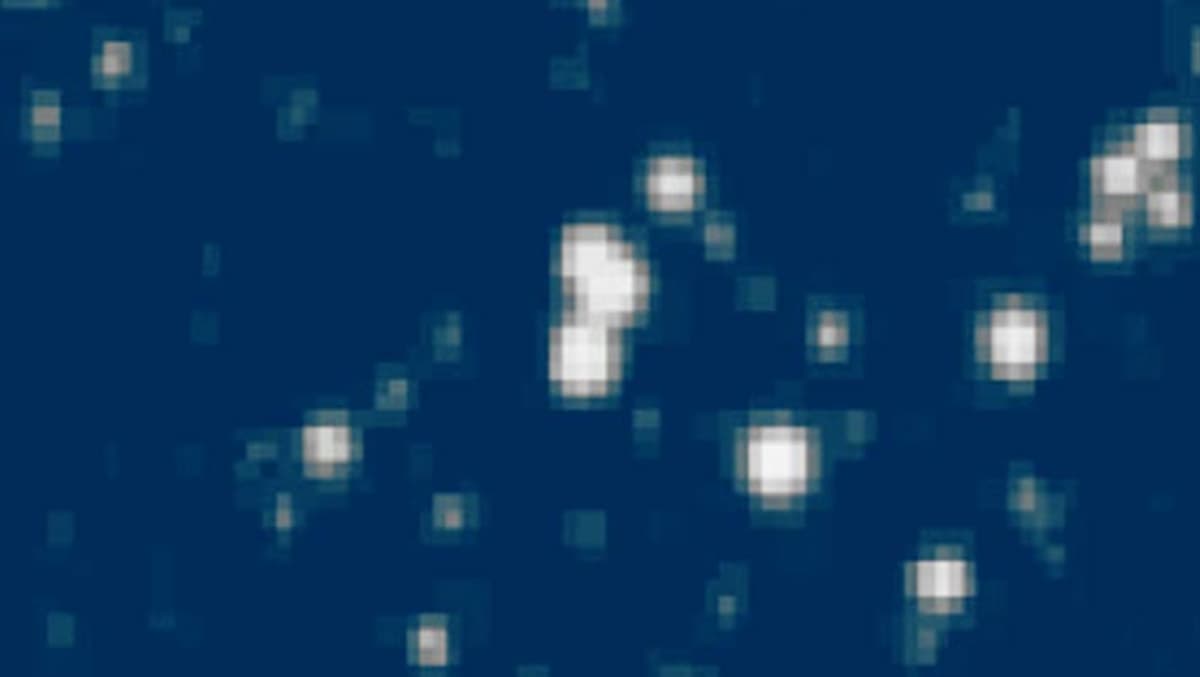
Mysterious Flashes in 1950s Skies Linked to Nuclear Tests and UAP Sightings: Study
Why It Matters
If the flashes are tied to nuclear testing or high‑altitude objects, they could reveal previously unrecognized atmospheric reactions or covert aerospace activities, reshaping security and scientific monitoring of the skies.
Key Takeaways
- •Transients appeared on 310 of 2,718 days (11.4%).
- •Transient likelihood rose 45% within a day of nuclear tests.
- •Day after a test saw a 68% increase in transient observations.
- •Each extra UAP report correlated with an 8.5% rise in transients.
- •Study suggests possible atmospheric or orbital phenomena linked to nuclear detonations.
Pulse Analysis
The VASCO (Vanishing and Appearing Sources during a Century of Observations) project revisited the first Palomar Observatory Sky Survey, digitizing plates taken before the space age. By applying modern image‑analysis algorithms to more than 100,000 short‑lived, point‑like sources, the team created a rare statistical baseline for mid‑20th‑century transient events. This baseline is valuable because it predates satellite surveillance, offering a glimpse into atmospheric and near‑space phenomena that modern instruments might miss or filter out as noise.
When the researchers overlaid the transient timeline with a catalog of 124 above‑ground nuclear detonations and thousands of UFOCAT UAP reports, clear patterns emerged. Transients were 45% more likely on days within a one‑day window of a test, with the strongest signal—a 68% spike—appearing the day after an explosion. Simultaneously, each additional UAP sighting on a given date nudged the transient count up by roughly 8.5%. While correlation does not prove causation, the magnitude of these associations exceeds random chance and challenges explanations that attribute the flashes solely to photographic artifacts or known astrophysical sources.
The implications are twofold. First, the findings hint at a possible atmospheric reaction to nuclear blasts, perhaps involving high‑energy particles or transient luminous events that have escaped detection in contemporary monitoring. Second, the overlap with UAP reports raises the specter of unidentified high‑altitude or orbital platforms that could be linked to defense testing or other classified programs. For policymakers and defense analysts, the study underscores the need for systematic, long‑term sky monitoring that integrates historical archives with modern sensor networks, potentially improving early‑warning capabilities and informing debates on the security ramifications of unexplained aerial phenomena.
Mysterious Flashes in 1950s Skies Linked to Nuclear Tests and UAP Sightings: Study
Comments
Want to join the conversation?
Loading comments...