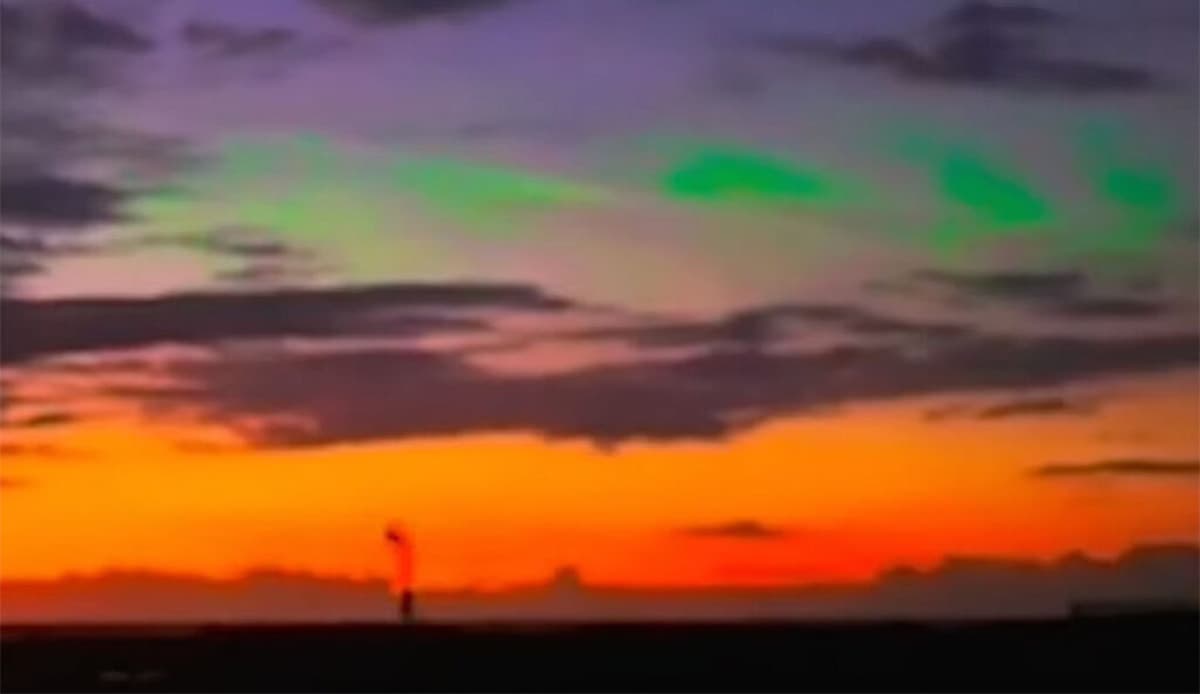
Mysterious Green Lights Over Hawaiian Evening Sky Are Baffling Astronomers
Why It Matters
The unexplained lights underscore gaps in atmospheric science, potentially affecting satellite monitoring and regional tourism that capitalizes on rare sky events.
Key Takeaways
- •Green lights observed over Kona on two consecutive evenings
- •Aurora unlikely; geomagnetic index was only 3-4
- •Researchers ruled out satellites, meteors, lasers, and green flash
- •Phenomenon remains unexplained, prompting further atmospheric study
- •Potential impact on tourism and local scientific interest
Pulse Analysis
The sudden appearance of green glows over Hawaii’s Kona coast has sparked curiosity far beyond amateur stargazing circles. While true auroras are typically confined to high‑latitude regions, occasional low‑latitude displays have been recorded when solar storms push the Earth’s magnetic field far enough south. In 2024, a modest aurora was documented over Hawaii during a K‑index of 6, but the recent sightings occurred at a much weaker K‑index of 3‑4, suggesting a different mechanism. Researchers are now examining atmospheric phenomena such as upper‑mesospheric sodium layers, ionospheric irregularities, or rare chemical reactions triggered by localized electric fields.
Beyond the scientific intrigue, the mystery carries practical implications for industries that rely on clear sky conditions. Satellite operators monitor atmospheric disturbances that can degrade signal quality, and an unexplained luminous event could hint at transient ionospheric turbulence affecting communications. Moreover, the tourism sector on the Big Island, which markets night‑time skywatching and eco‑adventures, may see a surge in interest if the lights become a repeatable attraction. Local businesses are already gauging the potential for guided viewing tours, merchandise, and media coverage, turning a scientific puzzle into an economic opportunity.
For policymakers and research institutions, the Kona lights serve as a reminder to invest in regional atmospheric monitoring infrastructure. Deploying all‑sky cameras, lidar stations, and magnetometers could provide real‑time data to differentiate between auroral activity, aircraft illumination, and novel optical phenomena. Such investments not only advance scientific knowledge but also bolster resilience against space weather impacts on navigation, power grids, and telecommunications. As the mystery unfolds, the intersection of curiosity, technology, and commerce will shape how Hawaii leverages its unexpected celestial showcase.
Mysterious Green Lights Over Hawaiian Evening Sky Are Baffling Astronomers
Comments
Want to join the conversation?
Loading comments...