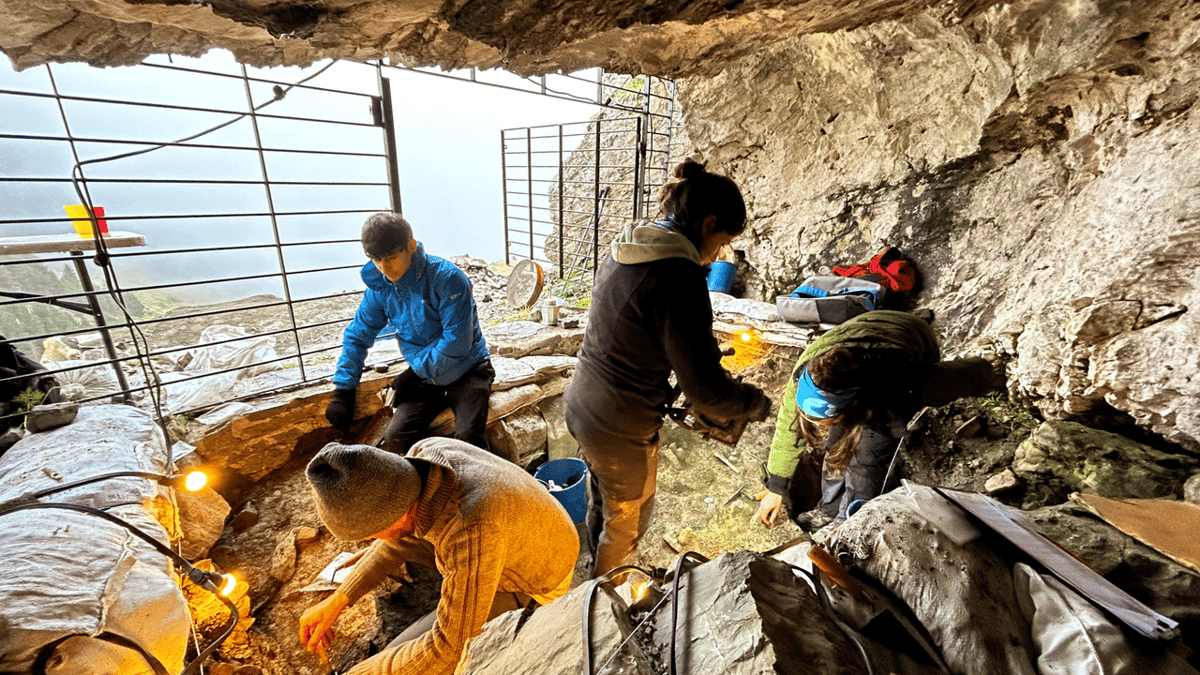
Mysterious Green Rocks in Pyrenees Cave Hint that Prehistoric People Were Working Copper There for 4,000 Years
Why It Matters
The find proves that prehistoric peoples organized complex, high‑altitude copper extraction long before the Iron Age, reshaping our understanding of early European metallurgy and settlement patterns. It highlights the strategic importance of mountain resources in shaping social networks and technological diffusion.
Key Takeaways
- •Malachite fragments indicate copper processing at 2,235 m altitude
- •Site used continuously for over 4,000 years, peak 3,600‑2,400 BC
- •Charcoal pits suggest deliberate smelting, not accidental fire
- •Personal ornaments reveal symbolic use alongside metal extraction
- •Findings reshape view of Pyrenees as peripheral to Copper Age societies
Pulse Analysis
The Copper Age, spanning roughly 5,000 to 2,000 BC, marked humanity's first large‑scale experiments with metal. While low‑land smelting sites have been documented across Europe, the Pyrenees cave introduces a new dimension: high‑altitude metallurgy. Malachite, a copper‑carbonate mineral prized for its vivid green hue, can be reduced to copper metal through a two‑step heating process that requires both fire and charcoal. The presence of nearly 200 thermally altered malachite shards, alongside dozens of combustion pits, provides concrete evidence that prehistoric groups deliberately transported fuel and expertise to 2,235 meters above sea level to extract copper, a logistical feat that underscores sophisticated planning and knowledge transmission across generations.
Beyond the technical achievement, the cave's assemblage of human remains, animal bones, and ornamental objects suggests a multifunctional site. The discovery of a clamshell pendant and a perforated bear tooth points to personal adornment practices intertwined with metalworking, while the burial of a baby tooth and finger bone hints at ritual or funerary use. Such a blend of economic and symbolic activities indicates that the cave was more than a raw‑material outpost; it was a cultural node where technology, identity, and perhaps ancestor veneration converged, reflecting complex social structures in prehistoric mountain communities.
The broader implications ripple through archaeological theory. By confirming sustained, intensive occupation of a remote mountain environment, the study forces a reevaluation of the Pyrenees' role in prehistoric trade routes and mobility strategies. It aligns with emerging evidence that ancient societies exploited diverse ecological niches, integrating high‑altitude resources into wider exchange networks. Ongoing excavations and forthcoming mineralogical analyses will refine our understanding of production scales and distribution pathways, potentially linking Pyrenean copper to artifacts found elsewhere in Europe. This discovery thus enriches the narrative of early metallurgy, illustrating how geography and ingenuity co‑shaped the economic foundations of ancient Europe.
Mysterious green rocks in Pyrenees cave hint that prehistoric people were working copper there for 4,000 years
Comments
Want to join the conversation?
Loading comments...