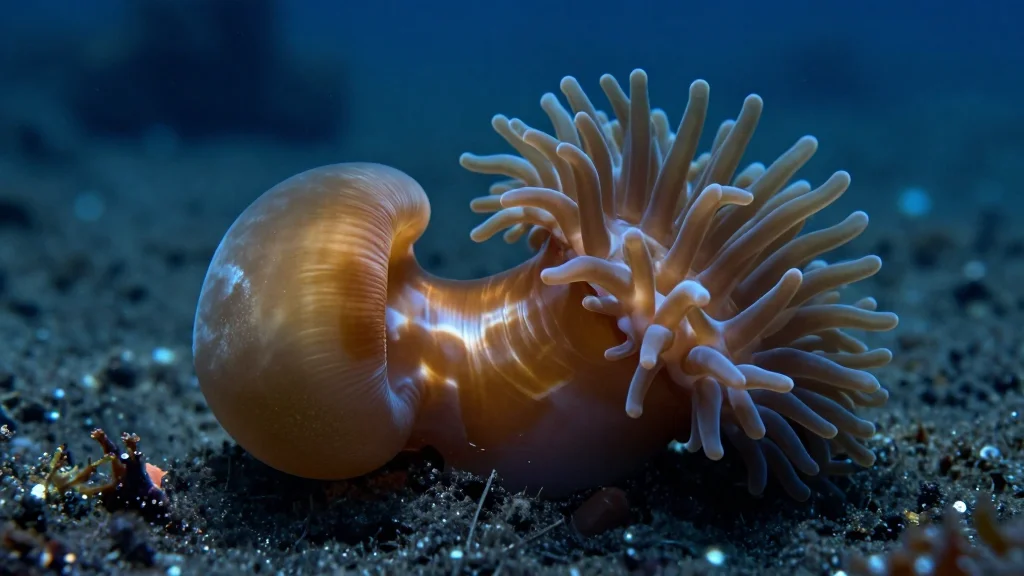
Mystery Solved: Ocean's ‘Golden Orb’ Is Something Nobody Guessed
Why It Matters
The finding clarifies a long‑standing deep‑sea mystery and underscores how advanced genetics and ocean exploration can reveal hidden biodiversity with potential economic and security relevance.
Key Takeaways
- •Golden orb identified as Relicanthus daphneae sea anemone tissue
- •Specimen collected 2 miles deep off Gulf of Alaska in 2023
- •Morphology and DNA sequencing resolved the mystery after contamination hurdles
- •Findings pending peer review, posted on bioRxiv
- •Discovery highlights deep‑sea exploration’s role in science and economy
Pulse Analysis
The "golden orb" that baffled researchers for over two years turned out to be a fragment of Relicanthus daphneae, a rarely seen hexacorallian sea anemone that inhabits hydrothermal vent fields at abyssal depths. Collected by the NOAA ship Okeanos Explorer during a 2023 Gulf of Alaska survey, the sample was retrieved from roughly 3.2 kilometers below the ocean surface, a zone where pressure exceeds 300 atmospheres and sunlight never penetrates. Its bronze‑hued, papery appearance initially suggested an egg sac, sponge, or even a novel organism, prompting a multi‑agency effort to decode its origin.
The investigative team applied an integrative approach, first noting the presence of cnidocytes—stinging cells characteristic of the class Hexacorallia—on the specimen’s surface. Genetic analysis proved more challenging; contaminant DNA required careful extraction of pristine tissue before reliable sequencing could be achieved. Once a clean sample was secured, mitochondrial markers matched the known genetic signature of Relicanthus daphneae, a species first described in 2006 but still poorly understood due to its remote habitat. This confirmation not only resolves a captivating mystery but also adds a valuable data point to the sparse genetic database of deep‑sea anemones.
Beyond satisfying scientific curiosity, the discovery illustrates the broader strategic value of deep‑sea exploration. Uncovering new or poorly known organisms can inform biotechnology, pharmaceuticals, and bio‑inspired materials, while expanding our knowledge of vent ecosystems supports assessments of mineral resources and climate‑related carbon sequestration. NOAA officials emphasize that such research bolsters national security by enhancing maritime domain awareness and fostering innovation. As the study moves toward peer‑reviewed publication, it reinforces the argument for sustained investment in oceanic research vessels, advanced sequencing platforms, and interdisciplinary collaboration.
Mystery solved: Ocean's ‘golden orb’ is something nobody guessed
Comments
Want to join the conversation?
Loading comments...