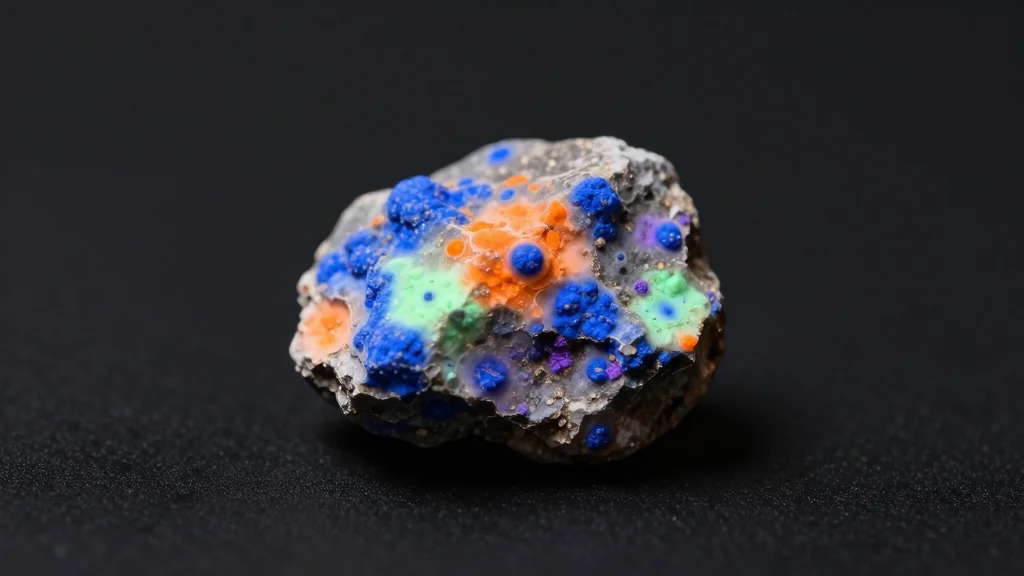
Nanoscale Infrared Spectroscopy Reveals Complex Organic–Mineral Assemblages in Asteroid Bennu
Why It Matters
The findings prove that fragile organic molecules can survive targeted aqueous processes on primitive asteroids, reshaping models of early solar‑system chemistry and informing future sample‑return strategies.
Key Takeaways
- •Nanoscale IR reveals three distinct chemical domains in Bennu samples
- •Organic‑rich, carbonate‑rich, and aliphatic‑rich regions are spatially separate
- •Nitrogen‑bearing organics survive despite localized aqueous alteration
- •Organosulfur compounds co‑locate with carbonates, indicating late‑stage brine chemistry
- •Heterogeneous alteration suggests fluid flow through restricted pathways, not uniform
Pulse Analysis
Nanoscale infrared spectroscopy, combined with Raman analysis, offers unprecedented chemical insight into extraterrestrial samples. By probing Bennu particles at ~20 nm resolution, scientists can distinguish molecular fingerprints that traditional bulk techniques blur. This level of detail uncovers subtle variations in organic functional groups and mineral phases, enabling a more precise reconstruction of the asteroid’s formation environment and the processes that altered it after accretion.
The study’s core discovery is the coexistence of three chemically distinct domains—aliphatic‑rich, carbonate‑rich, and nitrogen‑bearing organic‑rich—each isolated at the nanoscale. Nitrogen‑rich organics, including amine and nitrile groups, remain intact despite evidence of localized water‑rock interaction, suggesting that aqueous alteration was confined to narrow pathways rather than pervasive. Carbonate‑rich zones host organosulfur compounds, pointing to late‑stage brine chemistry that facilitated sulfur incorporation. These patterns contrast with the more uniform alteration observed in some carbonaceous chondrites, highlighting Bennu’s unique fluid history.
Beyond Bennu, these results refine our understanding of volatile‑rich bodies that seeded early Earth with organics. The heterogeneous alteration model implies that water and organics can coexist without wholesale degradation, a scenario that may apply to other primitive asteroids such as Ryugu. For planetary scientists and mission planners, the ability to map chemistry at the nanometer scale informs target selection, sampling strategies, and the design of in‑situ instruments for upcoming missions to volatile‑laden bodies, ultimately advancing the quest to trace the origins of life‑building compounds in the solar system.
Nanoscale infrared spectroscopy reveals complex organic–mineral assemblages in asteroid Bennu
Comments
Want to join the conversation?
Loading comments...