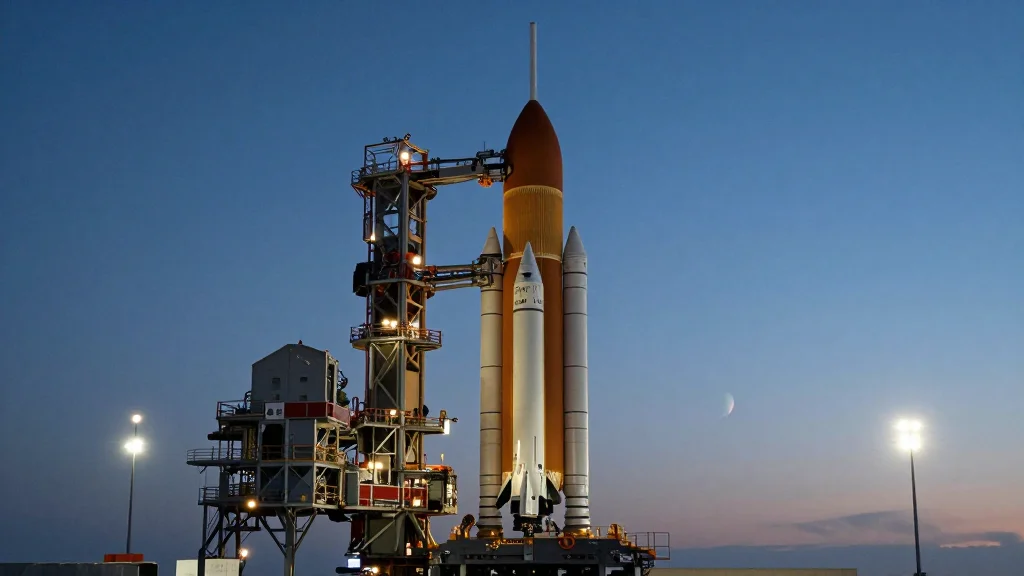
NASA Alters Artemis 3 Launch Vehicle Configuration
Why It Matters
Dropping the upper stage cuts development cost and shortens the critical path, but it also limits the payload’s ability to perform deep‑space maneuvers, influencing Orion’s design and future lunar lander operations.
Key Takeaways
- •Artemis 3 launches SLS without Interim Cryogenic Propulsion Stage
- •Inert spacer matches ICPS dimensions, preserving vehicle interface
- •Decision reduces cost and schedule risk for NASA
- •Payload mass to lunar orbit slightly decreased
- •Future Artemis missions may reinstate upper stage for flexibility
Pulse Analysis
The Artemis program, NASA’s flagship effort to return humans to the Moon, relies on the heavy‑lift Space Launch System (SLS) to propel the Orion crew capsule beyond low‑Earth orbit. In its original configuration, the SLS Block 1B would have been topped by the Interim Cryogenic Propulsion Stage (ICPS), a hydrogen‑fuel upper stage that provides the additional delta‑v needed for trans‑lunar injection and orbit insertion. The ICPS also serves as a structural interface for the Orion service module and any attached payloads, making it a critical component of the launch architecture for Artemis 1 through Artemis 3.
NASA’s May 13 update replaces the ICPS with an inert ‘spacer’ built at Marshall Space Flight Center. The spacer replicates the ICPS’s physical dimensions and attachment points, allowing the SLS to launch without the propulsion hardware while preserving the vehicle’s structural envelope. By eliminating the cryogenic stage, NASA sidesteps a series of integration and testing milestones that have been sources of delay, trimming both schedule and cost. The trade‑off is a modest reduction in payload mass to lunar orbit, as Orion will now rely on its own service module for the final burn, tightening mission margins.
The move signals a pragmatic shift in NASA’s approach to the Artemis cadence, emphasizing near‑term deliverables over ideal performance. For the commercial launch sector, a simpler SLS configuration could free up industrial resources and lower the barrier for future partnerships on upper‑stage development. Budget‑constrained policymakers may view the spacer as a cost‑saving precedent for later Artemis flights, potentially accelerating the timeline for a sustainable lunar gateway. However, the reduced propulsion capability underscores the importance of robust on‑orbit maneuvering systems, a factor that will shape the design of subsequent lander and cargo vehicles.
NASA Alters Artemis 3 Launch Vehicle Configuration
Comments
Want to join the conversation?
Loading comments...