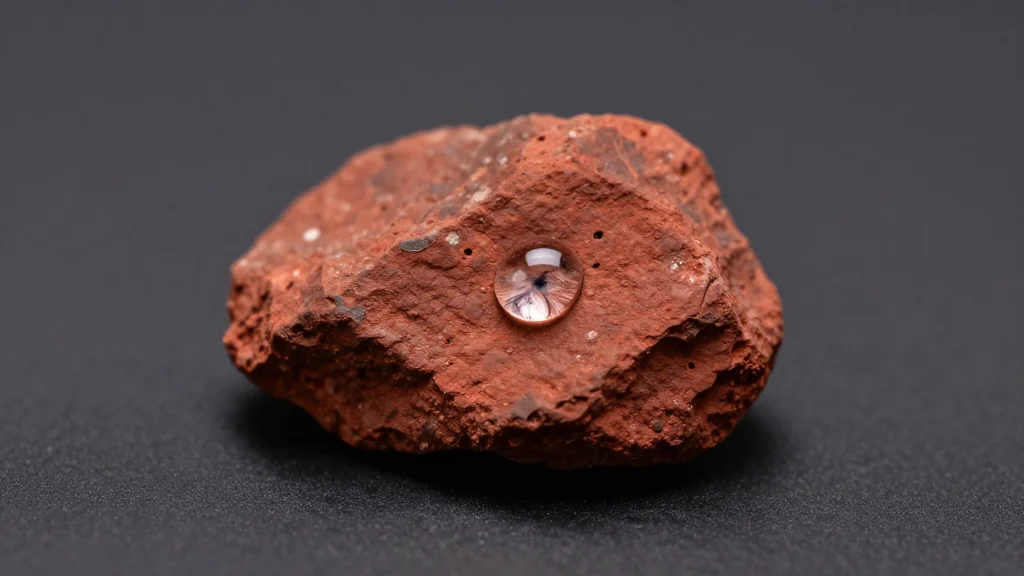
NASA Announces Potential Martian Biosignature Amid New Contamination Warnings

Why It Matters
Confirming a biosignature on Mars would reshape our understanding of life's distribution in the universe and could drive a new era of astrobiology research. However, the discovery also raises the stakes for rigorous contamination control, as false positives could misdirect billions of dollars of funding and erode public trust. The dual narrative of discovery and caution illustrates the delicate balance between scientific ambition and methodological rigor in the quest to answer whether we are alone. If the biosignature holds up under independent verification, it could accelerate international interest in Mars exploration, influence policy decisions on planetary protection, and spur investment in next‑generation sample‑return technologies. Conversely, if contamination proves to be the source of the signal, it will reinforce the need for stricter protocols, potentially reshaping how future missions are designed and how terrestrial labs handle extraterrestrial samples.
Key Takeaways
- •Perseverance identified mineral patterns in Bright Angel formation that could indicate microbial activity.
- •NASA Administrator Sean Duffy called the find the closest to discovering life on Mars.
- •Study of Martian meteorites revealed pen‑ink and diamond particle contaminants from lab handling.
- •NASA’s sample‑return mission was cancelled, increasing reliance on in‑situ analysis and meteorite analogs.
- •Researchers recommend new cleaning solvents and handling procedures to prevent future contamination.
Pulse Analysis
The biosignature announcement arrives at a pivotal moment for Mars science. Historically, claims of possible life—such as the 1996 Viking results or the 2018 methane spikes—have sparked intense debate, only to be tempered by subsequent scrutiny. This time, the combination of high‑resolution mineralogy and the presence of organic‑rich clays provides a more compelling case, yet the absence of definitive isotopic or morphological evidence keeps the claim provisional.
The contamination study serves as a sobering reminder that even the most sophisticated instruments can be undermined by human error. The detection of gel‑pen ink, a seemingly trivial contaminant, illustrates how easily terrestrial signatures can infiltrate the analytical chain. As planetary protection policies evolve, agencies may adopt stricter clean‑room standards akin to those used in semiconductor manufacturing, potentially raising mission costs but safeguarding scientific credibility.
Looking forward, the field may see a bifurcation: one path pursuing more aggressive sample‑return strategies, possibly via commercial launch providers, and another emphasizing enhanced in‑situ capabilities that reduce reliance on Earth‑based labs. The outcome of the Bright Angel investigation will likely influence funding allocations, with successful verification prompting a surge in astrobiology grants, while a contamination‑driven retraction could trigger a more cautious, method‑focused research agenda.
NASA Announces Potential Martian Biosignature Amid New Contamination Warnings
Comments
Want to join the conversation?
Loading comments...