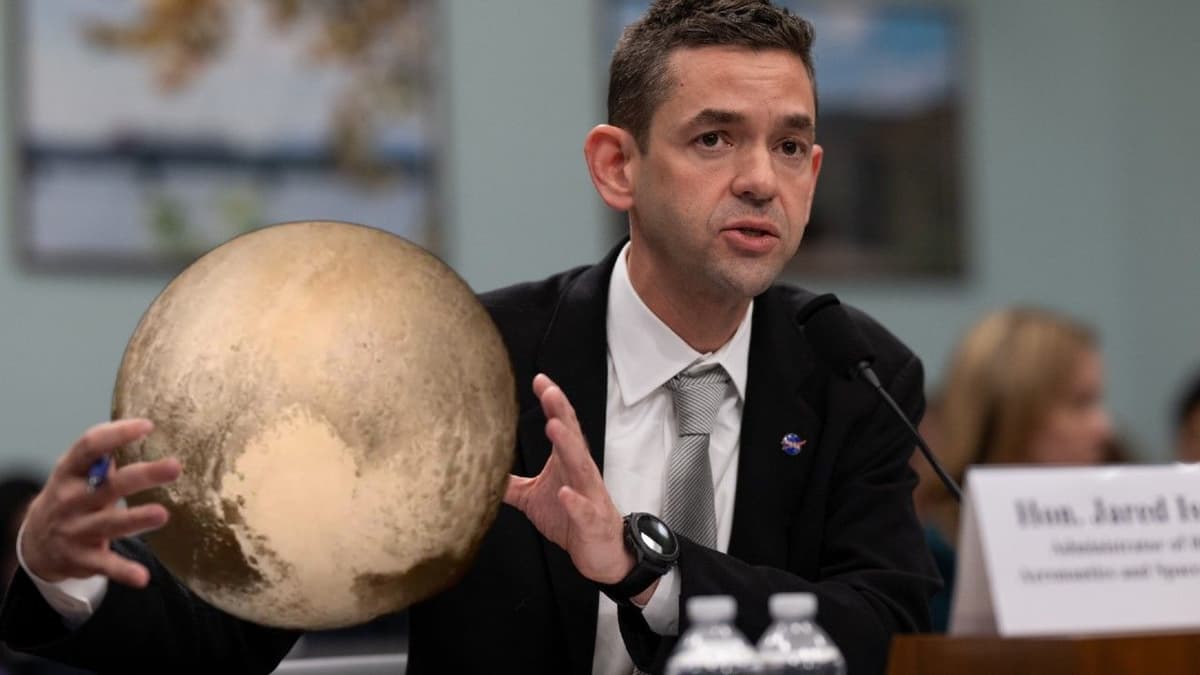
NASA Chief Jared Isaacman Says He's Fighting for Pluto: 'I Am Very Much in the Camp of 'Make Pluto a Planet Again'
Companies Mentioned

NASA
Why It Matters
Restoring Pluto as a planet would reshape textbooks, public perception, and could steer future mission funding, underscoring NASA’s influence on scientific standards.
Key Takeaways
- •NASA chief Jared Isaacman publicly backs Pluto reclassification
- •Isaacman plans to submit scientific papers to IAU
- •Pluto lost planet status in 2006 under IAU criteria
- •New Horizons flyby revealed complex geology, boosting advocacy
- •Reclassification could reshape education and planetary science curricula
Pulse Analysis
The 2006 International Astronomical Union decision that demoted Pluto to dwarf‑planet status sparked a cultural backlash that still resonates in classrooms and popular media. The IAU’s three‑criterion definition—orbiting the Sun, achieving hydrostatic equilibrium, and clearing its orbital neighborhood—left Pluto short on the last point, despite its spherical shape and historic discovery by American astronomer Clyde Tombaugh. Over a decade later, the New Horizons flyby delivered high‑resolution images of towering mountains, nitrogen‑ice glaciers, and the iconic heart‑shaped Tombaugh Regio, reigniting scientific and public interest in the distant world.
Now NASA’s top administrator, Jared Isaacman, is moving the conversation from nostalgia to formal advocacy. During a Senate appropriations hearing, Isaacman pledged to draft and circulate scholarly papers that challenge the IAU’s orbital‑clearing criterion, arguing that other planets, such as Earth and Jupiter, share their orbital zones with smaller bodies. By leveraging NASA’s research infrastructure and the compelling New Horizons data, Isaacman hopes to galvanize a coalition of planetary scientists who can present a revised classification framework to the IAU. While the agency cannot unilaterally change the definition, its endorsement adds significant weight to the debate and may accelerate a formal review.
If the IAU were to re‑elevate Pluto, the ripple effects would extend beyond taxonomy. Textbooks worldwide would require updates, and the change could inspire renewed public enthusiasm for outer‑solar‑system exploration, potentially influencing budget allocations for future missions to the Kuiper Belt. Moreover, the episode highlights a broader tension between scientific governance bodies and high‑visibility agencies like NASA, illustrating how advocacy, data, and cultural sentiment can intersect to reshape scientific consensus. The outcome will serve as a case study in how planetary classification evolves alongside advancing technology and public engagement.
NASA chief Jared Isaacman says he's fighting for Pluto: 'I am very much in the camp of 'make Pluto a planet again'
Comments
Want to join the conversation?
Loading comments...