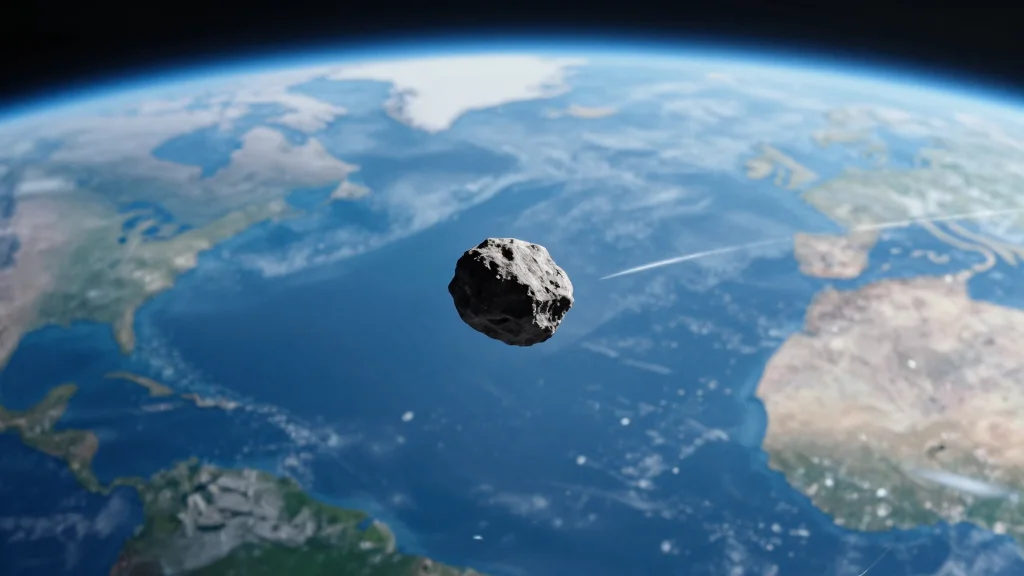
NASA Confirms Bus-Sized Asteroid 2026 HJ1 Will Fly Past Earth at 400,000 Miles

Why It Matters
The 2026 HJ1 flyby illustrates how routine monitoring of small NEOs can prevent misinformation and panic, reinforcing public confidence in scientific institutions. By demonstrating that even a bus‑sized rock can be tracked with precision, the event showcases the maturity of Earth’s planetary‑defense network. Beyond public perception, each close approach adds to a growing dataset that improves orbital predictions for the entire NEO population. Better models mean earlier warnings for genuinely hazardous objects, giving governments and space agencies more time to plan mitigation strategies, such as kinetic impactors or gravity tractors.
Key Takeaways
- •NASA confirmed asteroid 2026 HJ1, ~23 feet wide, will pass Earth on April 21, 2026.
- •Closest approach distance: ~400,000 miles (1.6 lunar distances).
- •Object is part of the regular stream of near‑Earth asteroids, posing no impact risk.
- •Flyby underscores the effectiveness of NASA’s continuous NEO surveillance network.
- •Data from the encounter will refine orbital models and support future planetary‑defense missions.
Pulse Analysis
The 2026 HJ1 encounter is a textbook case of how modern planetary‑defense systems operate under the radar of everyday life. Decades ago, a similar-sized asteroid might have gone undetected until it was too late to assess risk. Today, a coordinated network of ground‑based telescopes and space‑based sensors identifies such objects weeks or months in advance, allowing agencies to issue calm, factual statements rather than reactive alerts. This shift from surprise to predictability is a direct result of sustained funding for NEO surveys and the integration of data across international partners.
Historically, high‑profile asteroid scares—like the 2013 Chelyabinsk meteor—have spurred spikes in public interest and policy discussions. However, those events also exposed gaps in detection capabilities for smaller, yet still dangerous, objects. The 2026 HJ1 flyby, while harmless, serves as a low‑stakes rehearsal for handling larger threats. It demonstrates that the scientific community can not only locate a small rock but also communicate its harmless nature effectively, a skill that will be essential if a truly hazardous asteroid is discovered.
Looking forward, the next frontier lies in moving from passive observation to active mitigation. NASA’s upcoming NEO Surveyor, slated for launch in 2028, will dramatically increase detection rates for objects as small as 140 meters, the threshold for global catastrophe. Coupled with the development of deflection technologies—like the Double Asteroid Redirection Test (DART) mission’s successful kinetic impact—these capabilities will transform planetary defense from a watch‑only posture to a proactive shield. The 2026 HJ1 event, modest as it may seem, is a stepping stone toward that future, reminding both policymakers and the public that vigilance, not panic, is the cornerstone of space safety.
NASA Confirms Bus-Sized Asteroid 2026 HJ1 Will Fly Past Earth at 400,000 Miles
Comments
Want to join the conversation?
Loading comments...