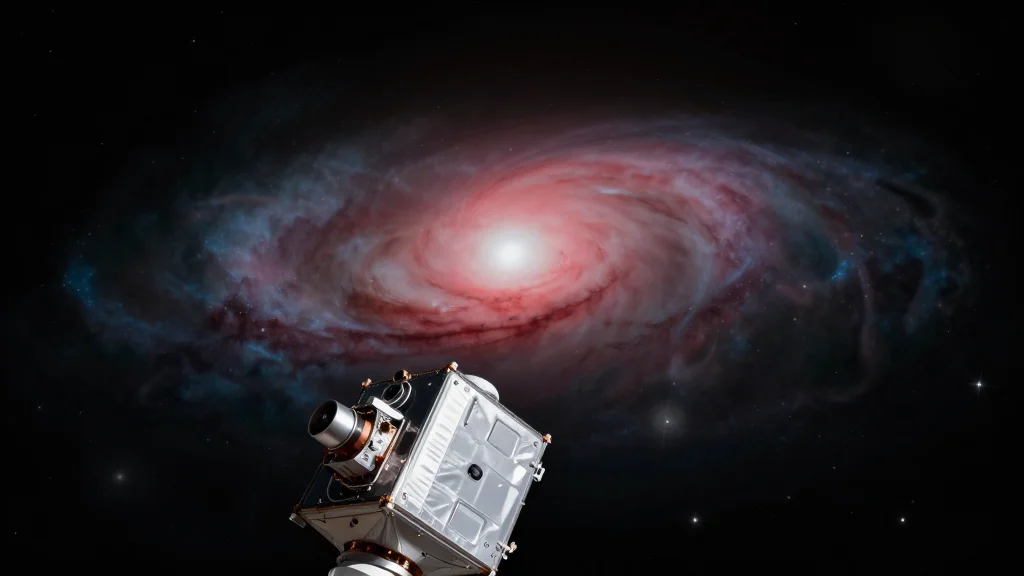
NASA Connects Little Red Dots with Chandra, JWST
Why It Matters
The combined Chandra‑JWST view deepens our understanding of galaxy and black‑hole formation during the universe’s first billion years, informing theoretical models and guiding future observations.
Key Takeaways
- •Chandra and JWST jointly observed distant red galaxies at z>6.
- •X-ray data reveal hidden black holes in early galaxies.
- •Infrared imaging pinpoints star-forming regions within the red dots.
- •Combined analysis refines models of galaxy evolution in the first billion years.
- •Findings showcase power of multi-wavelength astronomy for cosmic origins.
Pulse Analysis
Multi-wavelength astronomy has become a cornerstone of modern astrophysics, and NASA’s latest collaboration between the Chandra X-ray Observatory and the James Webb Space Telescope exemplifies this trend. By pairing Chandra’s high‑energy X‑ray vision with JWST’s unprecedented infrared sensitivity, scientists can peer through cosmic dust and capture the energetic processes that shaped the earliest galaxies. This partnership not only maximizes the scientific return of two flagship missions but also sets a template for future joint observations across the electromagnetic spectrum.
The joint study focused on faint, red‑shifted objects colloquially called “little red dots,” which are galaxies existing when the universe was less than a billion years old. Chandra detected X‑ray emissions indicating the presence of accreting black holes, while JWST’s infrared cameras mapped vigorous star‑forming regions within the same systems. Together, the data reveal that black hole growth and stellar birth were already co‑evolving at redshifts greater than six, challenging earlier models that placed significant black‑hole activity later in cosmic history. These findings provide a rare, simultaneous glimpse of both the hot, energetic cores and the cooler, dusty outskirts of primordial galaxies.
The implications extend beyond academic curiosity. A clearer picture of early galaxy assembly informs cosmological simulations, improves predictions for upcoming surveys, and guides the allocation of limited telescope time. Moreover, the success of this cross‑mission approach underscores the value of coordinated funding and data‑sharing frameworks within the aerospace sector. As NASA and its partners plan next‑generation observatories, the Chandra‑JWST synergy will likely serve as a benchmark for unlocking the remaining mysteries of the cosmic dawn.
NASA Connects Little Red Dots with Chandra, JWST
Comments
Want to join the conversation?
Loading comments...