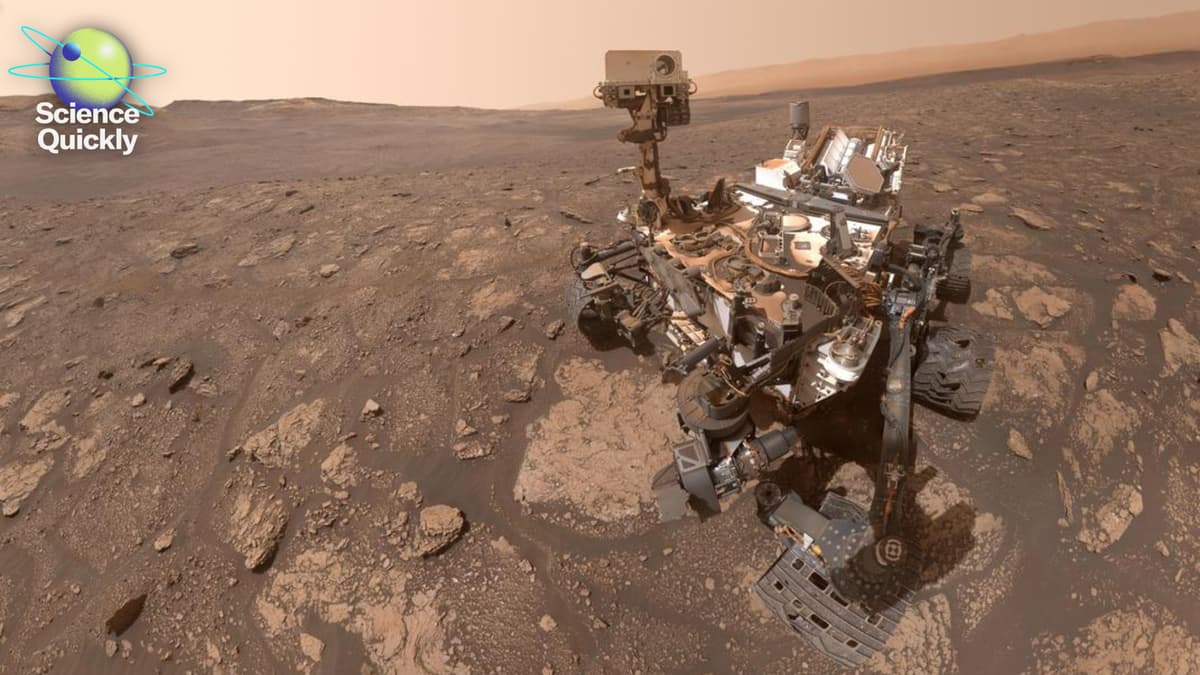
NASA Curiosity Discovery, Suicide Hotline Hope, the AI Voice Clone Upper Hand
Why It Matters
The Mars findings sharpen the scientific focus on potential biosignatures, while the 988 data validates large‑scale mental‑health investment, and AI voice advances could reshape communication technology.
Key Takeaways
- •Curiosity identified 21 carbon‑based molecules in 2020 rock sample
- •Seven molecules, including nitrogen heterocycles, never seen on Mars before
- •988 Lifeline cut youth suicides by ~4,000 deaths in 2022‑2024
- •States with biggest 988 call surge saw larger suicide declines
- •AI voice clones outperformed humans on speech intelligibility tests
Pulse Analysis
The detection of 21 organic molecules by Curiosity marks the most chemically diverse inventory ever recorded on Mars. Seven of these compounds, such as nitrogen heterocycles, have never been observed on the Red Planet, suggesting that ancient Martian environments may have preserved complex pre‑biotic chemistry. Scientists emphasize that while the molecules do not prove past life, their presence in 3.5‑billion‑year‑old sedimentary rock—formed when Mars hosted standing water—offers a compelling target for future missions seeking definitive biosignatures.
A recent analysis in the Journal of the American Medical Association quantifies the public‑health payoff of the 988 Suicide & Crisis Lifeline. By comparing projected versus actual suicide deaths among 15‑34‑year‑olds, researchers estimate a reduction of roughly 4,000 lives since the three‑digit number’s rollout, with the most pronounced effects in states that experienced the sharpest increase in call volume. The study’s counterfactual checks—including senior cohorts and an English control—strengthen the causal inference, underscoring how strategic funding of crisis‑intervention infrastructure can yield measurable mortality benefits.
In the realm of artificial intelligence, a study published in the Journal of the Acoustical Society of America reveals that synthetic voice clones can surpass human speakers in intelligibility scores. Leveraging just seconds of audio, modern voice‑cloning models generate speech that listeners understand more readily than natural speech in test conditions. This breakthrough promises enhancements for accessibility tools, virtual assistants, and remote communication, yet also raises ethical questions about identity spoofing and consent. As the technology matures, regulators and developers will need to balance performance gains with safeguards to prevent misuse.
NASA Curiosity discovery, suicide hotline hope, the AI voice clone upper hand
Comments
Want to join the conversation?
Loading comments...