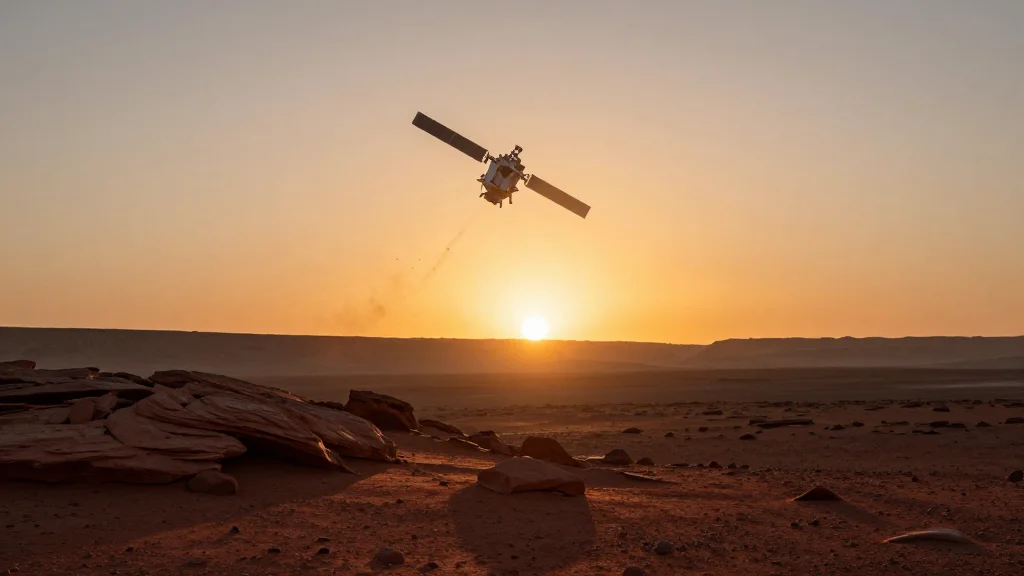
NASA Ends MAVEN Mars Mission After Seven Years of Atmospheric Study

Why It Matters
MAVEN’s termination marks a turning point for Mars science and planetary exploration. The mission’s seven‑year dataset on atmospheric escape provides a benchmark for comparative studies of Earth’s climate history and informs the design of future atmospheric probes. Additionally, the loss highlights the fragility of deep‑space communication infrastructure, prompting NASA to evaluate redundancy strategies across its interplanetary network. The shift of resources away from MAVEN to upcoming flagship missions accelerates timelines for high‑profile projects like Mars Sample Return and Europa Clipper. By reallocating engineering talent and funding, NASA aims to maintain momentum in its exploration roadmap while preserving the scientific value of MAVEN’s legacy data for researchers worldwide.
Key Takeaways
- •NASA declared MAVEN officially terminated on June 3 after an unrecoverable spin anomaly
- •The spacecraft rotated at 2.7 rpm, draining its batteries and ending communications
- •MAVEN contributed 8% of relay sessions but returned 18% of Mars data
- •Four other orbiters now carry the full Mars Relay Network workload
- •NASA will redirect MAVEN resources to Mars Sample Return and Europa Clipper
Pulse Analysis
The formal end of MAVEN illustrates the lifecycle of high‑cost planetary missions: a decade‑long investment yields transformative science, yet operational risks remain high. MAVEN’s unexpected spin highlights the need for more robust fault‑tolerance in spacecraft attitude control, especially for missions operating far from Earth where real‑time intervention is impossible. Future orbiters may incorporate redundant gyroscopes or autonomous spin‑recovery algorithms to mitigate similar failures.
From a strategic perspective, NASA’s decision to reallocate MAVEN’s budget underscores a broader trend toward concentrating limited resources on a smaller number of high‑impact missions. The agency’s focus on Mars Sample Return and Europa Clipper reflects a shift from atmospheric characterization to sample analysis and ocean world exploration, aligning with international scientific priorities and public interest. This reallocation also signals confidence in the resilience of the existing Mars Relay Network, which, despite reduced redundancy, can sustain rover communications without a significant science gap.
Looking ahead, the MAVEN archive will continue to be a valuable asset for the planetary science community. Researchers can mine its extensive atmospheric measurements to refine models of planetary habitability and atmospheric loss processes, informing the design of future missions to Venus, Titan, and exoplanets. The mission’s legacy, therefore, extends beyond its operational lifespan, shaping both scientific inquiry and engineering practices for the next generation of deep‑space exploration.
NASA Ends MAVEN Mars Mission After Seven Years of Atmospheric Study
Comments
Want to join the conversation?
Loading comments...