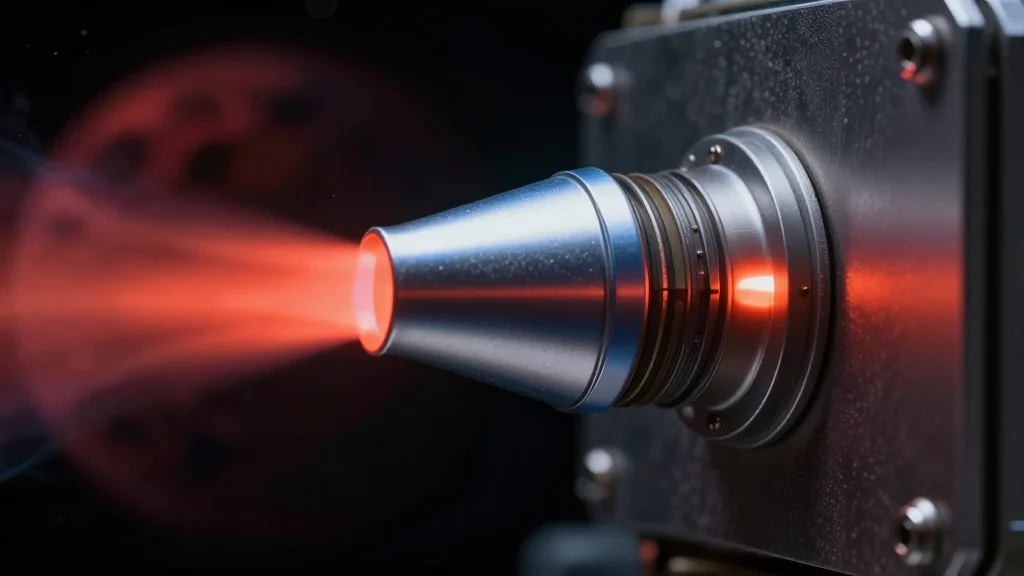
NASA Fires Up Powerful Lithium-Fed Thruster for Trips to Mars
Why It Matters
Higher‑efficiency lithium propulsion could reduce transit time and launch costs for Mars missions, reshaping deep‑space architecture. The technology also offers commercial satellite operators a lighter, cheaper alternative to xenon thrusters.
Key Takeaways
- •Lithium Hall thruster hit 2,500 s specific impulse, 30% efficiency gain.
- •Test produced 200 mN thrust at 10 kW power for 30 minutes.
- •Lithium propellant density is 2× xenon, reducing tank mass.
- •Potential 20% faster Mars transit cuts crew exposure to radiation.
- •NASA plans integration into next‑generation deep‑space vehicles by 2029.
Pulse Analysis
Electric propulsion has become the workhorse of modern deep‑space travel, but xenon‑based Hall thrusters have long been limited by propellant cost and storage volume. NASA’s latest lithium‑fed thruster flips that paradigm by leveraging lithium’s superior mass density and lower boiling point, enabling a compact tank design that delivers comparable thrust with a fraction of the mass. The recent 10‑kilowatt demonstration not only proved the engine’s stability over a sustained 30‑minute burn but also showcased a specific impulse that eclipses conventional systems, marking a notable step forward in propulsion efficiency.
The performance metrics from the test—200 mN of thrust, 2,500 seconds of specific impulse, and a 30% boost in efficiency—translate directly into mission architecture benefits. Spacecraft can carry less propellant, freeing up volume for payloads or additional scientific instruments. For crewed Mars missions, the higher thrust-to-weight ratio could shave weeks off the transit window, reducing astronauts’ exposure to cosmic radiation and microgravity effects. Moreover, the lower operating cost of lithium compared with xenon makes the technology attractive for commercial satellite operators seeking longer station‑keeping life without the premium price tag of traditional propellants.
Looking ahead, NASA plans to integrate the lithium Hall thruster into its next generation of deep‑space vehicles, targeting a 2029 deployment on a Mars cargo demonstrator. This move signals confidence that the technology can scale to higher power levels required for human missions. Industry stakeholders are watching closely, as the adoption of lithium propulsion could spur a new wave of lightweight, cost‑effective spacecraft, reshaping the economics of interplanetary travel and satellite servicing alike.
NASA Fires Up Powerful Lithium-Fed Thruster for Trips to Mars
Comments
Want to join the conversation?
Loading comments...