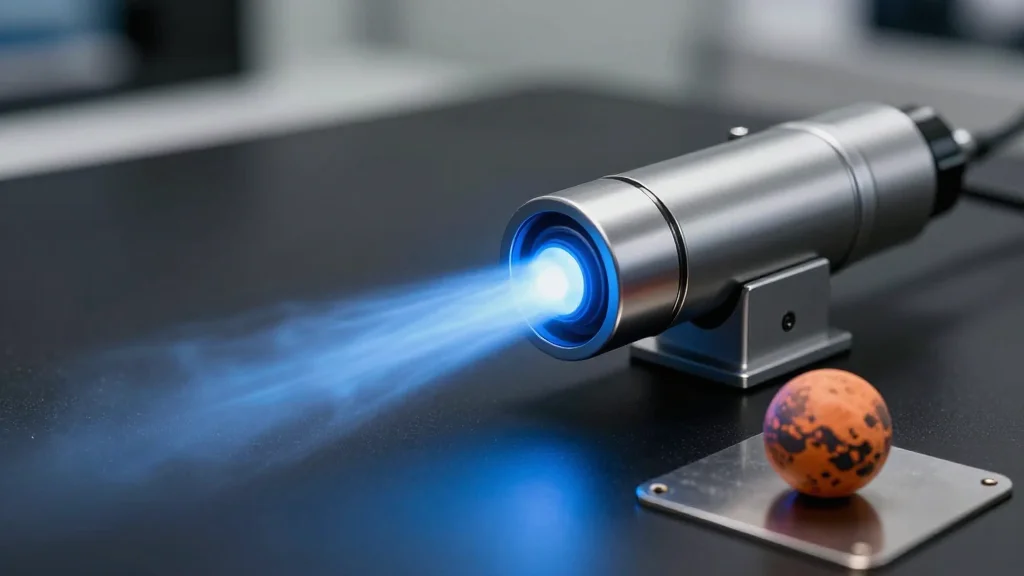
NASA JPL Fires 120‑kW Lithium‑Fed Thruster, Paving Way for Faster Mars Trips

Why It Matters
High‑power electric propulsion promises to slash the mass and cost of interplanetary travel, directly influencing the feasibility of crewed Mars missions slated for the 2030s. By proving that lithium‑fed MPD thrusters can operate at 120 kW—and eventually at megawatt scales—NASA is laying the groundwork for spacecraft that can deliver payloads faster while using dramatically less propellant. Beyond Mars, the technology could enable rapid, low‑cost missions to the outer solar system, opening new scientific opportunities at Jupiter, Saturn, and beyond. The ability to generate continuous thrust over long durations also aligns with emerging concepts for asteroid mining and deep‑space habitats, where efficient propulsion is a critical enabler.
Key Takeaways
- •NASA JPL ignited a lithium‑fed MPD thruster at 120 kW on Feb. 24, the highest U.S. electric‑propulsion test to date.
- •The test produced five ignitions, with electrode temperatures exceeding 5,000 °F (2,800 °C).
- •James Polk, senior research scientist at JPL, highlighted that the power target was met and the testbed proved viable.
- •NASA plans to scale the thruster to 500 kW‑1 MW, aiming for megawatt‑class engines needed for crewed Mars missions.
- •Electric propulsion using lithium vapor can reduce propellant use by up to 90 % compared with conventional chemical rockets.
Pulse Analysis
The 120‑kilowatt lithium‑fed MPD test represents a turning point not because of the raw power number alone, but because it validates a propulsion architecture that has lingered in the research phase for six decades. Historically, NASA’s electric‑propulsion portfolio has been dominated by Hall‑effect and ion thrusters, which excel at low‑thrust, high‑efficiency missions like Dawn and Psyche. Those systems, however, are fundamentally limited by the power they can draw from solar arrays, capping their thrust and, consequently, mission timelines.
MPD thrusters sidestep that bottleneck by leveraging magnetic fields to accelerate dense plasma, allowing thrust to scale linearly with power. The JPL test shows that the thermal and material challenges—once the primary show‑stoppers—can be managed in a controlled environment. If the upcoming 500‑kilowatt and megawatt milestones are achieved, the technology could compress Mars transit windows, reducing crew exposure to radiation and microgravity, and lowering life‑support resupply needs.
Commercial players are watching closely. Companies like SpaceX and Blue Origin have focused on chemical propulsion for rapid transit, but a high‑efficiency electric alternative could reshape the economics of cargo delivery and in‑space manufacturing. The ability to deliver the same delta‑v with a fraction of propellant mass would make deep‑space logistics more viable, potentially spawning a new market for MPD‑powered cargo tugs and orbital refueling stations. The next few years will be decisive: sustained high‑power testing, integration with next‑generation power sources, and demonstrable reliability will determine whether MPD thrusters move from laboratory curiosity to the backbone of interplanetary travel.
NASA JPL Fires 120‑kW Lithium‑Fed Thruster, Paving Way for Faster Mars Trips
Comments
Want to join the conversation?
Loading comments...