NASA Keeps Track As Mexico City Sinks Into the Ground

Why It Matters
Real‑time subsidence data gives policymakers a scientific basis to address water management and infrastructure resilience, while showcasing NISAR’s broader potential for disaster‑risk monitoring worldwide.
Key Takeaways
- •NISAR satellite provides weekly centimeter‑scale subsidence maps of Mexico City.
- •Some neighborhoods are sinking faster than 2 cm per month.
- •Groundwater extraction compacts clay lake‑bed soils, driving the subsidence.
- •Infrastructure leaks cause 40% water loss, worsening drought vulnerability.
- •NISAR data can monitor earthquakes, volcanoes, landslides worldwide.
Pulse Analysis
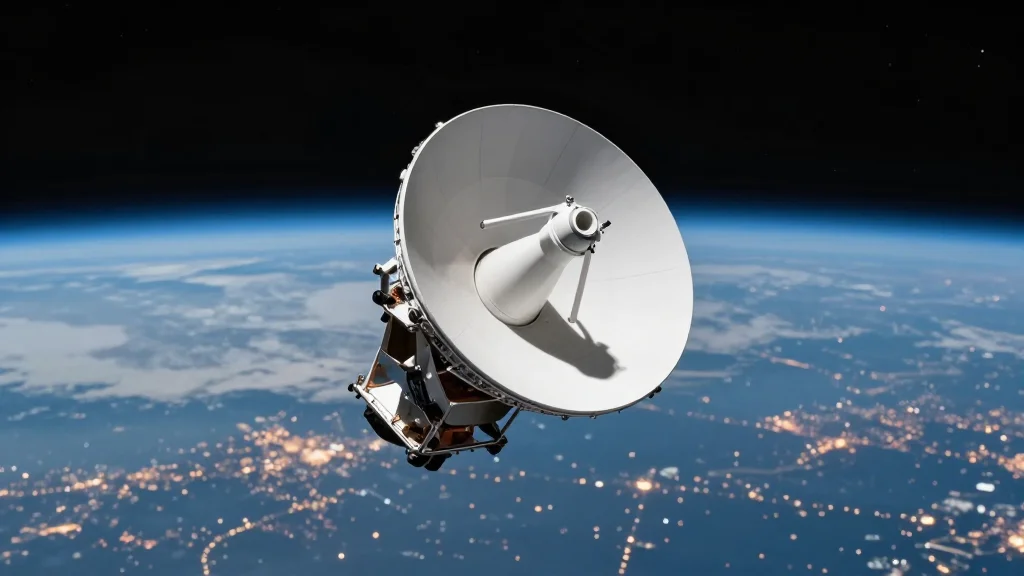
The launch of NASA’s NISAR (NASA‑ISRO Synthetic Aperture Radar) marks a leap forward in Earth observation, delivering high‑resolution interferometric data every week. Unlike optical sensors, NISAR’s L‑band and S‑band radars penetrate clouds, vegetation and even urban clutter, allowing scientists to detect millimeter‑level surface changes across vast areas. For Mexico City, this means a continuous, precise picture of how the ground is deforming, a capability previously limited to sporadic GPS campaigns or lower‑resolution satellite passes. The richness of the dataset opens new avenues for urban geotechnical studies and early‑warning systems.
Mexico City’s sinking is a textbook case of anthropogenic subsidence. The metropolis sits atop the former Lake Texcoco, whose soft, water‑laden clay compresses when the underlying aquifer is over‑pumped. Decades of groundwater extraction have accelerated this process, with some districts losing more than 2 cm each month. The resulting ground tilt stresses historic structures, cracks pipelines and amplifies flood risk. Compounding the problem, aging water infrastructure leaks an estimated 40% of the city’s supply, turning subsidence into a feedback loop that threatens both water security and heritage preservation.
Beyond Mexico, NISAR’s global reach promises to transform how governments monitor ground deformation. The same interferometric techniques can map volcanic inflation, fault‑line creep after earthquakes, and slow‑moving landslides in remote regions. By providing near‑real‑time alerts, the system equips disaster‑response agencies with actionable intelligence, potentially saving lives and reducing economic losses. As climate change intensifies extreme weather and water scarcity, the ability to track subtle earth movements will become a cornerstone of resilient infrastructure planning worldwide.
NASA Keeps Track As Mexico City Sinks Into the Ground
Comments
Want to join the conversation?
Loading comments...