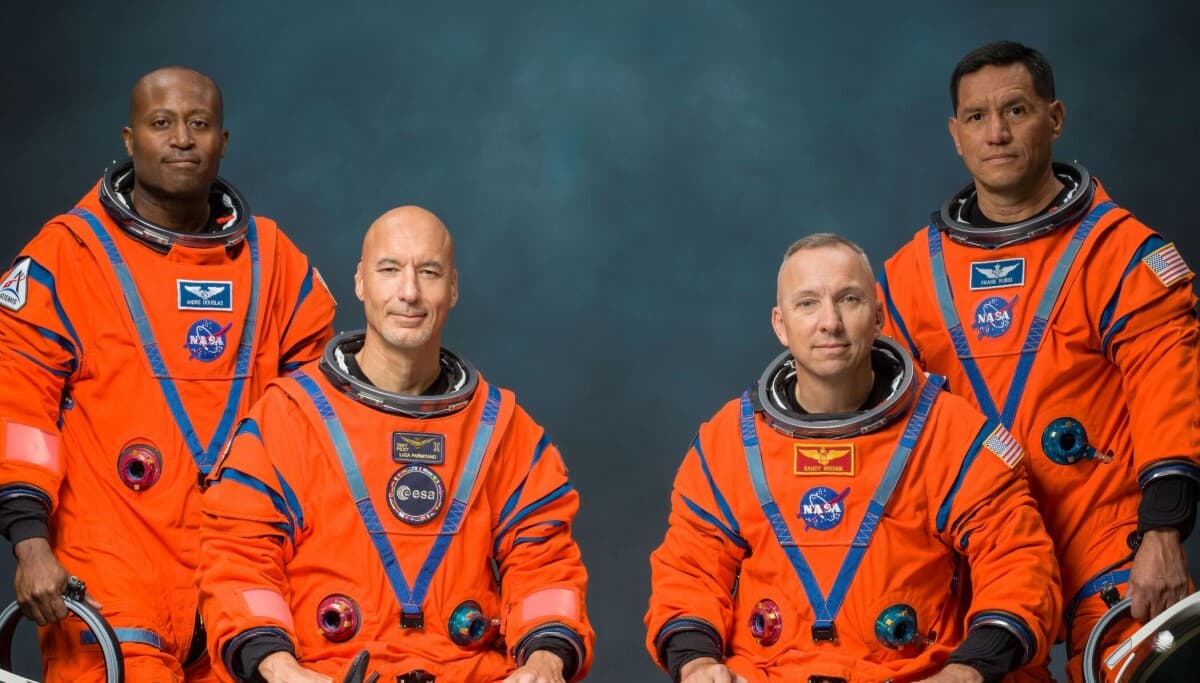
NASA Names Crew for Artemis III Lunar Lander Rehearsal

Companies Mentioned

Why It Matters
Testing commercial landers in orbit will validate the hardware needed for future Moon landings and lock in the role of private partners in NASA’s Artemis program, directly influencing the timeline and cost of returning humans to the lunar surface.
Key Takeaways
- •NASA names four astronauts for Artemis III LEO lander test
- •Mission will test both Blue Origin’s Blue Moon and SpaceX’s Starship dockings
- •Blue Origin’s New Glenn rocket exploded, jeopardizing its lander schedule
- •Artemis III now targets 2027, after Orion and SLS become ready
- •SpaceX’s Starship still awaiting first orbital flight, adding risk
Pulse Analysis
The Artemis program, NASA’s flagship effort to return humans to the Moon, has hit a pivotal crossroads. After delays with the Orion capsule and the Space Launch System, the agency repurposed Artemis III as a low‑Earth‑orbit rehearsal, mirroring the Apollo 9 mission that proved the lunar module’s capabilities. By naming a seasoned crew—veteran shuttle commander Randy Bresnik, ESA’s Luca Parmitano, and specialists Frank Rubio and Andre Douglas—NASA signals confidence in the astronauts’ ability to handle complex docking and EVA scenarios while still in Earth’s vicinity.
The core of the rehearsal involves two competing commercial lander concepts. Blue Origin’s Blue Moon pathfinder will first rendezvous with Orion, allowing the crew to open hatches, enter the lander, and practice lunar‑suit donning. After a two‑day stay, the Orion vehicle will detach for a second docking with SpaceX’s Starship‑derived test article, slated for about a day of operations. This dual‑approach not only provides redundancy but also offers NASA real‑world data on docking mechanisms, life‑support integration, and crew workflows that will be critical when the actual lunar descent occurs.
However, the timeline is fraught with risk. Blue Origin’s New Glenn heavy‑lift rocket suffered a launch‑pad explosion, casting doubt on its ability to deliver the lander by the planned 2027 window. Meanwhile, SpaceX’s Starship has yet to achieve its first orbital flight, meaning its lunar‑lander variant remains unproven. These uncertainties could push NASA to consider alternative launch vehicles, such as Falcon Heavy, or to adjust mission sequencing. The outcome will shape the balance of power between government and private sector in deep‑space exploration, influencing funding, technology development, and the broader commercial space ecosystem.
NASA names crew for Artemis III lunar lander rehearsal
Comments
Want to join the conversation?
Loading comments...