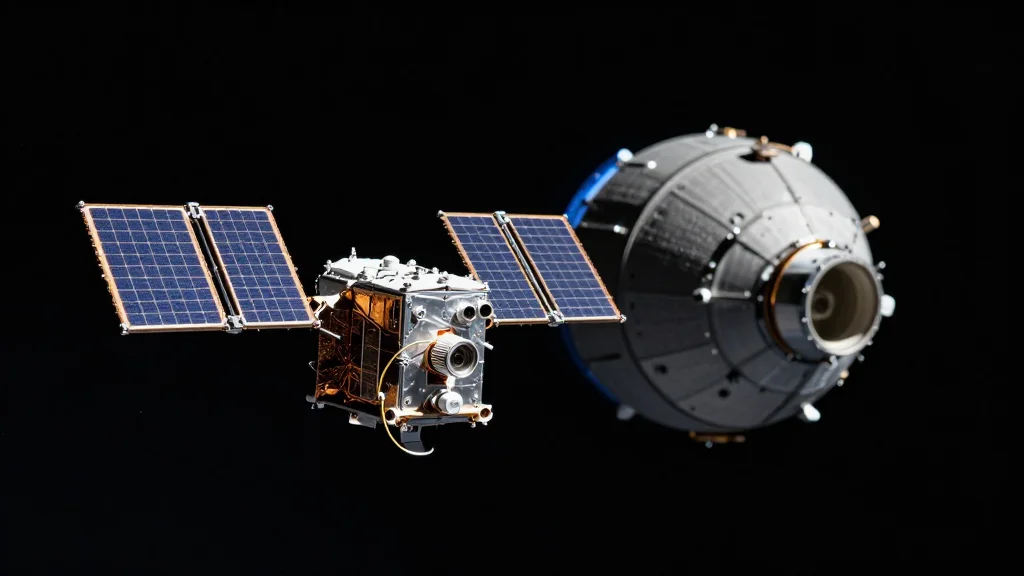
NASA Readies Mission to Reverse the Swift Observatory’s Skyfall
Why It Matters
Saving Swift preserves a unique, rapid‑response astrophysics platform and validates on‑orbit servicing technology that could underpin future commercial and defense satellite maintenance.
Key Takeaways
- •NASA plans June launch of robotic rescue spacecraft LINK.
- •$30 million contract awarded to Katalyst Space for first flight.
- •Swift observatory at 370 km risk re‑entry without boost.
- •Mission aims to extend Swift’s $500 million science capability.
- •LINK will use lidar‑guided arms to inspect and grip Swift.
Pulse Analysis
The Swift Observatory, launched in 2004, has become a cornerstone of high‑energy astrophysics, uniquely capable of detecting gamma‑ray bursts within minutes. Its orbit has gradually decayed, and an unexpected surge in solar activity accelerated atmospheric drag, dropping it to about 370 km. Without intervention, Swift would burn up on re‑entry, ending a $500 million scientific program that continues to deliver critical data for both academic research and space weather forecasting. The urgency of the situation has spurred NASA to pursue an unprecedented rescue mission.
Enter LINK, a 400‑kilogram, mini‑fridge‑sized service vehicle built by Katalyst Space. Funded by a $30 million NASA contract, LINK incorporates three robotic arms equipped with lidar sensors for precise navigation and attachment. After a flyby inspection to map Swift’s backside—an area never photographed—LINK will latch onto structural flanges and fire its hall thrusters to raise the observatory above the 300 km minimum required for a successful boost. The mission not only aims to extend Swift’s operational life but also demonstrates autonomous on‑orbit servicing, a capability that could transform satellite maintenance economics.
Beyond preserving Swift’s scientific output, the mission serves as a proof‑point for a broader vision of a reusable servicing fleet. Katalyst’s CEO envisions an "Uber Eats" model in space, where dozens of robotic satellites continuously service scientific, commercial, and military assets, reinforcing U.S. leadership in the emerging space economy. If LINK succeeds, it will validate the technical approach, lower the barrier for future rescue or upgrade missions, and potentially open a new market for on‑demand satellite servicing.
NASA readies mission to reverse the Swift observatory’s skyfall
Comments
Want to join the conversation?
Loading comments...