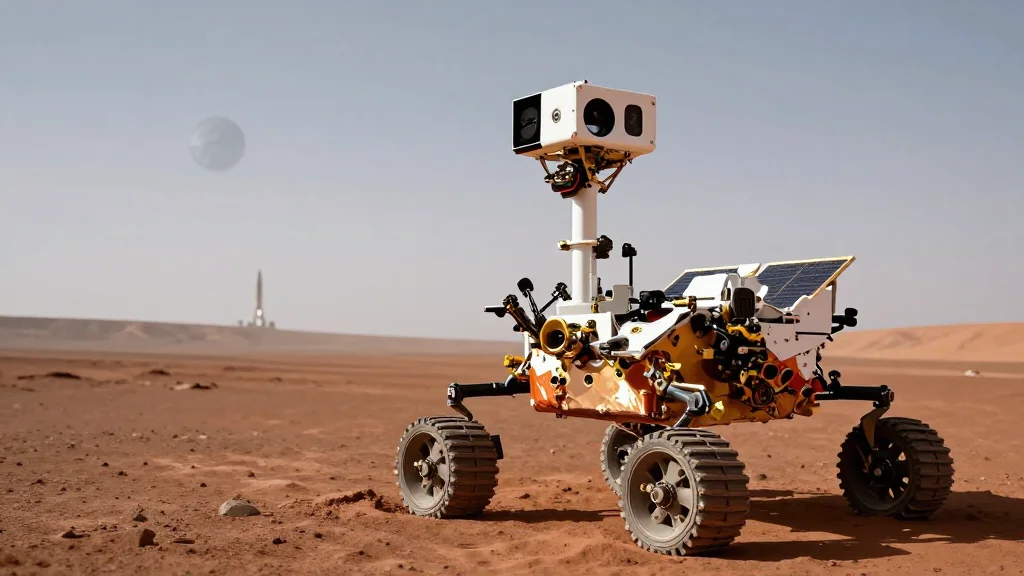
NASA Restarts Work to Support Europe's Uncrewed Trip to Mars After Years of Setbacks
Companies Mentioned
Why It Matters
The collaboration revives a flagship Mars science effort, preserving critical planetary‑life research and demonstrating trans‑Atlantic cooperation amid tightening U.S. space budgets.
Key Takeaways
- •NASA to supply braking engines, heaters for ESA's Rosalind Franklin rover
- •Launch slated for 2028 on SpaceX Falcon Heavy from Kennedy
- •Mission targets Oxia Planum to search for ancient Martian life
- •ESA replaced Russia with NASA after 2022 partnership suspension
- •Budget cuts threaten NASA science, but collaboration persists
Pulse Analysis
The Rosalind Franklin rover, originally conceived in 2001, has endured a turbulent development path marked by shifting partners, technical setbacks, and geopolitical tensions. After ESA’s 2022 suspension of its Russian launch arrangement, NASA re‑entered the program in 2024, bringing its deep‑space expertise and securing a launch slot on SpaceX’s Falcon Heavy. This renewed commitment underscores the resilience of international space initiatives, even as domestic budget debates threaten broader science funding.
Scientifically, the rover is equipped with a cutting‑edge mass spectrometer and an organic molecule analyzer designed to probe the mineralogy of Oxia Planum, a region rich in hydrated minerals. By analyzing sedimentary rocks for trace organics, the mission aims to answer the long‑standing question of whether Mars once harbored microbial life. NASA’s contribution of braking engines and thermal control systems will ensure a precise descent and protect delicate instruments from the planet’s harsh temperature swings, enhancing the likelihood of high‑quality sample collection.
Beyond the immediate science, the partnership signals a strategic alignment between the United States and Europe in deep‑space exploration. Leveraging commercial launch capabilities reduces costs and accelerates timelines, while shared risk mitigates the impact of potential budget cuts. As Artemis missions dominate the U.S. agenda, the Rosalind Franklin project offers a complementary pathway to sustain planetary science, preserve critical expertise, and keep the United States at the forefront of Mars research.
NASA restarts work to support Europe's uncrewed trip to Mars after years of setbacks
Comments
Want to join the conversation?
Loading comments...