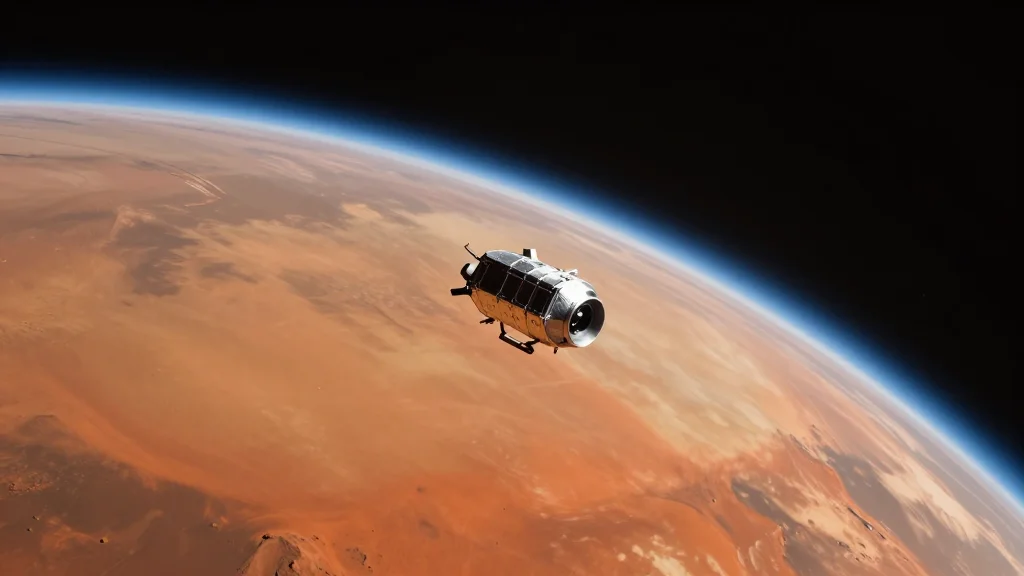
NASA Retires MAVEN After More Than a Decade Studying Mars’ Atmosphere
Companies Mentioned

NASA
Why It Matters
MAVEN’s findings clarify why Mars lost its once‑thick, potentially life‑supporting air, informing both future Mars exploration and models of exoplanet atmospheres. The retirement also frees resources for next‑generation planetary missions.
Key Takeaways
- •MAVEN operated from 2014 to 2026, completing 11-year mission
- •Mission revealed how solar wind strips Mars' atmosphere
- •Data supports models of planetary habitability and climate change
- •Retirement frees budget for next-generation Mars orbiters
- •Final signal received Dec 6, 2025 before Mars occultation
Pulse Analysis
MAVEN’s decade‑long tenure marked a watershed in planetary science. By orbiting Mars continuously from 2014, the spacecraft captured high‑resolution measurements of ion escape, solar wind interactions, and the composition of the upper atmosphere. These observations confirmed that solar wind erosion, rather than volcanic activity, is the primary driver behind the planet’s atmospheric loss. The mission’s comprehensive dataset has become a cornerstone for researchers modeling how terrestrial planets transition from habitable to barren states.
Beyond Mars, MAVEN’s insights ripple through the broader field of exoplanet research. Understanding atmospheric escape mechanisms allows scientists to better assess the habitability of distant worlds orbiting active stars. The mission’s findings have been integrated into climate models that predict how early Earth‑like atmospheres might evolve under intense stellar radiation. This cross‑disciplinary relevance underscores the value of long‑duration orbital science for both solar system exploration and the search for life beyond Earth.
With MAVEN’s retirement, NASA reallocates funding toward upcoming missions such as the Mars Sample Return campaign and the Europa Clipper. The transition highlights a strategic shift toward sample‑return and ocean‑world investigations, leveraging MAVEN’s legacy data to refine landing site selections and atmospheric entry strategies. For the aerospace industry, the end of MAVEN signals continued demand for robust spacecraft design, deep‑space communications, and data‑analysis platforms that can sustain multi‑year scientific objectives.
NASA Retires MAVEN After More Than a Decade Studying Mars’ Atmosphere
Comments
Want to join the conversation?
Loading comments...