NASA Selects Mission to Study Space Weather Interaction with Earth’s Atmosphere
Companies Mentioned

Why It Matters
By linking lower‑atmosphere processes to space‑weather effects, DAPHNE will improve forecasts that protect power grids, GPS reliability and crewed missions beyond Earth’s magnetosphere.
Key Takeaways
- •DAPHNE selected for development, launch no earlier than 2029.
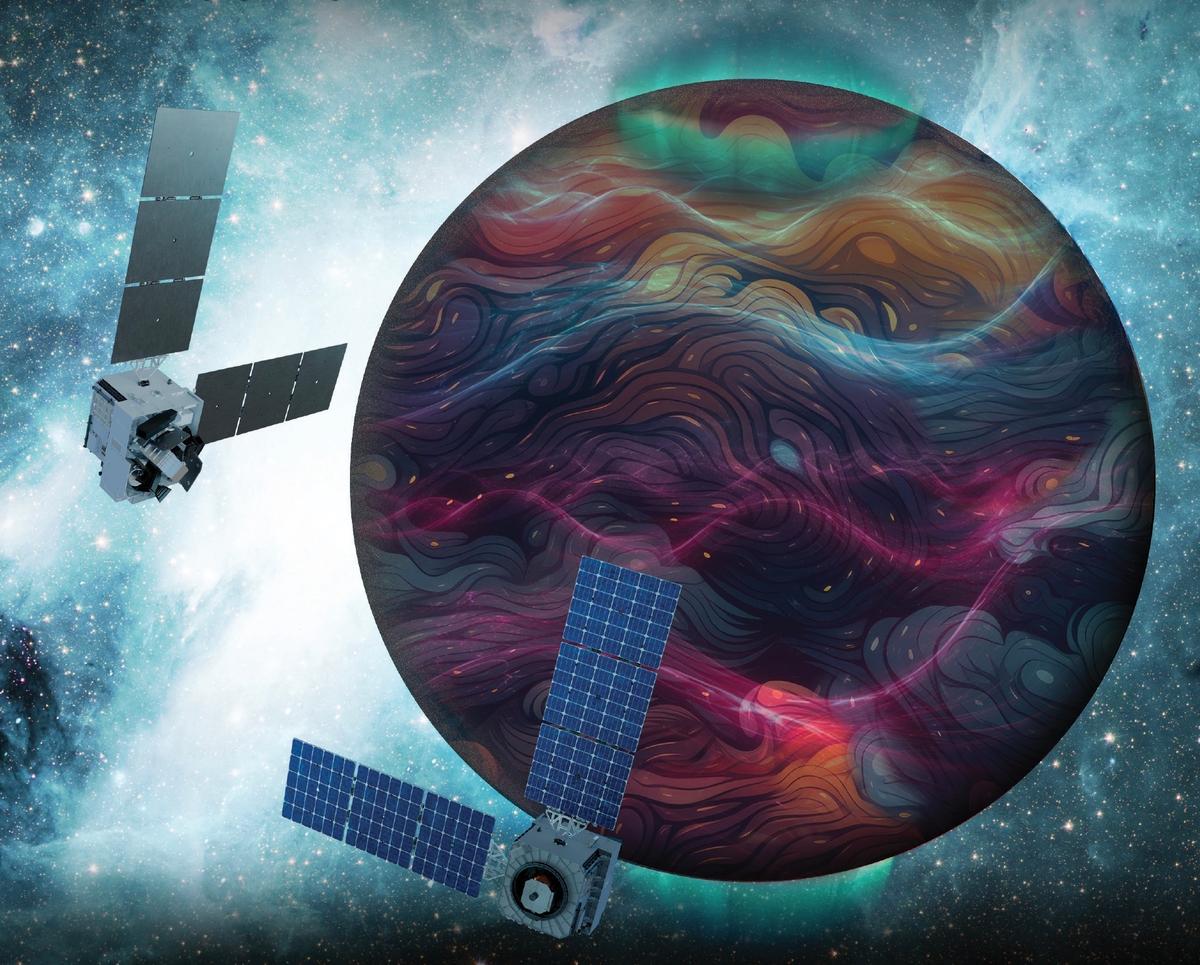
- •Twin satellites carry MIGHTI, FUVI, and PLATO instruments.
- •Program cost cap $250 million, launch expenses not included.
- •Studies how Earth's lower atmosphere influences upper atmospheric space weather.
- •Aligns with NASA’s move toward outcome‑driven heliophysics research.
Pulse Analysis
Space weather—solar flares, geomagnetic storms, and high‑energy particles—poses a growing risk to modern infrastructure and deep‑space exploration. NASA’s DAPHNE mission tackles this risk by deploying a pair of identical spacecraft to the thermosphere, the upper atmospheric layer where solar energy first interacts with Earth’s gases. The onboard MIGHTI, FUVI and PLATO suites will deliver high‑resolution measurements of atmospheric composition, temperature gradients and wind vectors, filling a data void that has hampered predictive models for years. By targeting a 2029 launch, DAPHNE positions itself to feed real‑time insights into next‑generation forecasting systems.
The scientific community has long focused on how solar activity drives disturbances in the ionosphere, yet the reciprocal influence of Earth’s lower atmosphere remains poorly quantified. DAPHNE’s observations will clarify this two‑way coupling, enabling more accurate predictions of geomagnetic storms that can cripple power grids, disrupt GPS signals and endanger astronauts venturing beyond Earth’s magnetic shield. The mission aligns with the 2013 heliophysics decadal survey’s call for integrated studies and supports NASA’s broader strategy to translate fundamental research into tangible societal benefits, from resilient energy networks to safer crewed missions to the Moon and Mars.
Financially, DAPHNE operates under a $250 million cost cap, excluding launch, reflecting NASA’s emphasis on cost‑effective science. The collaboration brings together the University of Colorado’s LASP, defense contractor BAE Systems and the Naval Research Laboratory, leveraging expertise across academia, industry and government. This partnership exemplifies the agency’s shift toward outcome‑driven heliophysics, where mission concepts are evaluated on their potential to deliver actionable data. As NASA refines its proposal solicitation process, DAPHNE sets a precedent for future missions that must demonstrate clear applications to critical infrastructure and space‑flight safety.
NASA selects mission to study space weather interaction with Earth’s atmosphere
Comments
Want to join the conversation?
Loading comments...